Commercial Gyms
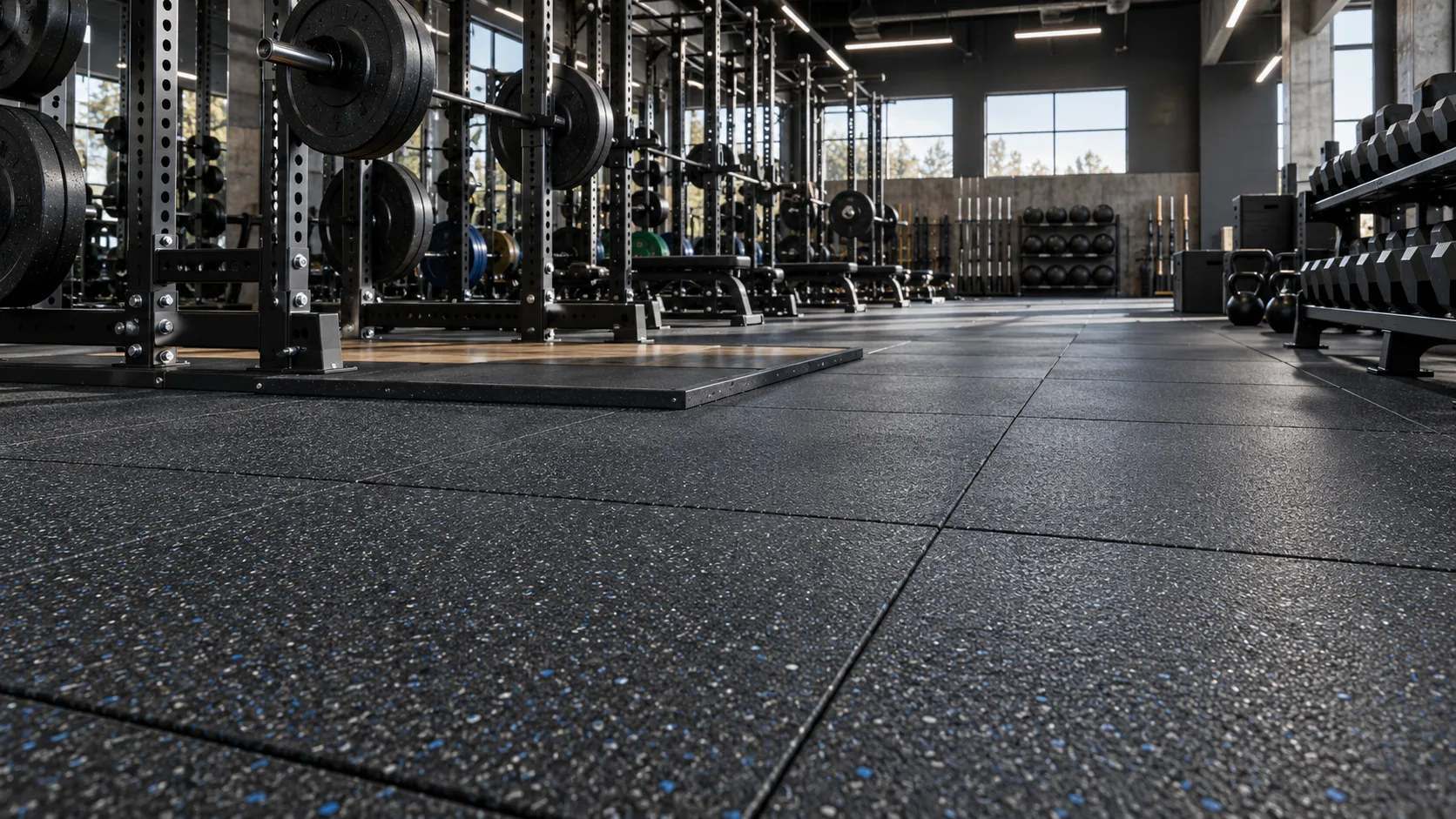
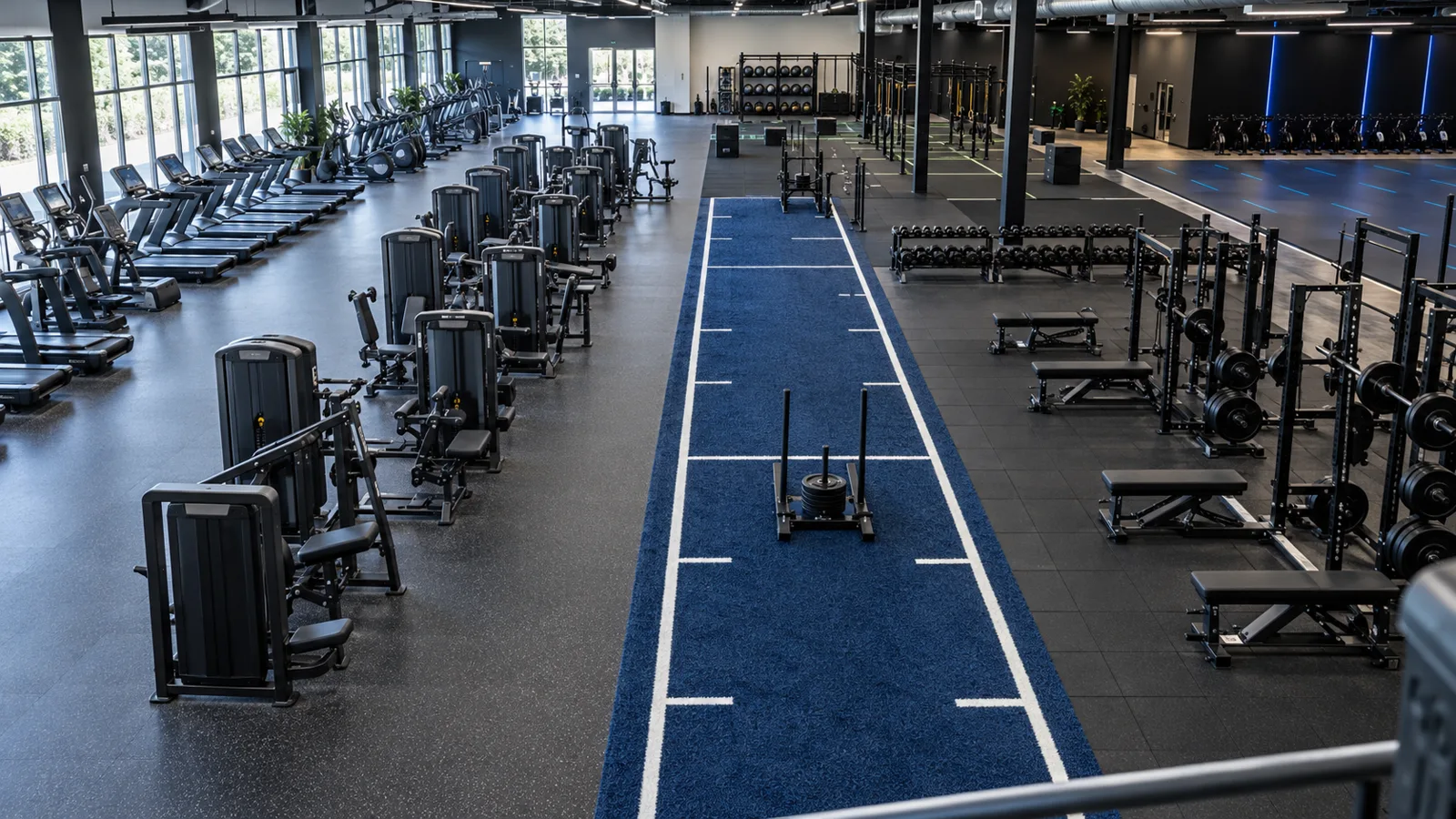
Durable multi-zone flooring that balances impact protection, acoustics, appearance and daily maintenance.
- Best for
- Fitness clubs · franchise gyms · large training centers
- Typical range
- 6–40 mm by zone
Compare flooring systems for commercial gyms, weight rooms, functional training, hospitality, home gyms and sports facilities—then request samples matched to your room and equipment.

Each solution connects room use, risk, recommended construction, product pages, samples and a quote-ready project brief.

Durable multi-zone flooring that balances impact protection, acoustics, appearance and daily maintenance.

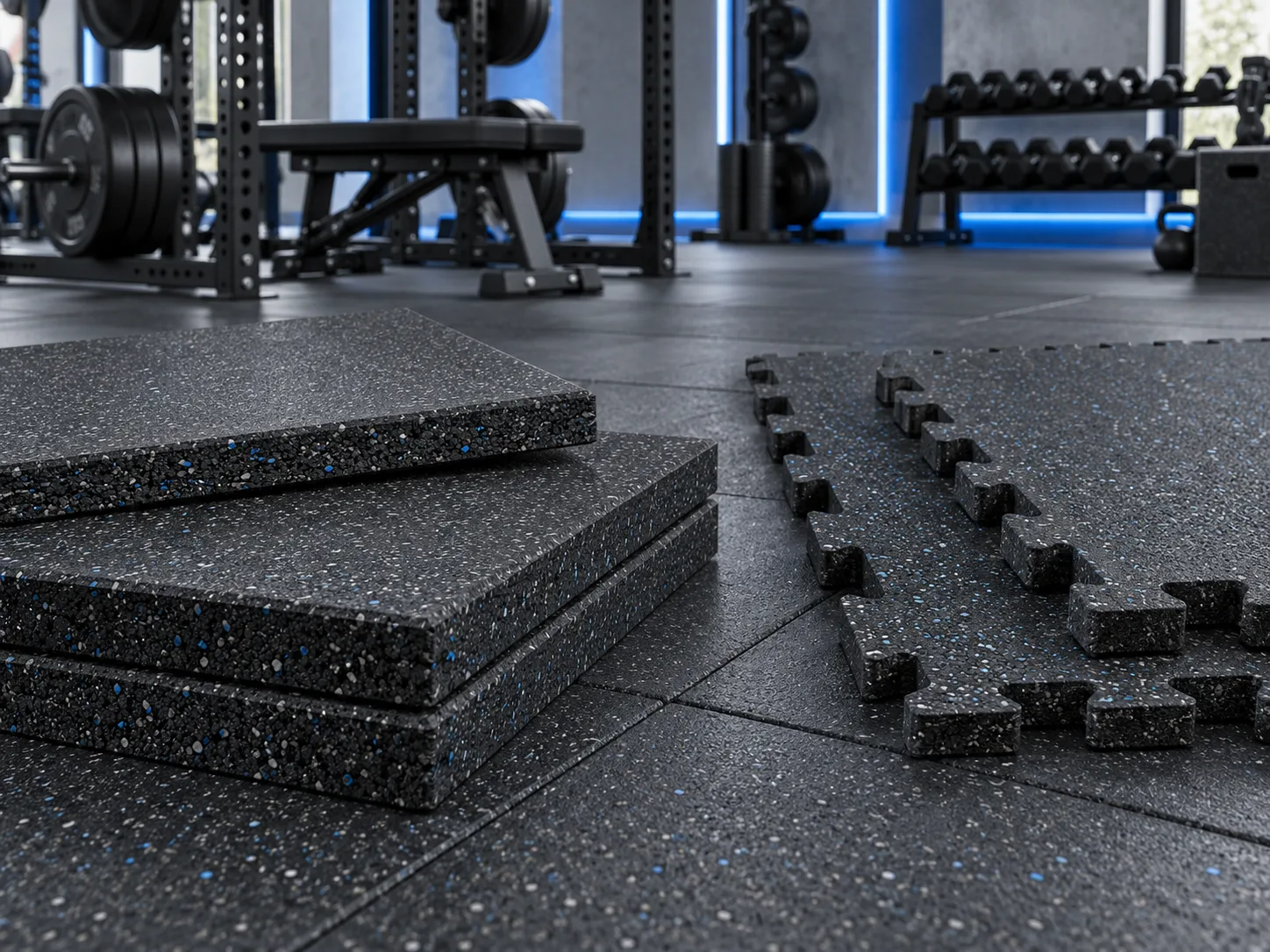
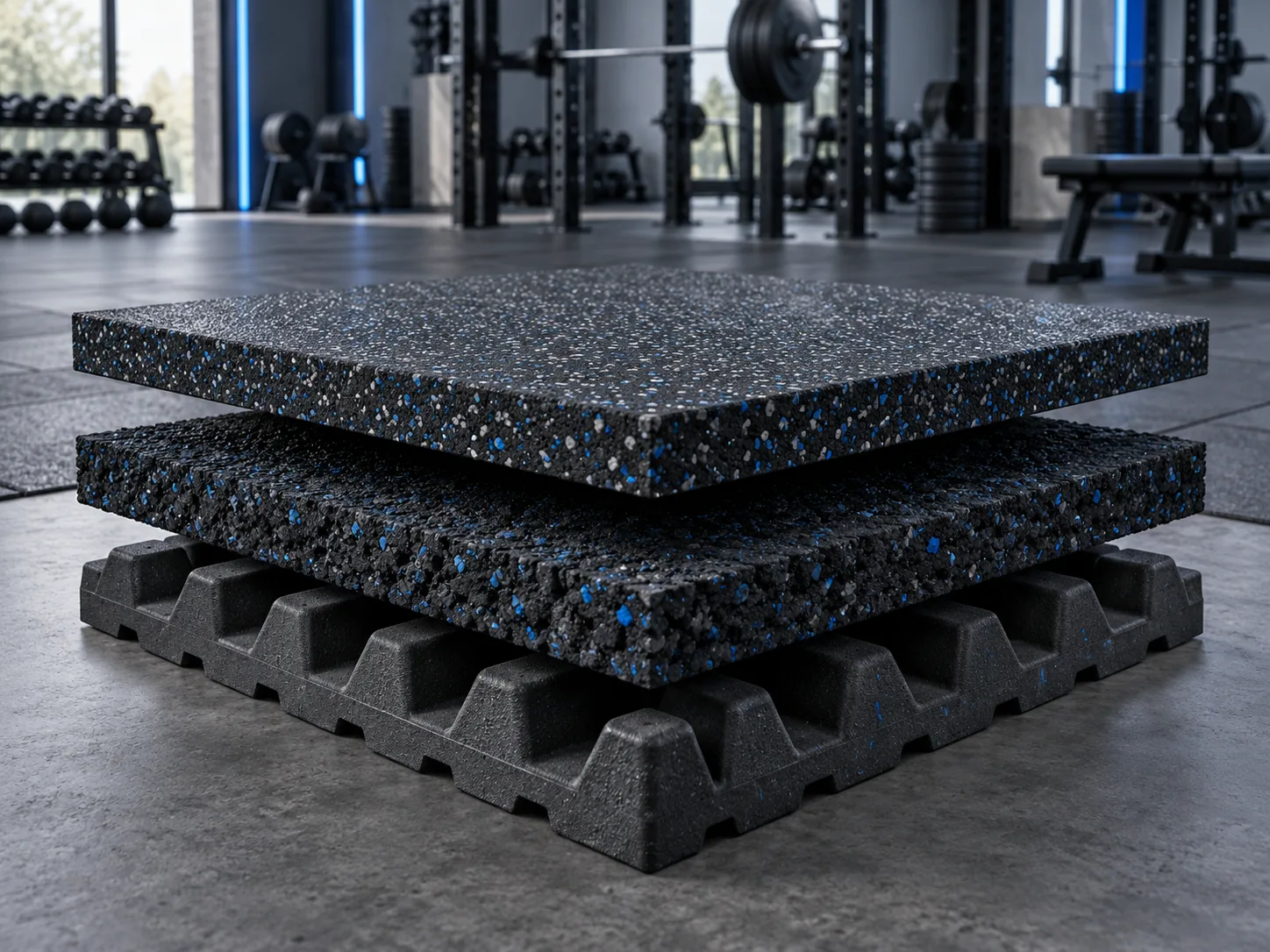
Thicker impact tiles and underlay combinations for racks, concentrated loads and dropped weights.

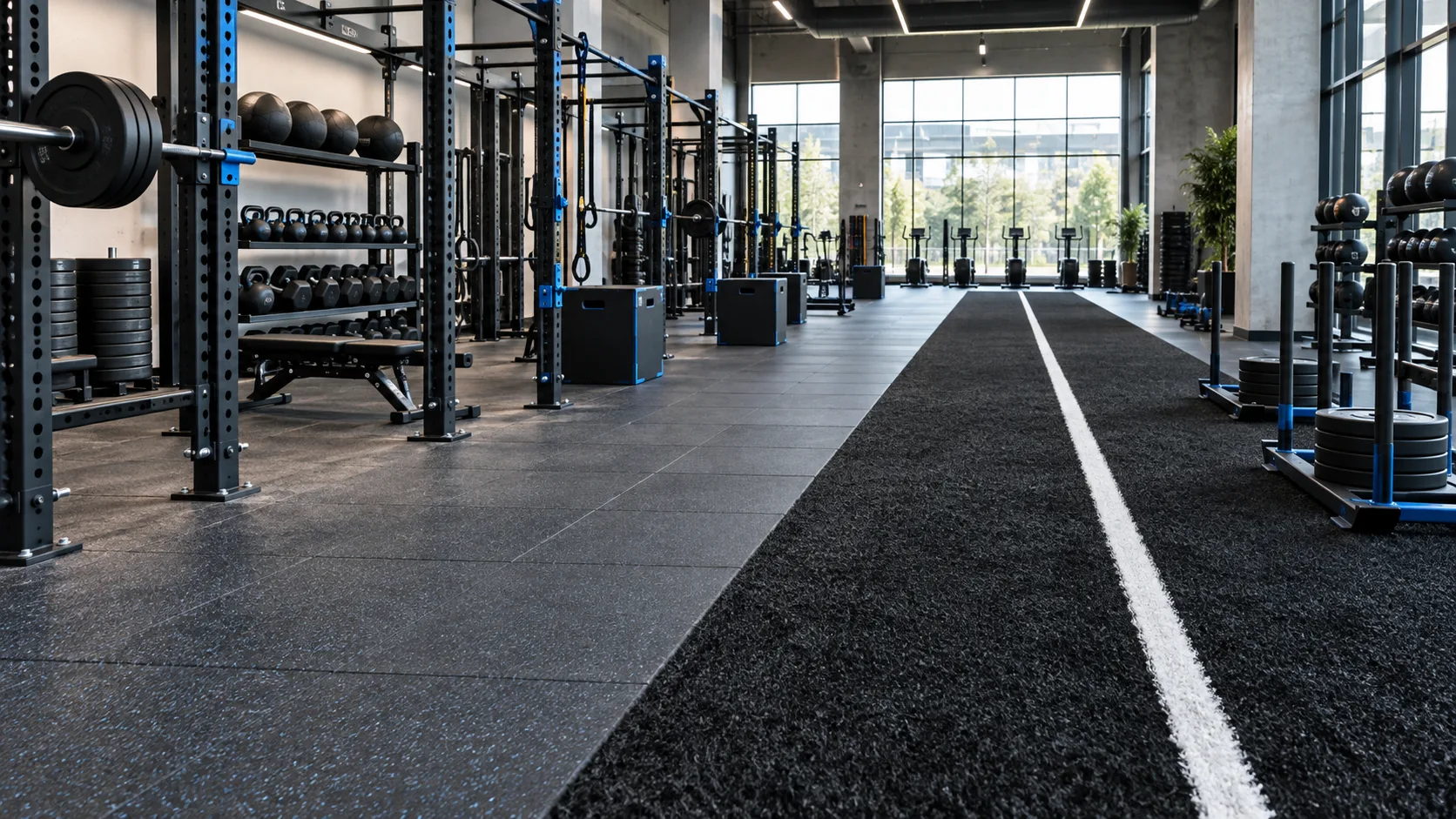
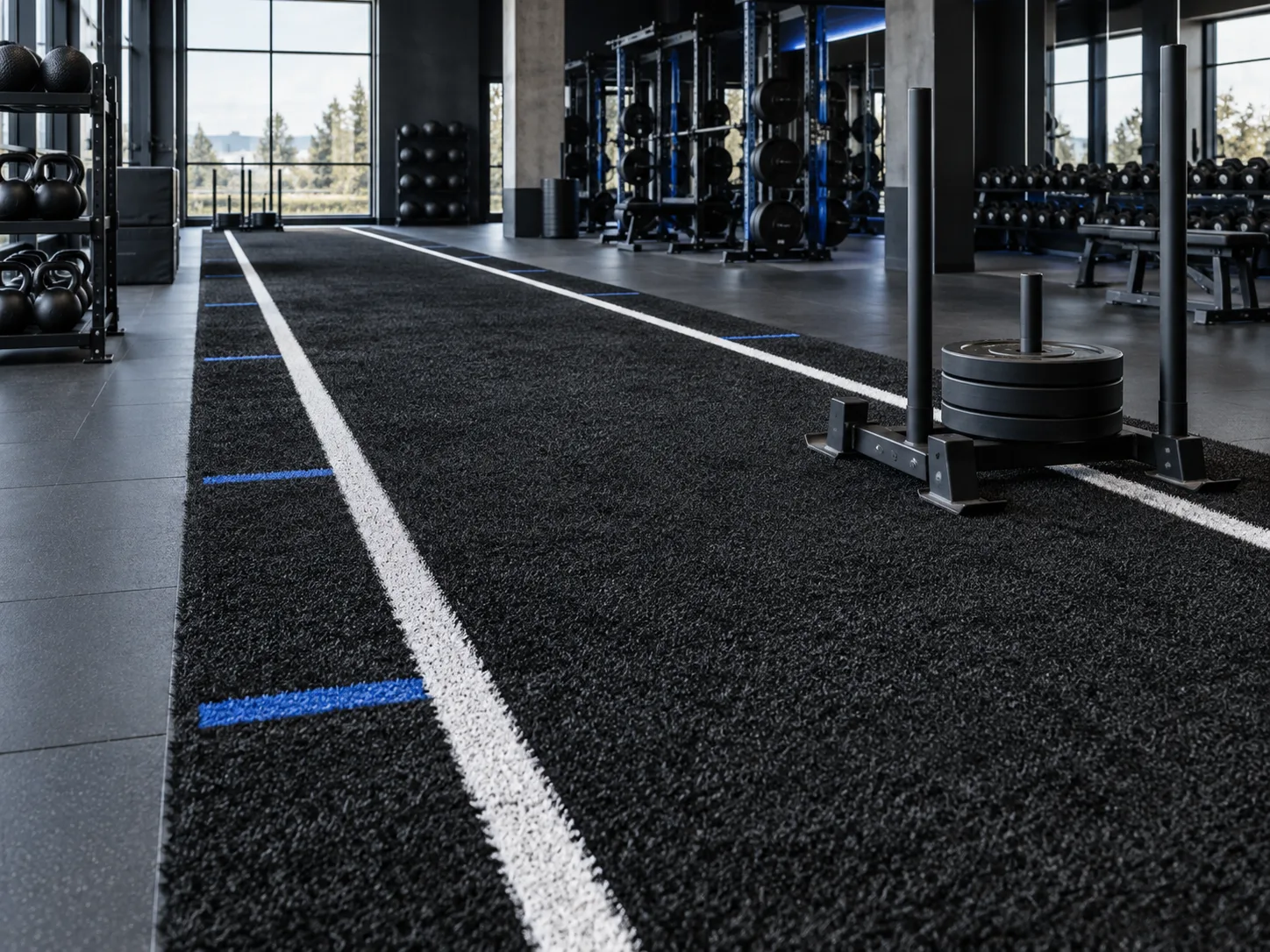
Zoned rubber and turf layouts for lifting, conditioning, agility and sled work.

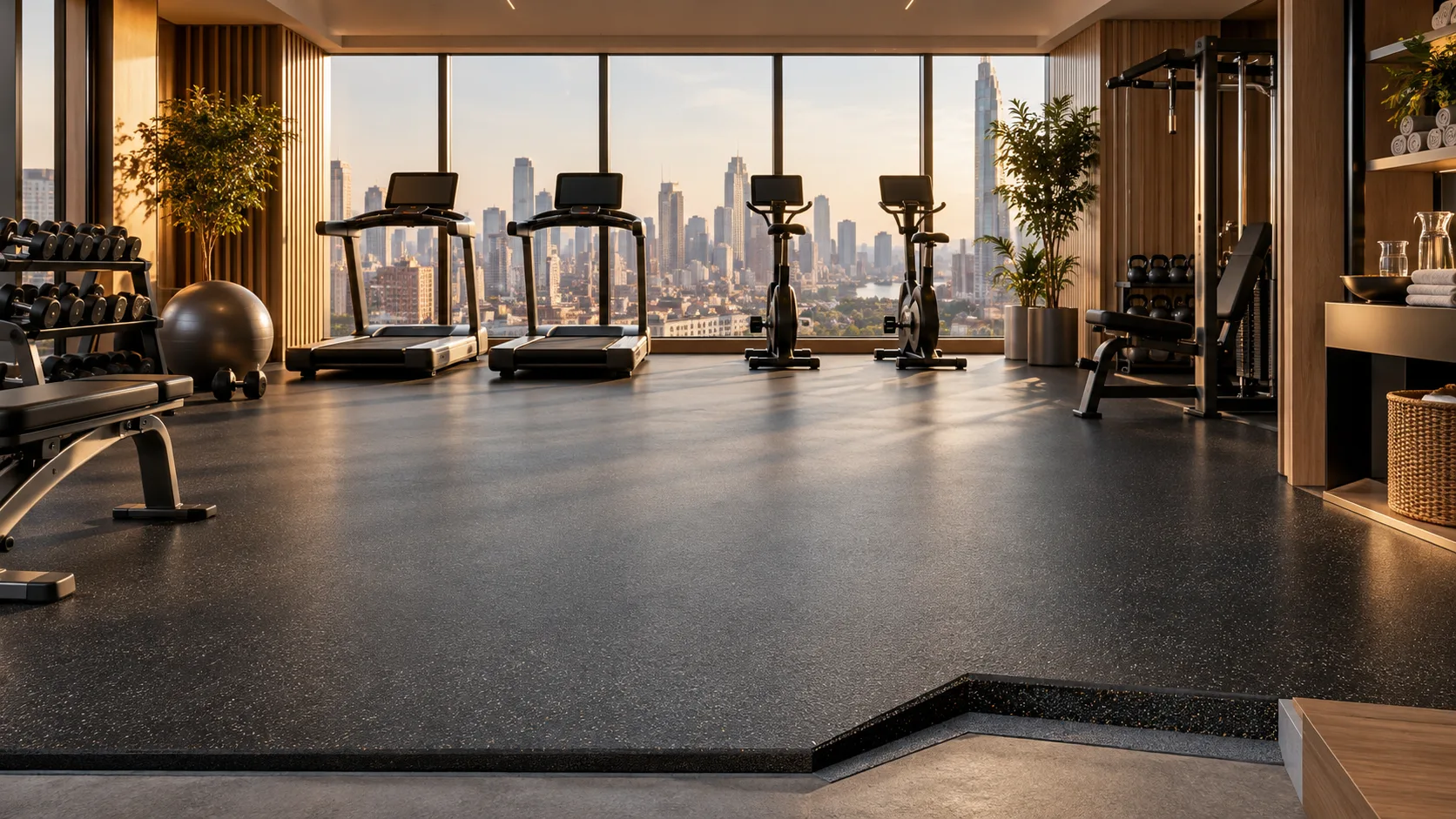
Acoustic-conscious flooring for fitness spaces above or beside guest rooms, homes and shared spaces.

Clean modular flooring for garages, basements, spare rooms and dedicated personal training spaces.

Multi-zone rubber, turf and mat systems for teams, schools and performance centers.
Use these ranges for early planning. Select the final construction from density, equipment, drop exposure, subfloor and acoustic conditions.
| Training area | Primary risk | Recommended format | Planning range | Key question |
|---|---|---|---|---|
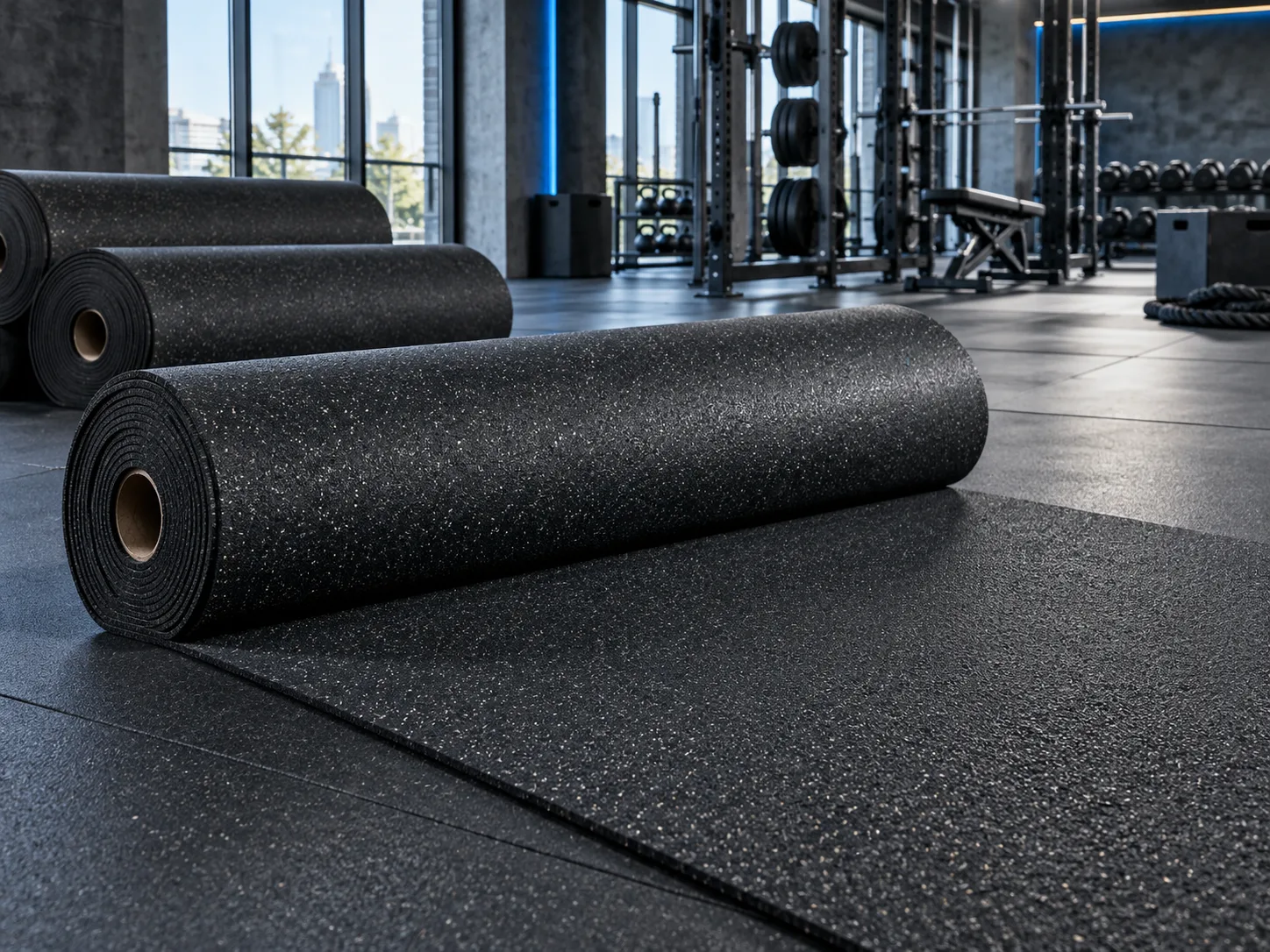
| Cardio | Vibration and daily traffic | Rubber rolls / fine tiles | 6–10 mm | What machines and operating hours? |
| Machine strength | Point loads and movement | Dense rolls / tiles | 8–20 mm | How is equipment anchored or moved? |
| Free weights | Dumbbell and barbell impact | Impact rubber tiles | 20–40 mm | What weight and drop height? |
| Functional / HIIT | Mixed movement and impact | Rubber tiles + turf | 15–30 mm | Are sled lanes and transitions required? |
| Upper-floor gym | Structure-borne noise | Surface + acoustic layer | System based | Who occupies rooms below and beside? |
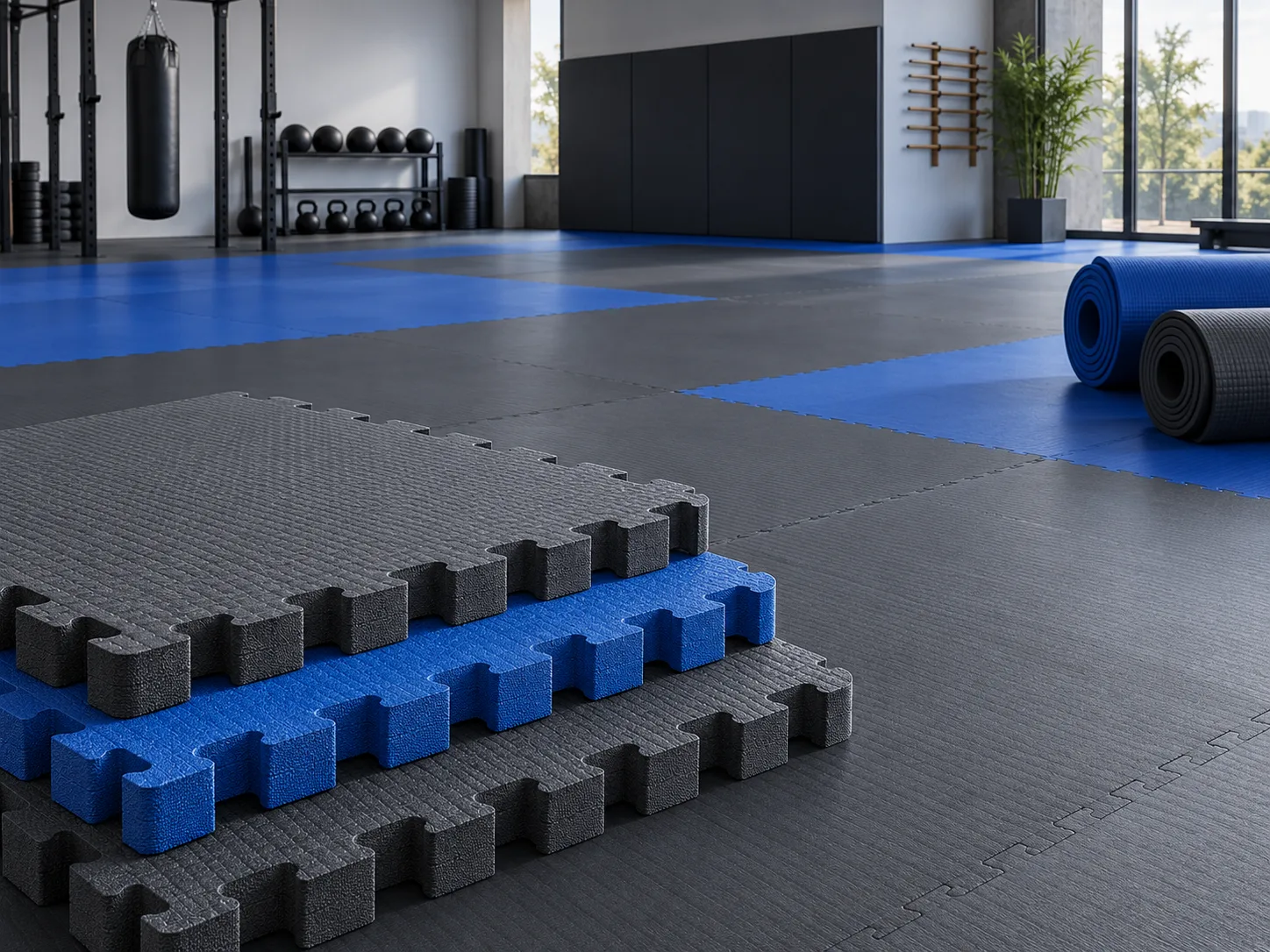
| Martial arts / studio | Body contact and movement | Tatami / sports roll mats | 20–50 mm | Which discipline and footwear? |
Stable, low-seam floors around treadmills, bikes and rowers.
View related solution →Localized impact protection around dumbbells and racks.
View related solution →Rubber-to-turf systems for circuits, carries and sled work.
View related solution →Layered planning for upper-floor and mixed-use buildings.
View related solution →Tatami and roll mat options for combat and body contact.
View related solution →Comfort-oriented surfaces for controlled low-impact movement.
View related solution →Durable, replaceable flooring for shared training facilities.
View related solution →Modular formats for DIY installation and changing layouts.
View related solution →Rubber, turf and markings for strength and speed programs.
View related solution →Color, logo and lane marking for facility identity.
View related solution →Drainage-aware impact tiles and turf for exterior areas.
View related solution →Stable surfaces for controlled movement and recovery work.
View related solution →Accurate recommendations begin with the real room: dimensions, equipment, training activities, subfloor, rooms below, cleaning program, branding requirements and destination.
Separate cardio, machines, free weights, turf and support areas.
Record loads, drop exposure, vibration and expected daily traffic.
Match format, thickness, density, color and installation route.
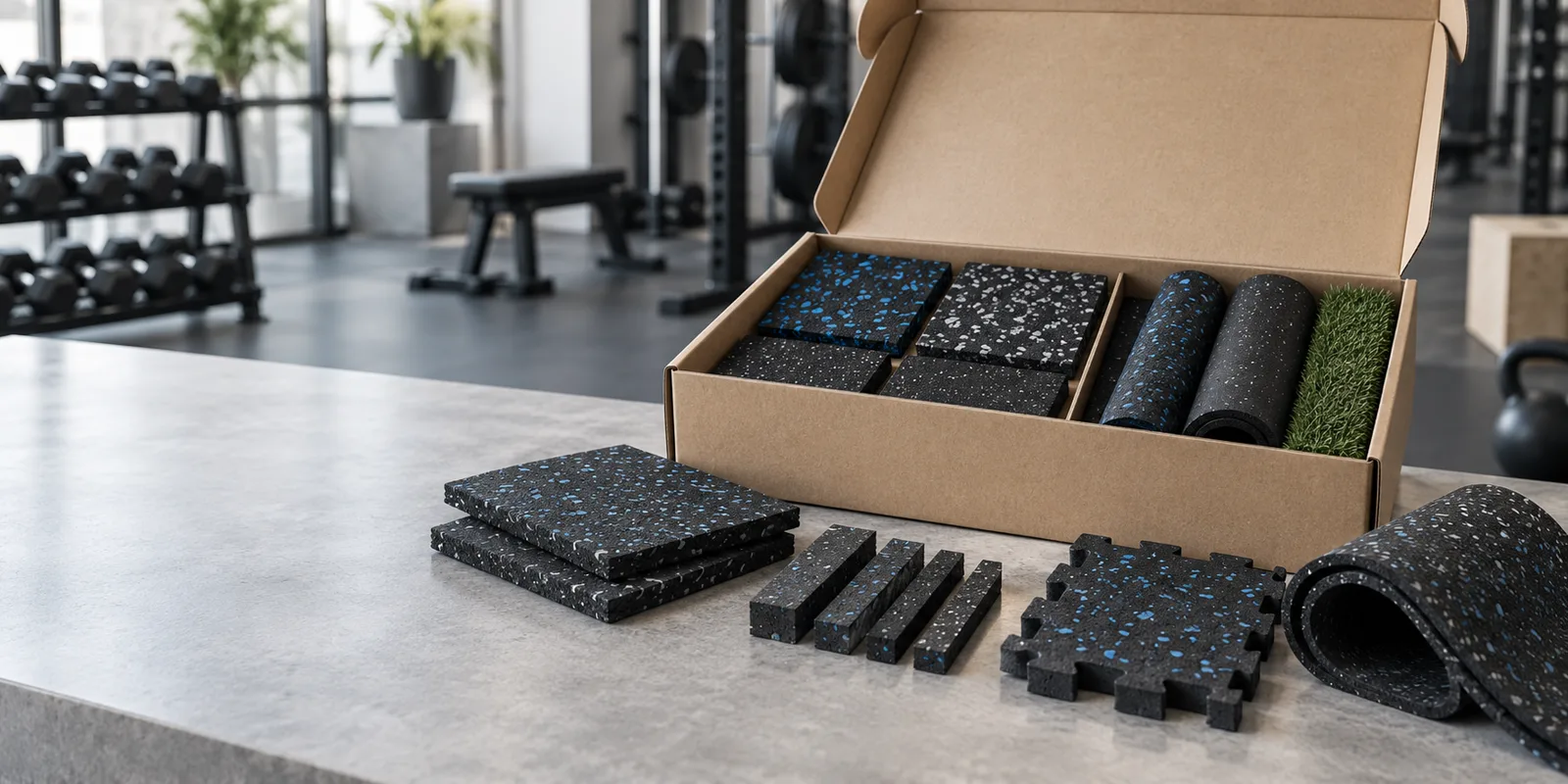
Compare texture, odor, color, dimensions and branding before bulk.
Calculate pieces, rolls, waste, pallets and export packing.

Connect each application directly to product specifications and free sample requests.

Large cardio, machine and circulation areas
Specifications →
Strength and free-weight zones
Specifications →
Fast installation and modular rooms
Specifications →
Sled, sprint and agility lanes
Specifications →
Upper floors and noise-sensitive buildings
Specifications →
Martial arts and studio activities
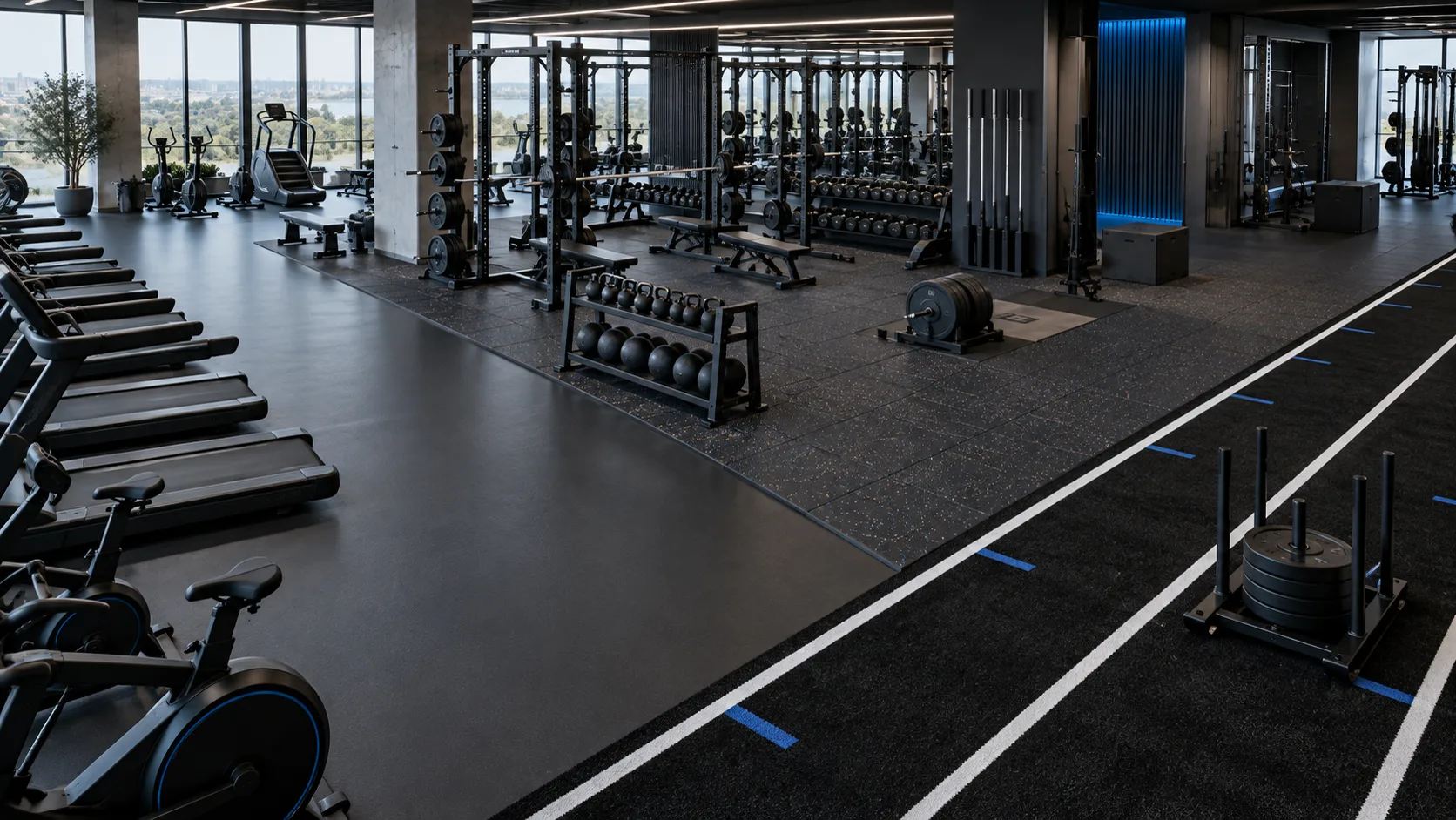
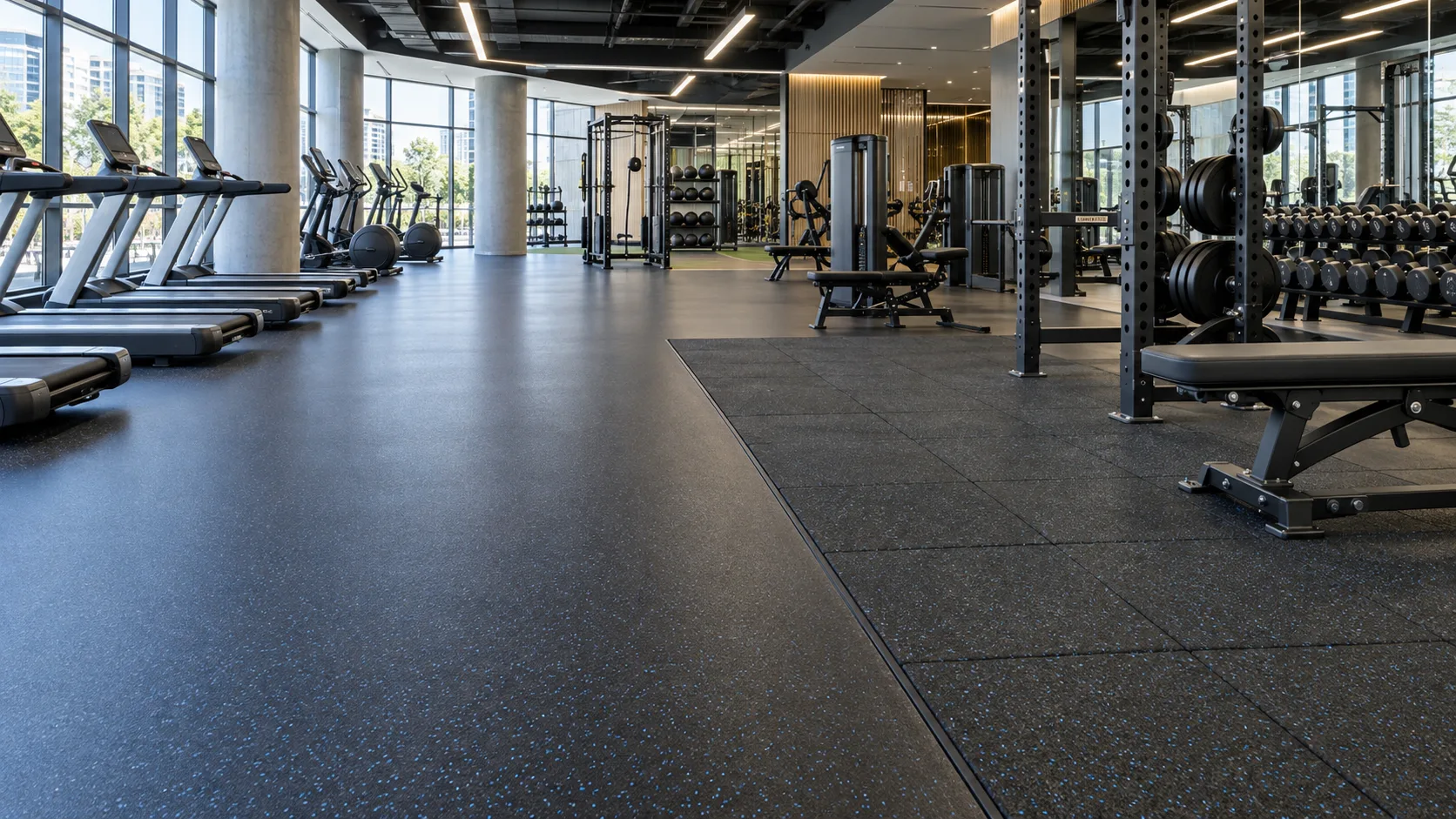
Specifications →Most commercial gyms perform best with a zone-based system: rubber rolls for cardio and machines, thicker rubber tiles for free weights, turf for sled work, and acoustic layers where the building requires vibration control.
Start with equipment type, expected drop height, concentrated loads, subfloor and rooms below. General fitness often uses thinner systems than free-weight and Olympic lifting zones.
A single surface can work in simple spaces, but multi-zone facilities usually achieve better protection, maintenance and value by matching the construction to each activity.
Not every project does, but upper-floor and mixed-use buildings should review structural transmission, treadmill vibration and free-weight impact before selecting the system.
Yes. Options can include EPDM fleck blends, custom colors, embedded or printed logos, turf lanes, numbers, labels and private-label packaging depending on the product.
Yes. B2B buyers can request relevant surface, color, thickness and construction samples before bulk production.
Compare surface texture, density, granule size, color blend and thickness in your own market. We prepare a focused sample pack around your project—not a random box of swatches.

Share your floor area, application and destination. We will recommend the right system and prepare a factory quotation.