PRODUCT CATEGORY
Rubber Gym Flooring
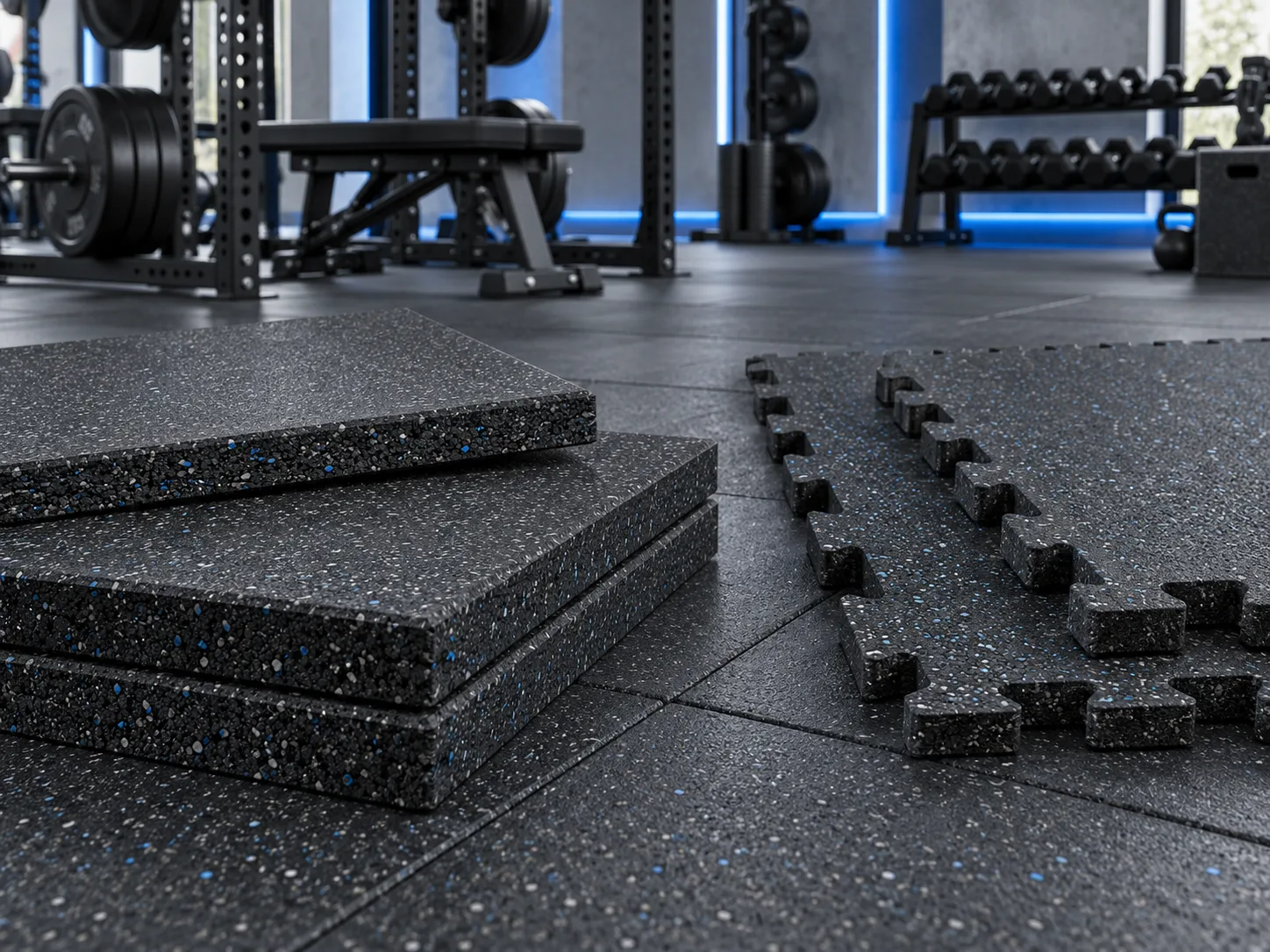
Compare rubber rolls, square tiles, interlocking mats and EPDM-fleck surfaces for commercial training areas.
Browse category →Compare rubber rolls, modular tiles, interlocking mats, acoustic layers, turf and private-label options—then request samples matched to your project.
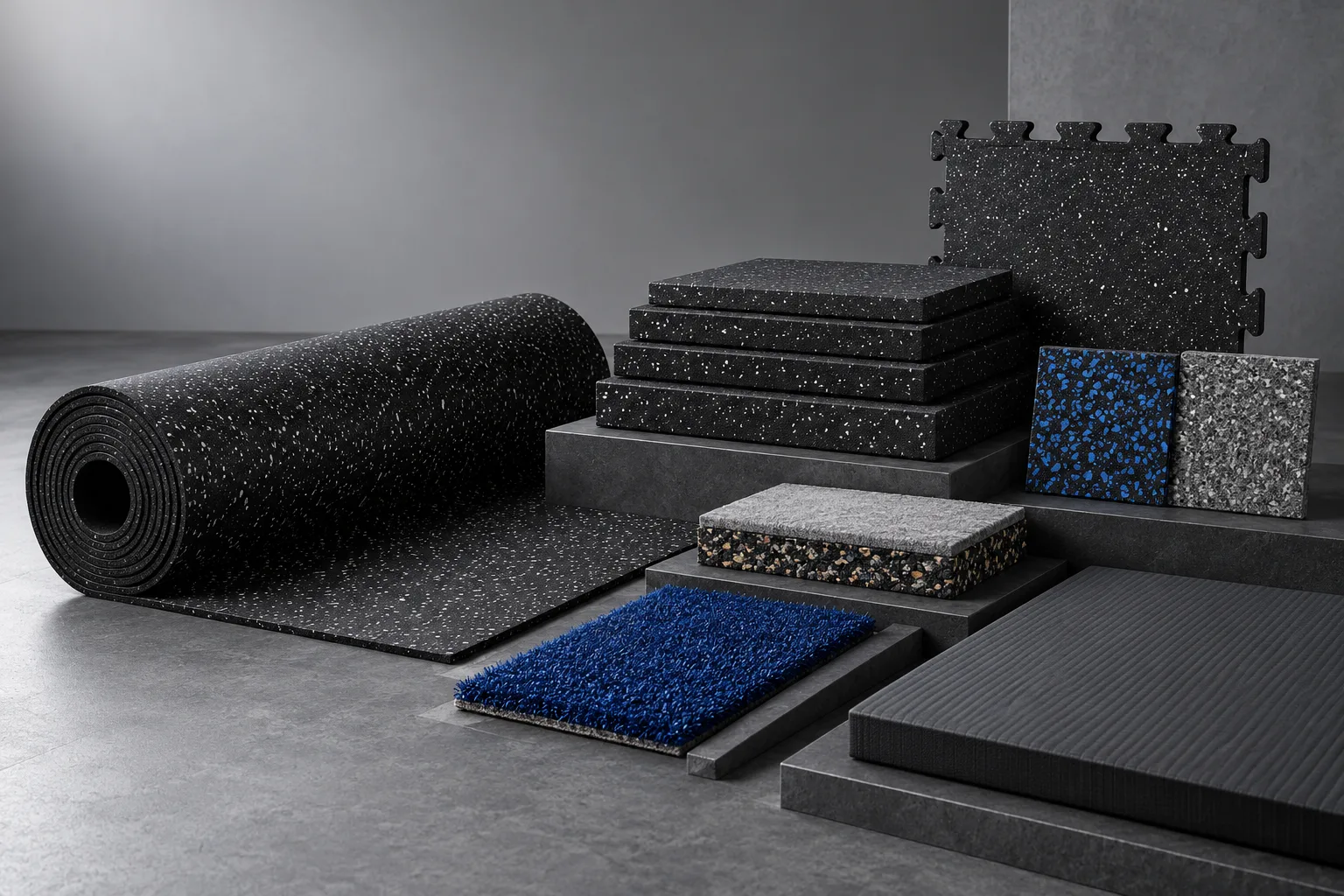
Category hubs connect product formats, applications and buyer guidance around one search intent.
Compare rubber rolls, square tiles, interlocking mats and EPDM-fleck surfaces for commercial training areas.
Browse category →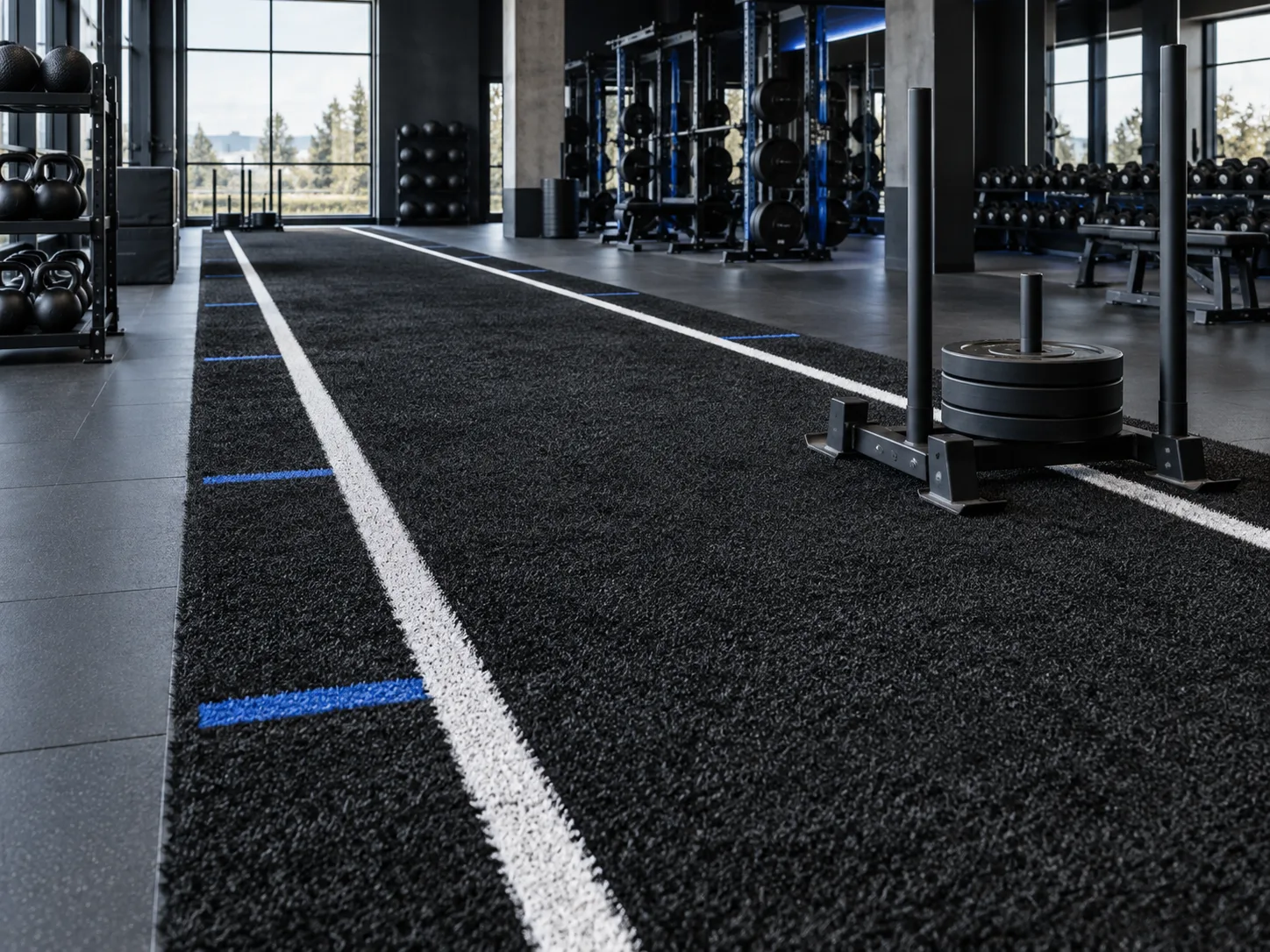
Plan turf, sports roll mats and tatami systems for sled work, agility, martial arts and flexible studios.
Browse category →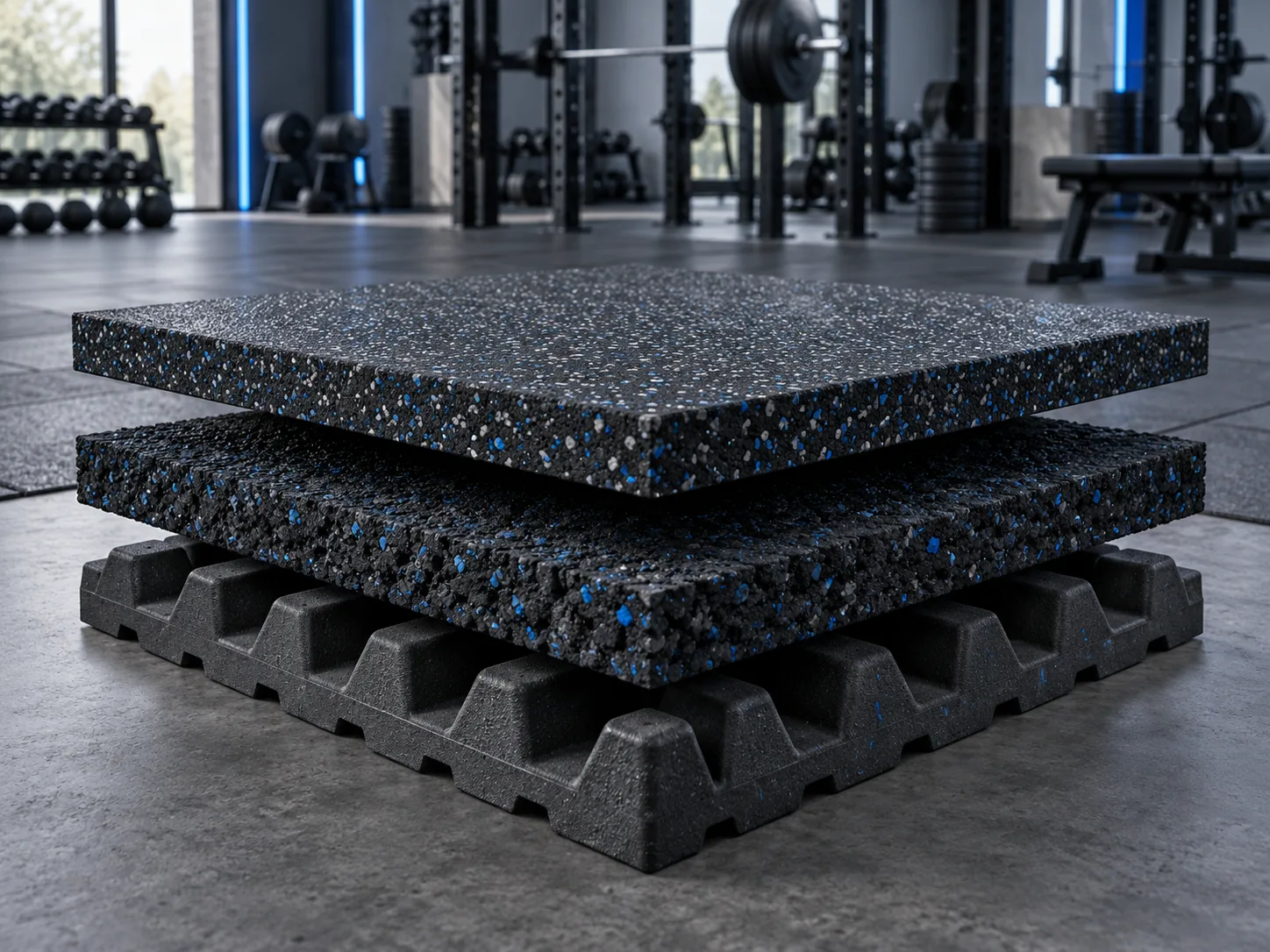
Build layered floor systems for upper-floor gyms, hotels, apartments and noise-sensitive facilities.
Browse category →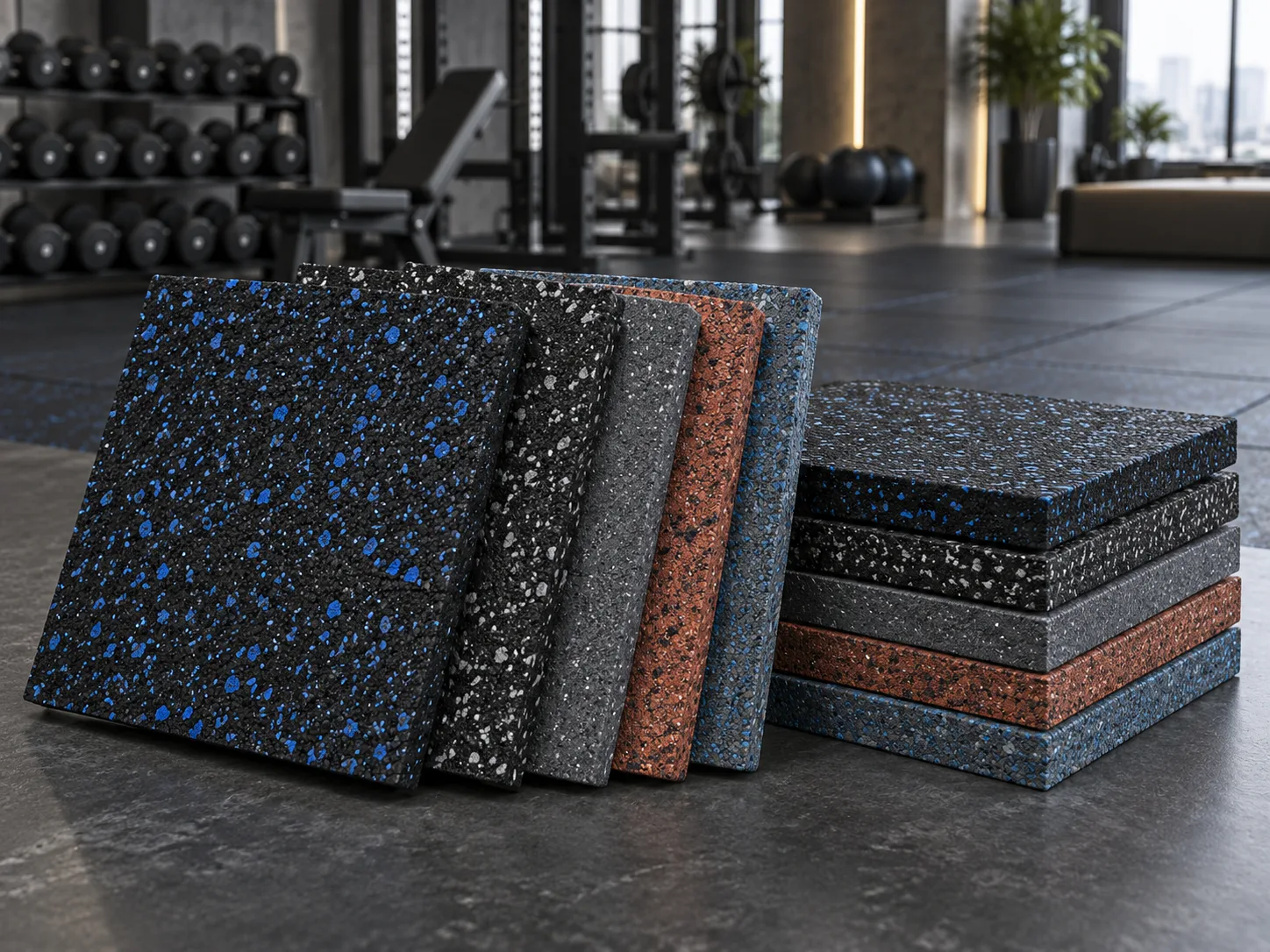
Develop private-label colors, dimensions, logos, markings, labels and export packaging around your market.
Browse category →Format affects seams, handling, replacement, installation speed and long-term service. Compare the six most common starting points.
Every product page connects specification, application, installation, maintenance and sample approval so buyers can move from research to an accurate quotation.
 4–12 mm
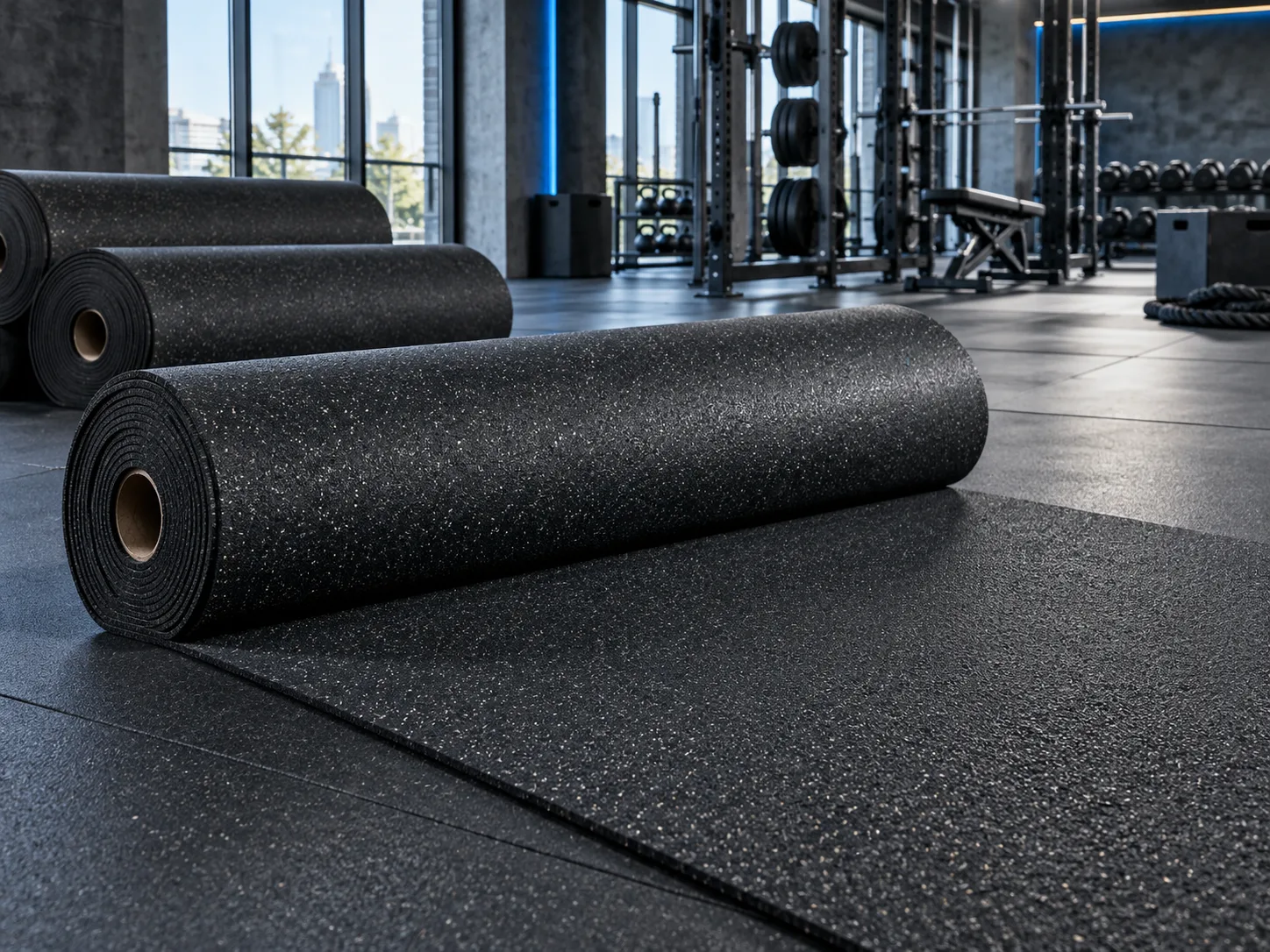
Seam-minimizing resilient flooring for large cardio, selectorized and functional training zones.
10–50 mmHigh-density modular tiles for free-weight rooms and commercial strength areas.
15–30 mmFast-install interlocking protection for studios, home gyms and temporary fit-outs.
15–30 mmColor-controlled commercial tiles for premium gym interiors and branded training zones.
20–50 mmDrainage-ready impact protection for outdoor gyms, terraces and multi-use sports areas.
5–25 mmLayered sound-control support for upper-floor gyms, studios and heavy-impact zones.
10–15 mmLow-friction training turf with custom lanes, markings and logo options.
 20–50 mm
Flexible roll mat systems for martial arts, school sports and temporary training rooms.
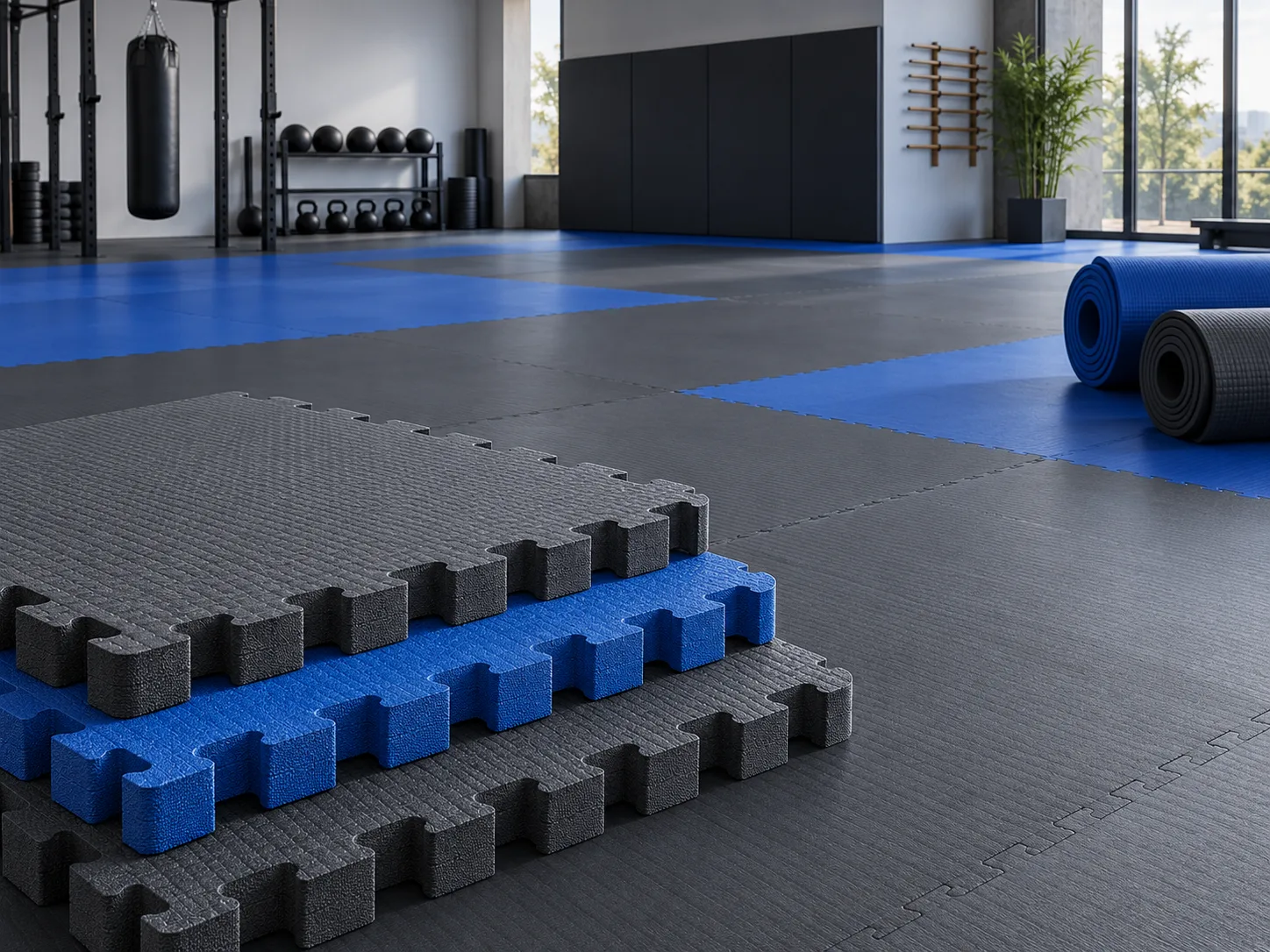
20–60 mmCushioned interlocking systems for judo, BJJ, kids areas and light training.
OEM / ODMPrivate-label flooring, color blends, embedded logos and project-specific packaging.
There is no single best gym floor. The right answer is the format and construction that fit the real use of each zone.
| Format | Best room type | Typical thickness | Seams | Installation | Replacement |
|---|---|---|---|---|---|
| Rubber rolls | Large open commercial areas | 4–12 mm | Lowest | Loose, tape or glue | Section replacement |
| Square tiles | Strength and free weights | 15–50 mm | Visible grid | Loose or glued | Individual tile |
| Interlocking tiles | DIY, studio, phased projects | 15–30 mm | Interlocking joints | Dry installation | Individual tile |
| Gym turf | Functional and sled zones | 10–15 mm | Lane joins | Tape or glue | Lane section |
| Acoustic system | Upper floors / mixed-use buildings | System based | Depends on surface | Layered assembly | By system layer |
Equipment weight, drop height, subfloor, building structure and acoustic risk all matter. These ranges support early specification; equipment, impact, subfloor and acoustic conditions determine the ordered construction.
Surface layer, rubber core, underlay and subfloor must work together. Thickness is only one part of the specification.
Walking, support areas and selected low-impact uses.
Treadmills, bikes, selectorized machines and general fitness.
Benches, cable systems, moderate dumbbells and mixed training.
HIIT, racks, heavier dumbbells and controlled barbell work.
Drop zones, demanding free weights and outdoor impact areas.
Rolls + tiles
View solution →Impact tiles + underlay
View solution →Tiles + turf
View solution →Acoustic system
View solution →Interlocking tiles
View solution →Multi-zone surfaces
View solution →Rubber rolls
View solution →Tatami + roll mats
View solution →Material, density, color and surface finish determine how the floor looks, feels, cleans and performs over time.
Durable value-focused construction for rolls, tiles and broad commercial use.
Controlled accent colors for branded interiors and product differentiation.
Smoother surfaces for easier cleaning and premium visual control.
Underlays selected around impact vibration and building conditions.
Pile, backing, lane markings and cushioning selected for sled and agility work.
Lightweight cushioning, interlocking installation and color options for studio use.
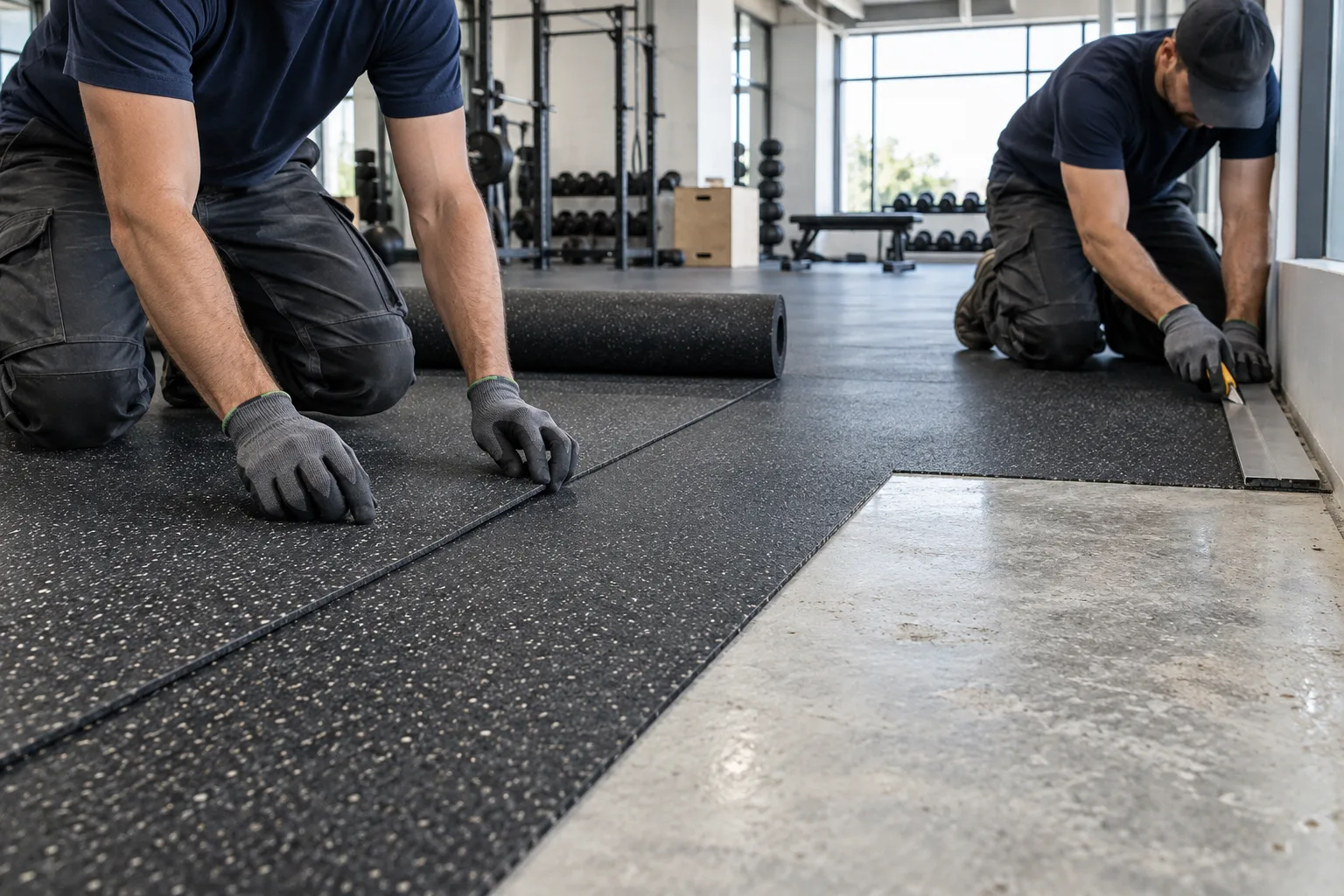
Room layout, roll direction, subfloor flatness, perimeter conditions and future replacement needs affect both product format and installation method.
Read installation guide→Routine dry cleaning and controlled damp cleaning help prevent abrasive grit, sweat residue and visual build-up. Always approve the cleaning process against the final material sample.
Vacuum or sweep loose dust and granules. Spot-clean spills promptly.
Damp mop using a neutral cleaner and controlled water volume.
Oil-based, solvent-rich or aggressive chemicals that can attack binders or surfaces.
Check seams, edges and high-impact zones as part of scheduled facility maintenance.
Compare surface texture, density, granule size, color blend and thickness in your own market. We prepare a focused sample pack around your project—not a random box of swatches.
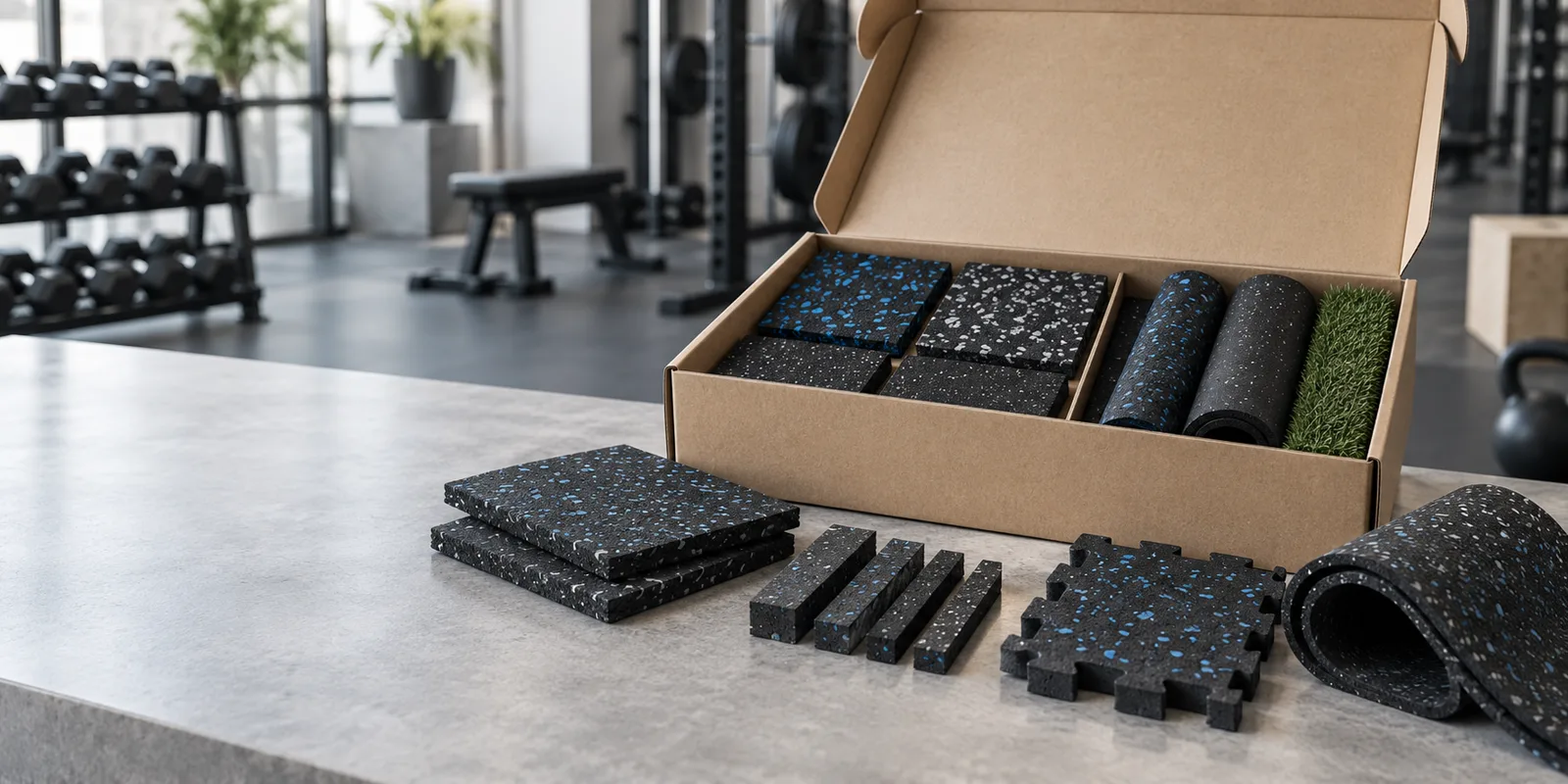
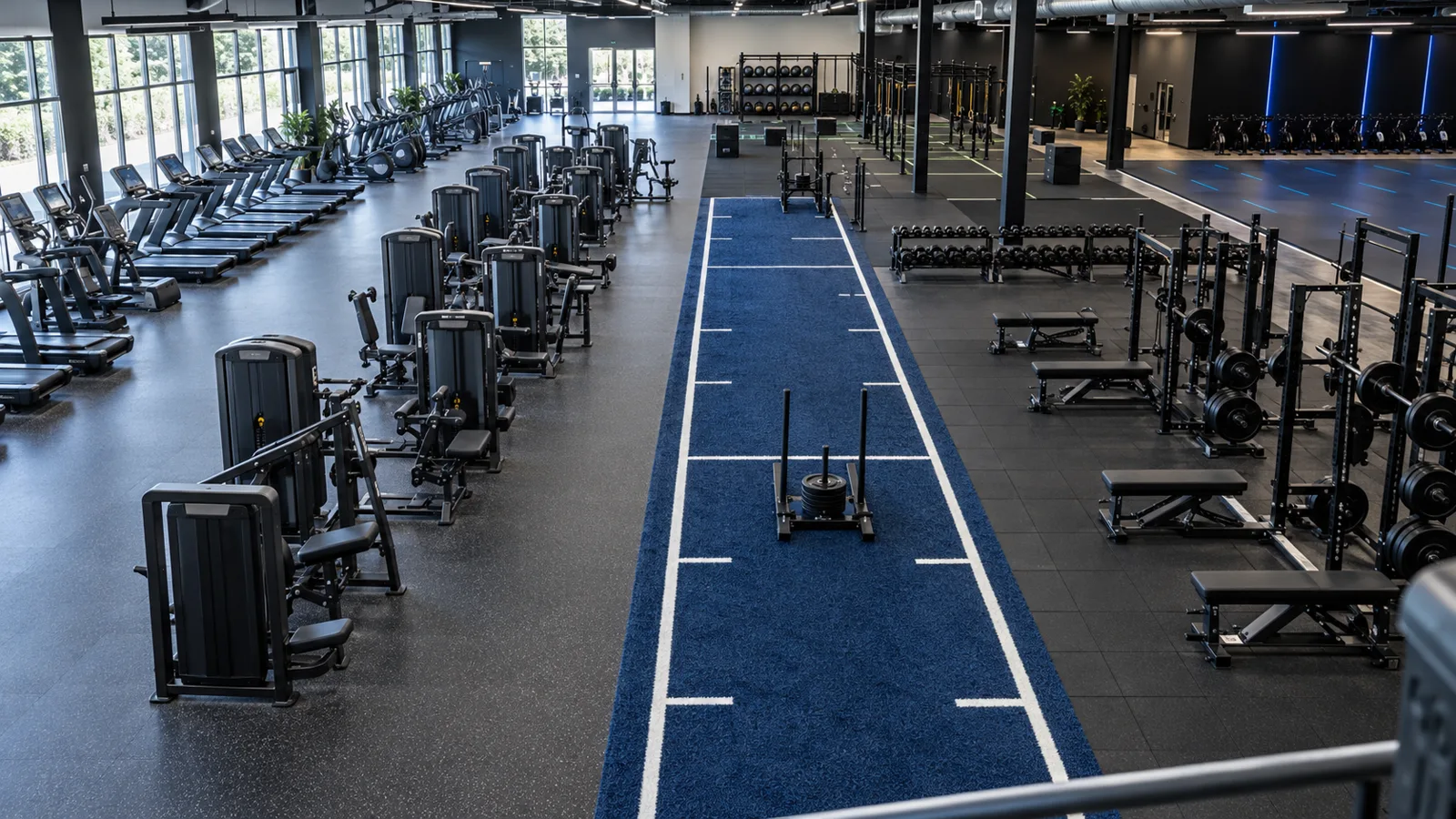
Most commercial gyms use more than one surface: rolls for cardio and machine areas, thicker tiles for strength and free weights, turf for sled lanes, and acoustic layers where the building requires vibration control.
General cardio and machine zones often begin around 6–10 mm, while strength, functional and free-weight zones commonly need thicker systems. Final selection should account for density, load, drop height and subfloor.
Rolls reduce seams and cover large areas efficiently. Tiles are easier to handle, replace and zone by thickness. Many projects combine both.
Some heavy rolls and tiles can be loose laid in controlled wall-to-wall spaces, and interlocking tiles are designed for dry installation. Permanent commercial projects may require tape or full adhesive.
Yes. DLJ FITNESS supports EPDM fleck ratios, custom palettes, turf markings, logo integration, labels, cartons and pallet marks based on the product and order.
Yes. Buyers can request relevant tile, roll, color and thickness samples before bulk production.
Send room dimensions or a floor plan, product format and expected waste allowance. We can help convert the layout into pieces, rolls, pallet quantities and shipment volume.
A single product can cover simple facilities, but multi-zone commercial gyms usually achieve better protection and value by matching construction to each activity area.
Match thickness to equipment, subfloor and impact risk.
Read guide →Compare seams, installation, maintenance and lifecycle value.
Read guide →Plan protection for dropped weights and concentrated loads.
Read guide →Prepare the subfloor and select the right installation method.
Read guide →Protect appearance and service life with the right cleaning routine.
Read guide →Send suppliers the details needed for an accurate quotation.
Read guide →Share your floor area, application and destination. We will recommend the right system and prepare a factory quotation.