Gym Flooring RFQ Checklist for Buyers
Send suppliers the details needed for an accurate quotation. This guide turns the topic into practical decisions, supplier questions and a project-ready checklist.

Gym Flooring RFQ Checklist
A quote becomes comparable when every supplier receives the same room areas, zone uses, product format, thickness, performance needs, customization, delivery terms and packing requirements.
Define the project scope
Send dimensioned drawings or a clear room schedule. Separate cardio, machines, free weights, functional training, turf and support areas. State whether quantities should include cutting waste and spare stock.
Describe the buyer type and project stage. A distributor building stock needs repeatable SKUs and packaging; a contractor needs zone quantities and installation information; a brand needs samples, artwork and private-label control.
Request a complete product specification
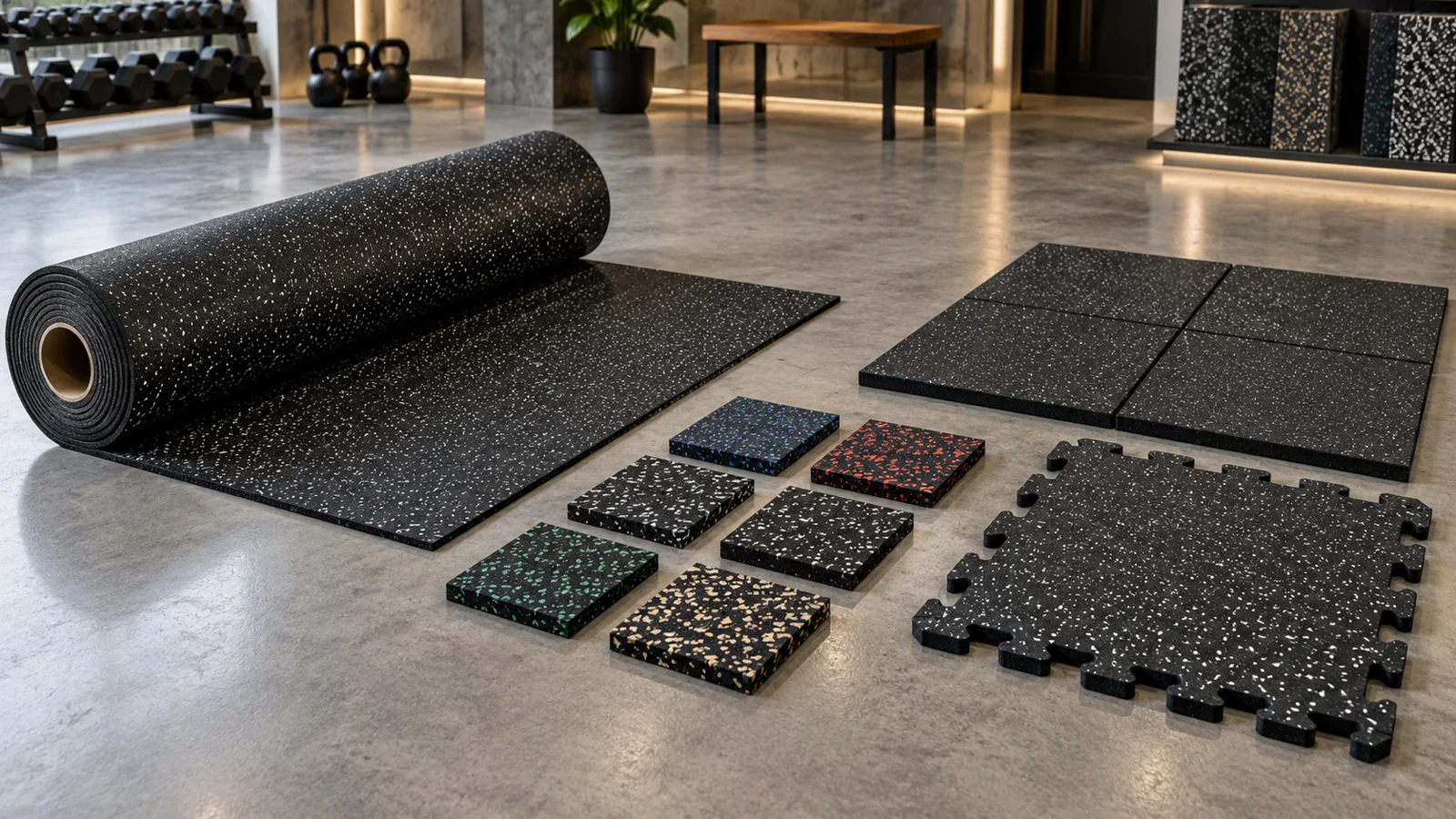
Ask each supplier to state material, construction, density or hardness where relevant, thickness and tolerance, dimensions, surface, edge or backing, color, installation method and recommended accessories. A product name alone is not a comparable specification.
For impact or acoustic claims, request the test scope and exact product assembly. Do not assume that a certificate from another thickness or construction applies to the quoted item.
Request the exact material sample, construction and packing data you plan to purchase. Product names alone are not enough for a reliable comparison.
Align price, delivery and packing terms
Specify quotation currency, Incoterm, loading port, destination, quantity tiers and validity. Ask for unit weight, packed dimensions, pieces per carton or pallet, total gross weight and total CBM for the quoted quantity.
Separate product price from tooling, sample preparation, pallets, labels, installation accessories, inspection and destination charges. This exposes the true landed-cost structure.
Create an approval and order pathway
Request physical samples and confirm which sample becomes the bulk reference. Record logo artwork, color blend, labels, cartons and pallet marks. Agree on inspection evidence, production lead time and how non-conforming items will be handled.
For repeat orders, ask how specifications and approved artwork are controlled. A well-structured RFQ should become the foundation of the purchase order, inspection checklist and future reorder.
Decision table
| RFQ block | Information to send | Information to receive |
|---|---|---|
| Project | Zones, areas, drawings, schedule | Recommended system and quantities |
| Product | Format, thickness, color, use | Full specification and tolerance |
| Commercial | Quantity tiers, Incoterm, destination | Price, validity, payment and lead time |
| Logistics | Access, shipment route, packing needs | Weights, dimensions, pallets and CBM |
| Approval | Samples, artwork and inspection scope | Approval record and QC evidence |
Buyer checklist
Use this list in your project brief or RFQ so suppliers can recommend and quote against the same requirements.
- ✓Company, market and buyer type
- ✓Room drawings and zone areas
- ✓Equipment and impact description
- ✓Product format, thickness and color
- ✓Quantity tiers and destination port
- ✓Logo, labels and packaging requirements
- ✓Requested Incoterm and quote validity
- ✓Sample, QC and document requirements
 Specification · 11 min
 Product comparison · 9 min
 Weight rooms · 12 min