Rubber Rolls vs Tiles: Which Fits Your Project?
Compare seams, installation, maintenance and lifecycle value. This guide turns the topic into practical decisions, supplier questions and a project-ready checklist.
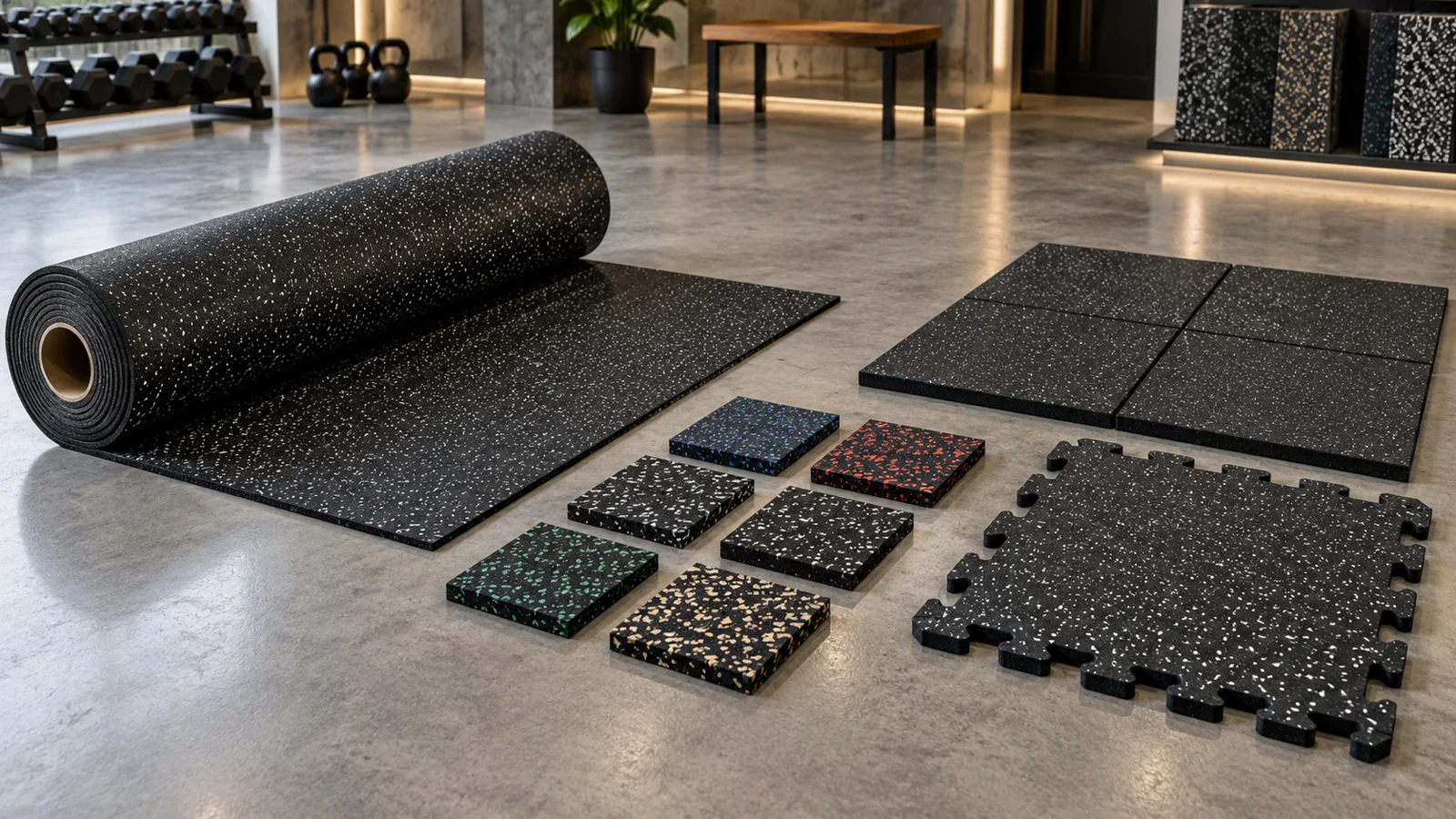
Rubber Flooring Rolls Vs Tiles
Choose rolls when low seam count and efficient coverage matter most. Choose tiles when handling, zoning, localized replacement or higher impact thicknesses matter most. Commercial gyms often combine both formats.
How rolls and tiles behave in a project
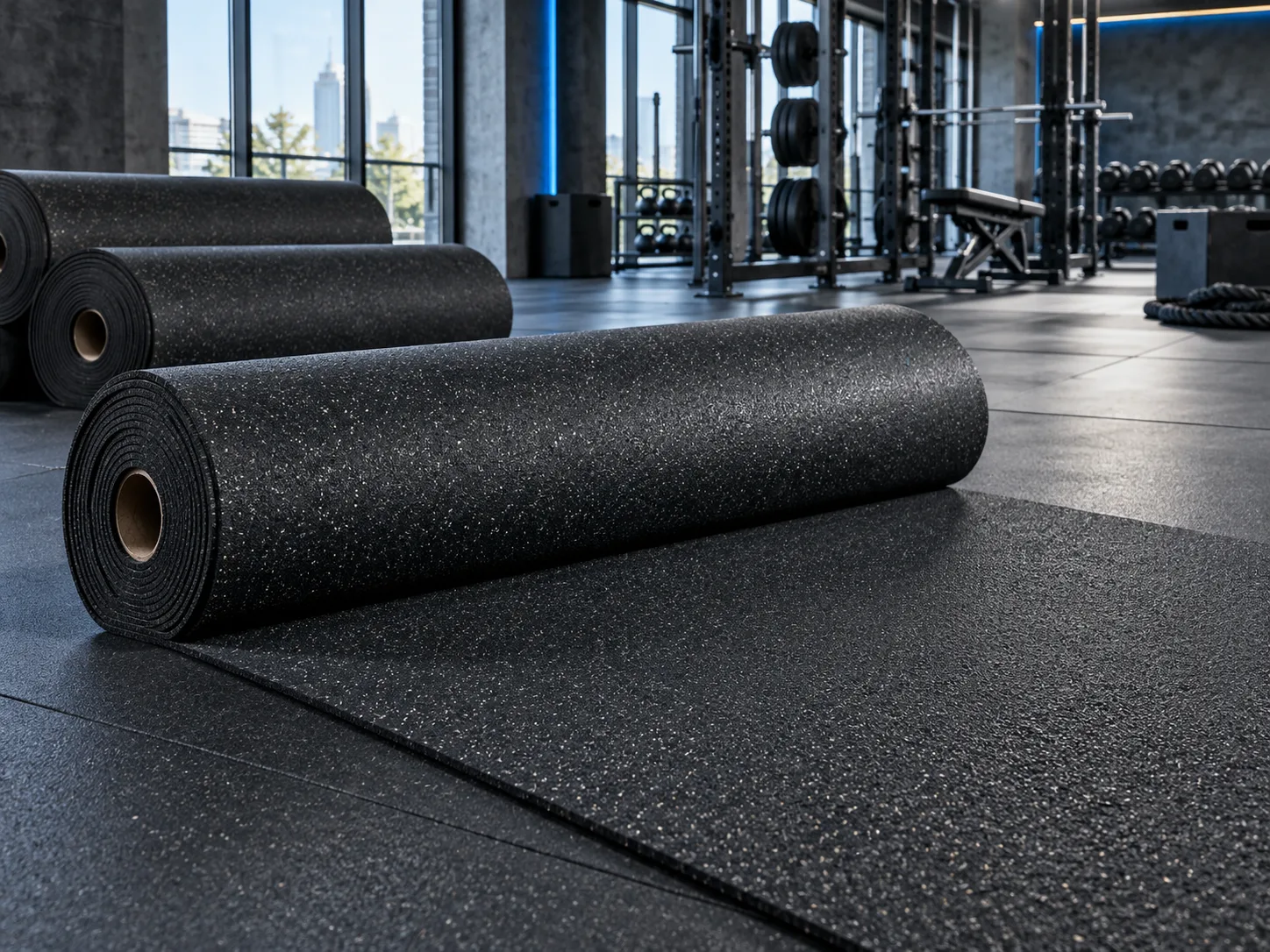
Rubber rolls cover large open areas with relatively few seams, creating a continuous appearance across cardio, machine and circulation zones. They are efficient after the room has been measured carefully, but heavy rolls need suitable handling and an installation plan.
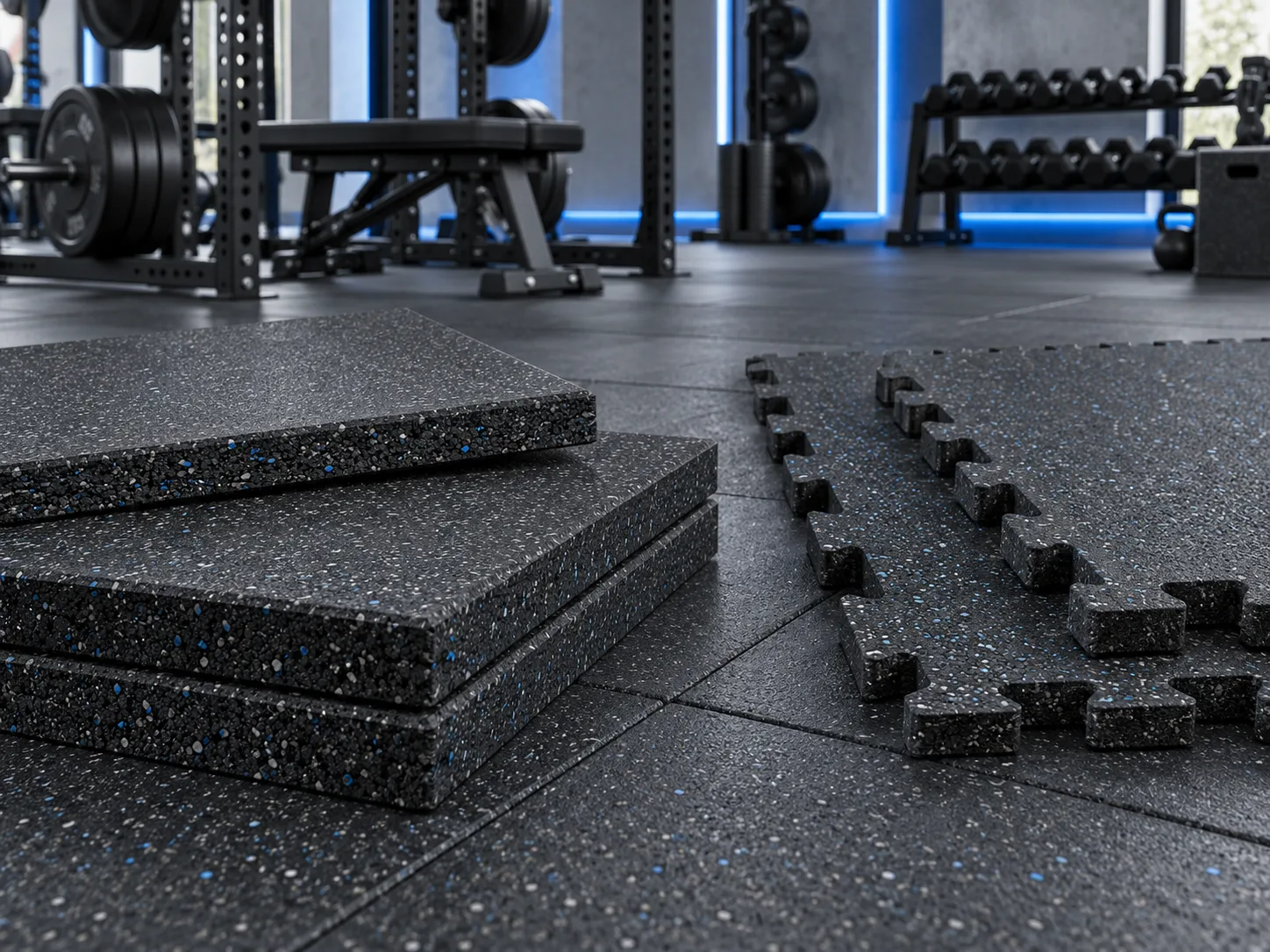
Tiles arrive as smaller modular pieces. They are easier to move through lifts and doorways, support color zoning and allow damaged areas to be replaced individually. Square tiles can be bonded for permanent projects; interlocking formats suit modular or phased installations.
Five factors that decide the format
First compare room geometry: columns, equipment islands and many small rooms increase cutting. Next review access, installer skill, shutdown time and whether the floor may move later. Then consider seam appearance, replacement needs and impact thickness.
Rolls generally suit large, regular spaces and thinner resilient surfaces. Tiles are often preferred where impacts are concentrated, where thickness is higher or where operational teams want serviceable modules. Neither format is universally superior.
Request the exact material sample, construction and packing data you plan to purchase. Product names alone are not enough for a reliable comparison.
Installation, cleaning and lifecycle value
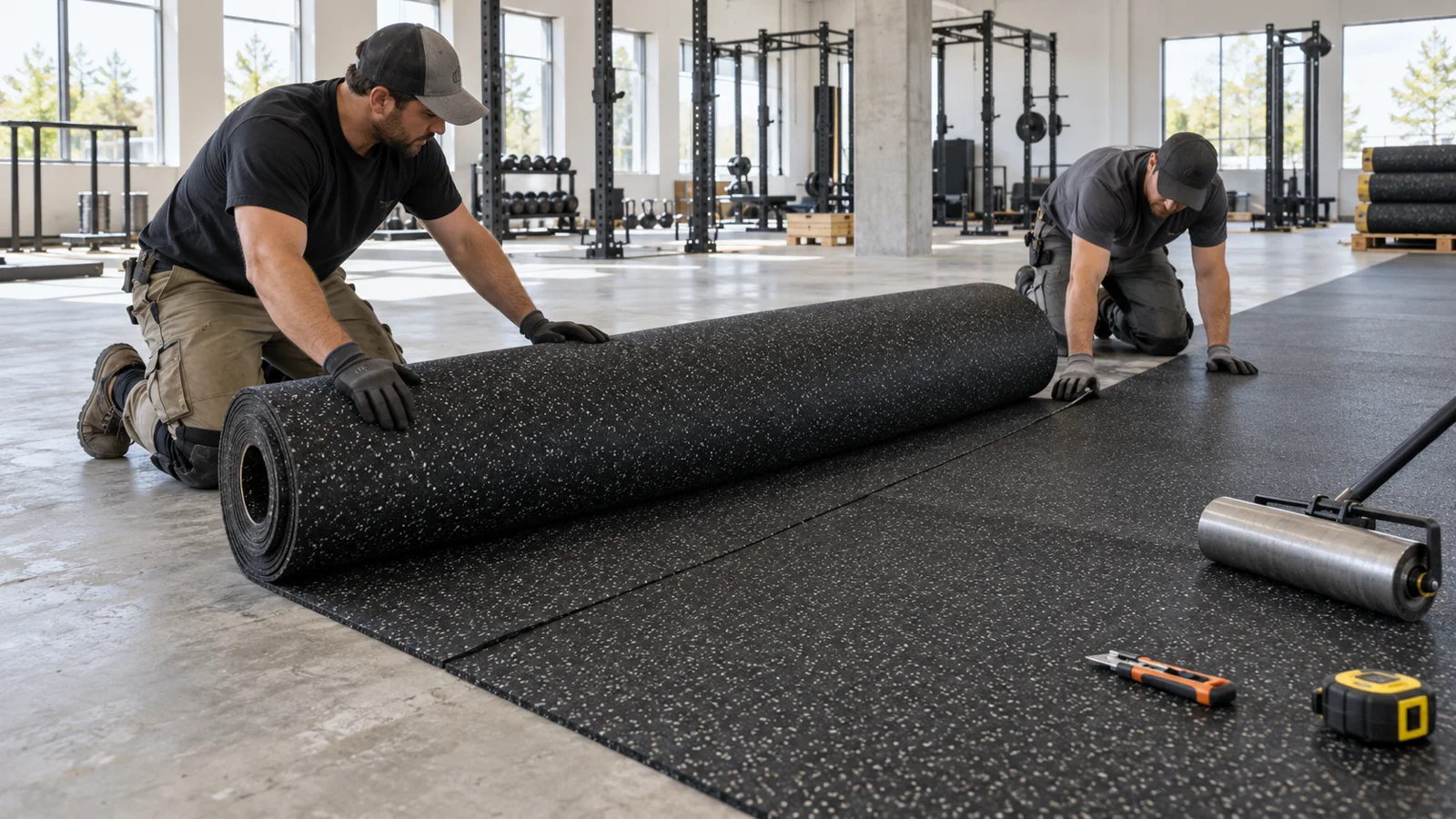
Roll seams need careful alignment, conditioning and adhesive control. Tile grids require accurate starting lines and consistent joint pressure. The subfloor must be sound, dry, clean and level for either format.
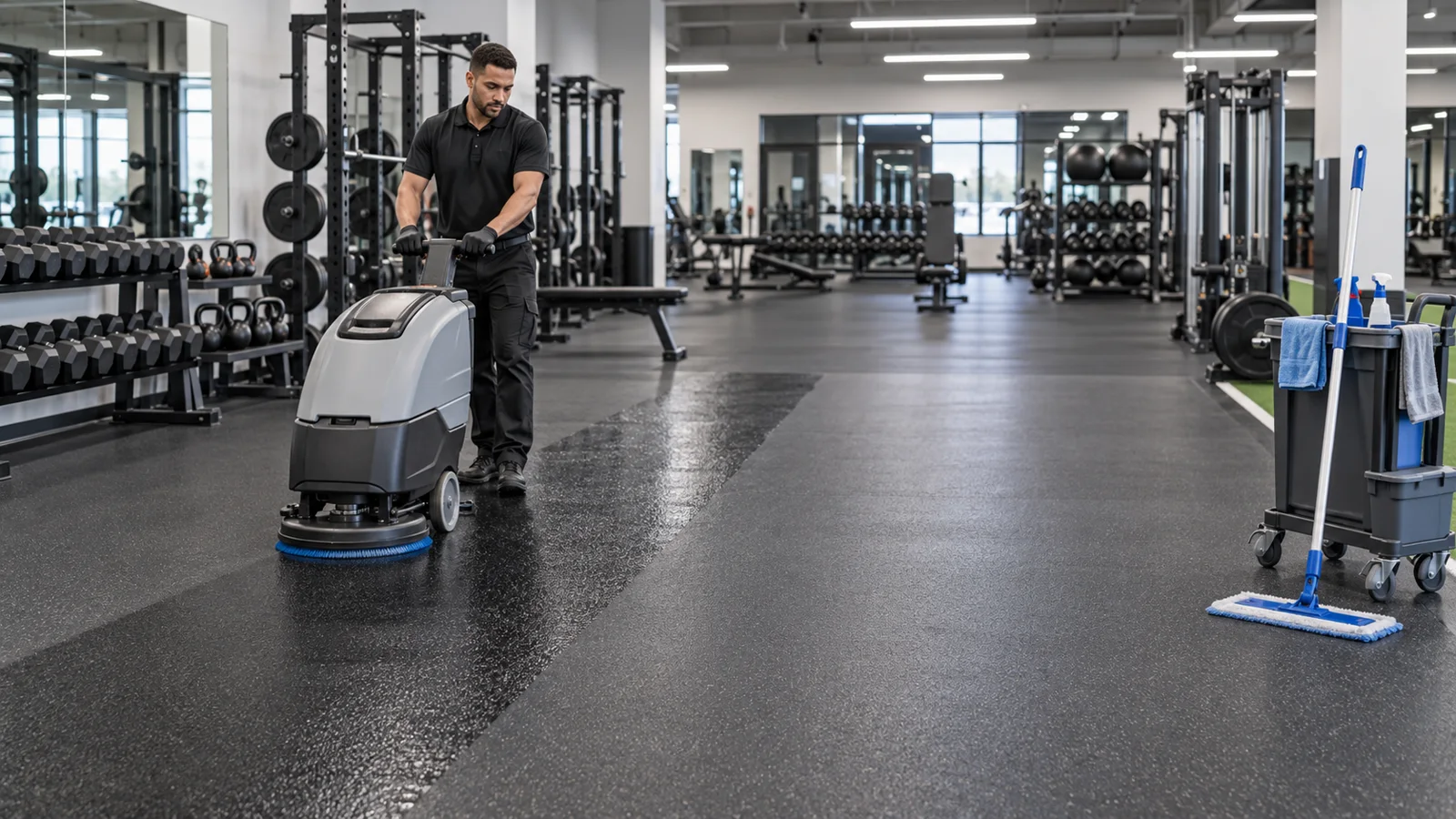
Cleaning performance depends more on surface texture, seam quality and housekeeping than on format alone. For lifecycle planning, include replacement access: a tile can be exchanged locally, while a damaged roll section may require a more visible repair.
When a hybrid layout works best
A practical commercial layout may use rolls in cardio and machine zones, impact tiles under racks and dumbbells, and turf for sled work. Coordinating finished heights, colors and junction details creates one visual system.
Ask the supplier for a zone schedule and samples of every adjoining surface. Confirm reducers, edge trims, adhesive compatibility and the exact direction of roll installation before production quantities are finalized.
Decision table
| Factor | Rubber rolls | Rubber tiles |
|---|---|---|
| Best use | Large cardio, machine and circulation zones | Strength, free weights and modular rooms |
| Seams | Fewer long seams | Regular grid of joints |
| Handling | Heavy; needs planned access | Smaller pieces; easier to move |
| Replacement | Section repair can be visible | Individual pieces can be replaced |
| Typical thickness | Commonly thinner systems | Wide range including impact tiles |
Buyer checklist
Use this list in your project brief or RFQ so suppliers can recommend and quote against the same requirements.
- ✓Room shape and total area
- ✓Access route and roll handling limits
- ✓Impact zones and required thickness
- ✓Permanent or modular installation
- ✓Seam appearance and color zoning
- ✓Future replacement and phased expansion
 Installation · 10 min
 Maintenance · 8 min
 Procurement · 10 min