How to Clean Rubber Gym Flooring
Protect appearance and service life with the right cleaning routine. This guide turns the topic into practical decisions, supplier questions and a project-ready checklist.
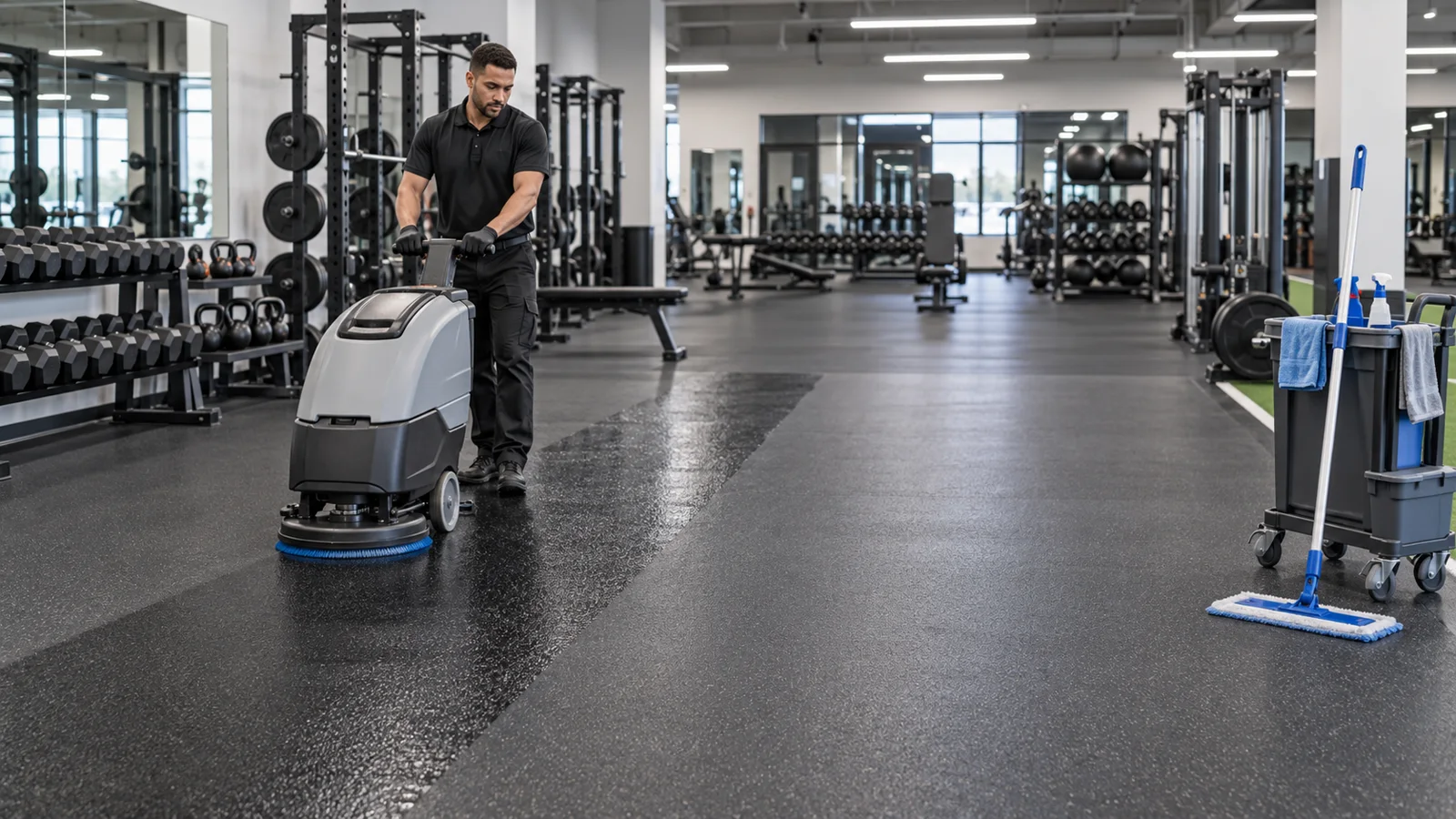
How To Clean Rubber Gym Flooring
Remove grit daily, clean spills promptly and use a diluted pH-neutral cleaner with the least aggressive pad that works. Avoid flooding seams, harsh solvents, oily residues and unapproved coatings.
Create a simple cleaning schedule
Dry soil behaves like abrasive grit under shoes and equipment wheels. Vacuum or dust-mop high-traffic areas daily, then damp-clean based on traffic. Place entrance matting outside the rubber zone to reduce tracked dirt.
Treat sweat, drinks and chalk before they spread. Use clean tools assigned to the gym floor so oils and chemicals from other rooms are not transferred onto rubber.
Use the right chemistry and machine
Begin with a pH-neutral cleaner diluted based on its instructions. Test in a hidden area, use cool or warm water, agitate with a soft brush or suitable auto-scrubber pad, recover dirty solution and rinse only when required by the cleaner.
Avoid strong solvents, undiluted degreasers, gasoline-based products and oily soaps. Too much chemical leaves a film that attracts soil and can make the surface slippery. Never assume a coating or disinfectant is compatible without testing.
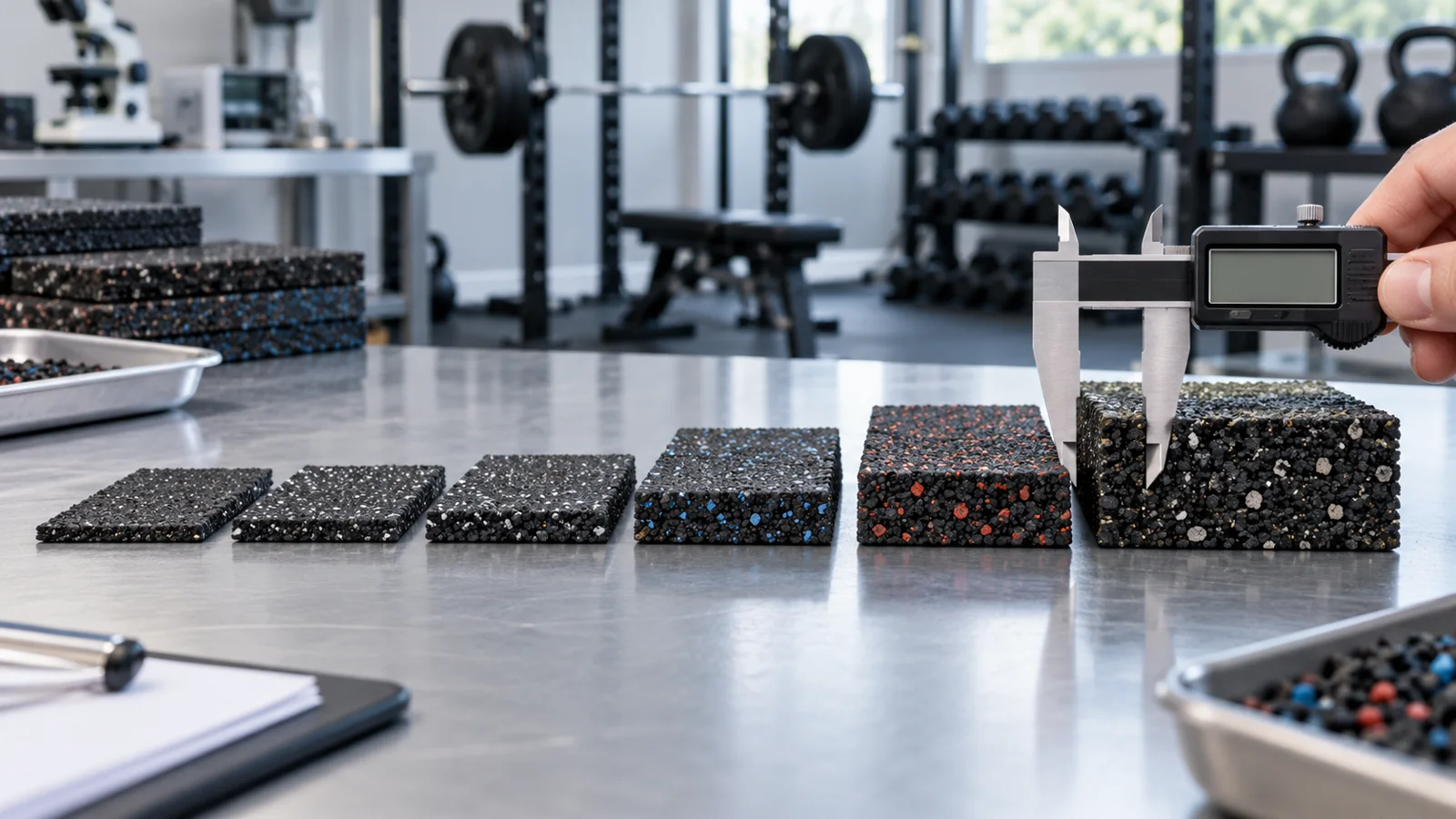
Request the exact material sample, construction and packing data you plan to purchase. Product names alone are not enough for a reliable comparison.
Handle spots without damaging the surface
Identify the soil first. Adhesive, rubber transfer, drinks and metal marks may need different treatment. Work from the mildest method upward, keep contact time controlled and blot rather than spreading a concentrated stain.
For a new facility, agree on a small sample panel and cleaning test before opening. This helps the operator select brushes, dilution and frequency without experimenting on the finished installation.
Combine cleaning with inspection
During cleaning, check open seams, lifted edges, damaged interlocks, loose transitions and deep cuts. Replace modular pieces early and investigate repeated damage around equipment feet or rolling routes.
Document products and dilution ratios for staff. Consistent cleaning normally performs better than occasional aggressive restoration and supports a predictable appearance across multiple sites.
Decision table
| Frequency | Action | Purpose |
|---|---|---|
| Daily | Vacuum or dust-mop; spot clean | Remove abrasive grit and spills |
| Weekly | Damp mop or auto-scrub as traffic requires | Lift body soil and residues |
| Monthly | Inspect seams, edges and equipment zones | Find wear before it spreads |
| As needed | Controlled spot treatment and tile replacement | Correct localized damage |
Buyer checklist
Use this list in your project brief or RFQ so suppliers can recommend and quote against the same requirements.
- ✓pH-neutral cleaner approved for rubber
- ✓Dedicated vacuum, mop or auto-scrubber
- ✓Soft brush or non-aggressive pad
- ✓Measured dilution and clean recovery water
- ✓Entrance matting and spill response kit
- ✓Inspection log for seams and damaged tiles
 Specification · 11 min
 Product comparison · 9 min
 Weight rooms · 12 min