Movement stability
Select grip and density around lateral movement and loaded carries.
Zoned rubber and turf layouts for lifting, conditioning, agility and sled work.
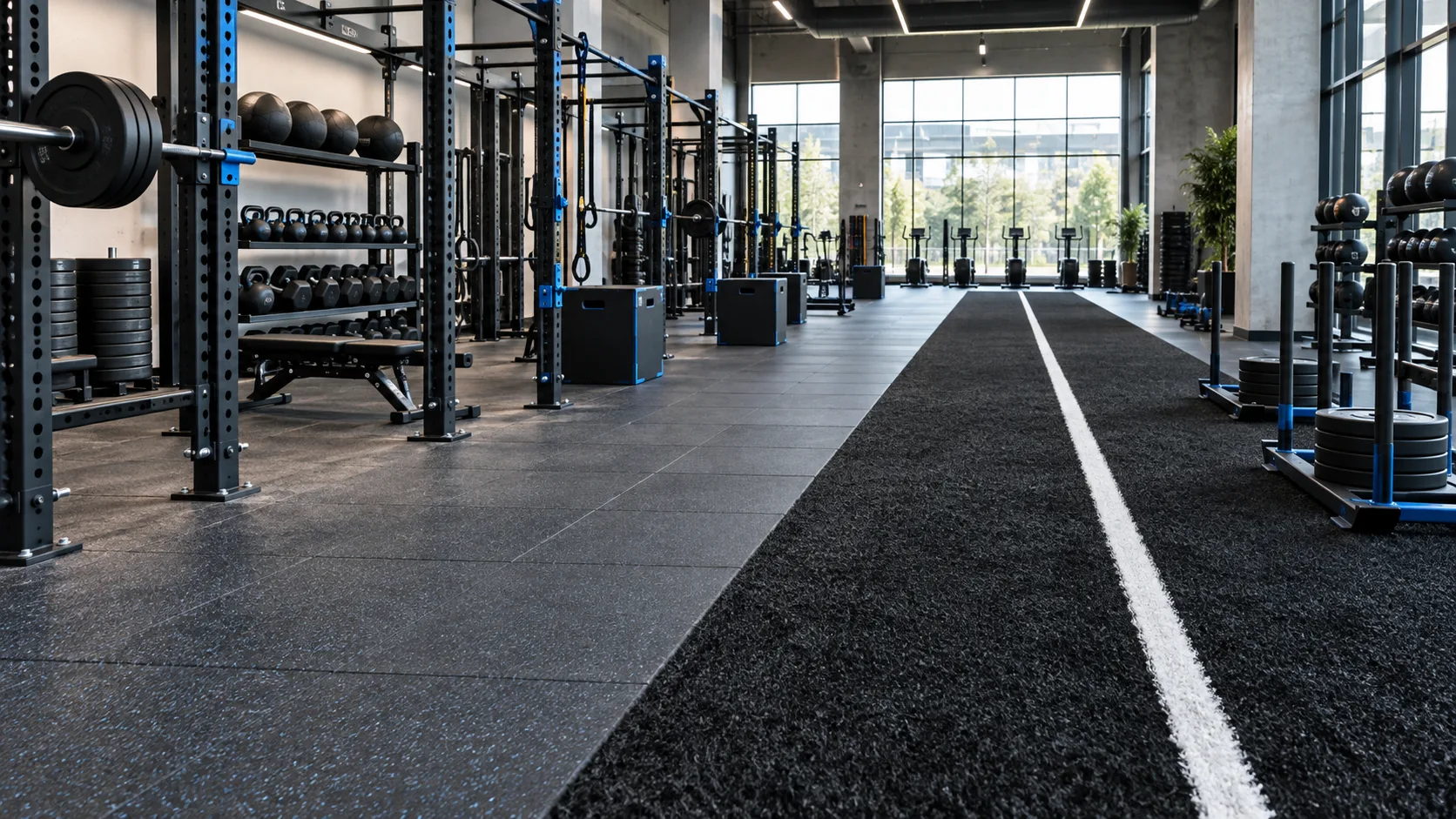
Functional training moves quickly between lifting, jumps, carries, sprints and sled work. A successful floor separates high-impact rubber zones from directional turf lanes while keeping transitions level and easy to maintain.
The recommendation should also account for installation access, cleaning frequency, visual zoning, future replacement and shipment format. A room drawing and equipment list produce a complete quotation basis beyond floor area alone.
Discuss Your Project→Select grip and density around lateral movement and loaded carries.
Specify pile, backing, lane width and fixing method together.
Coordinate surface heights where rubber meets turf or platforms.
Add lanes, numbers, logos and color accents to guide training flow.
The ranges below support early sourcing conversations. Select the final assembly using the material sample, equipment and building conditions.
Kettlebells, barbells and bodyweight work
Push, pull and acceleration drills
Jumps, boxes and circuits
Mobility and floor exercise
Open each product page for specifications, installation guidance and sample options.
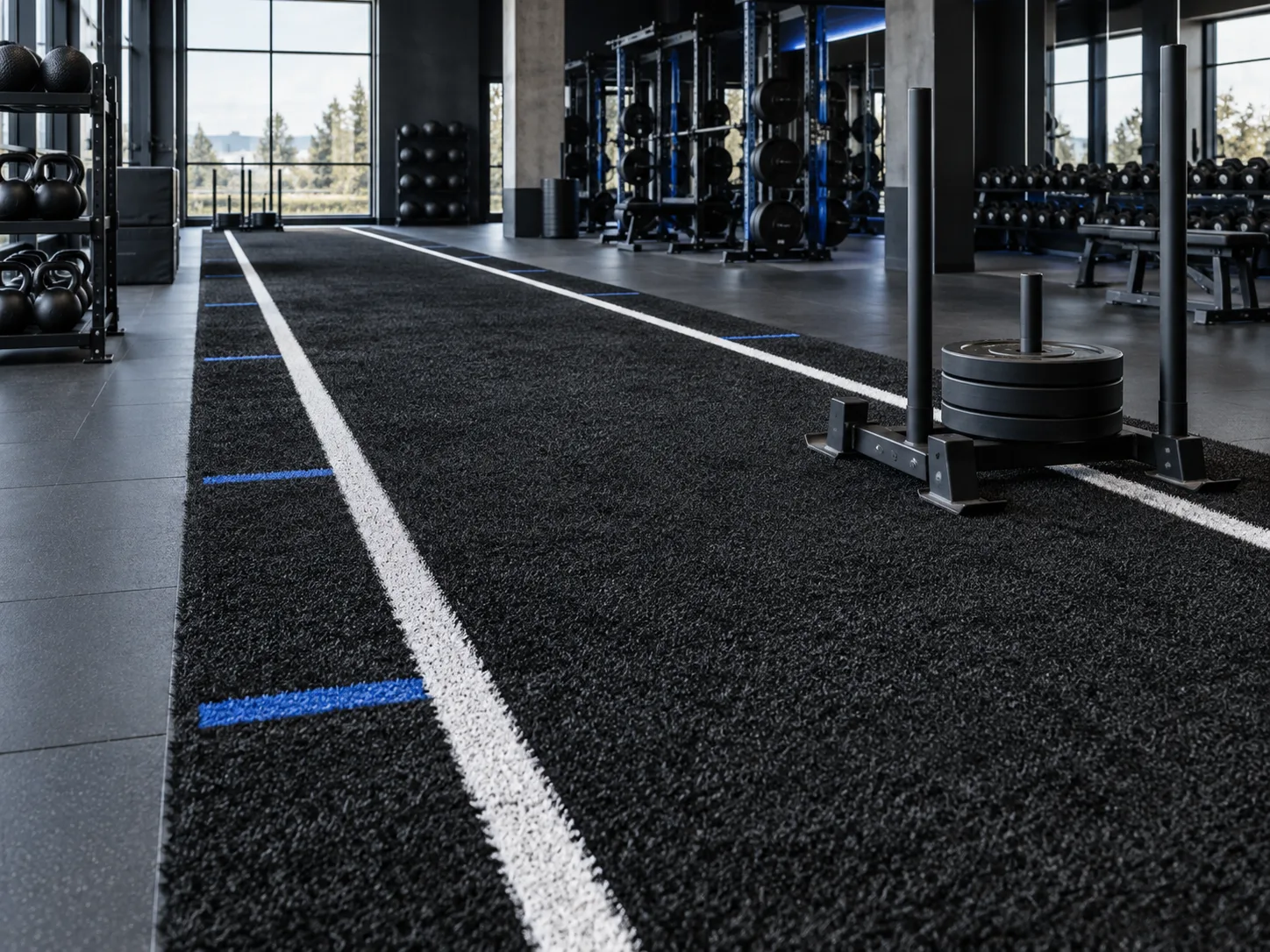
Low-friction training turf with custom lanes, markings and logo options.
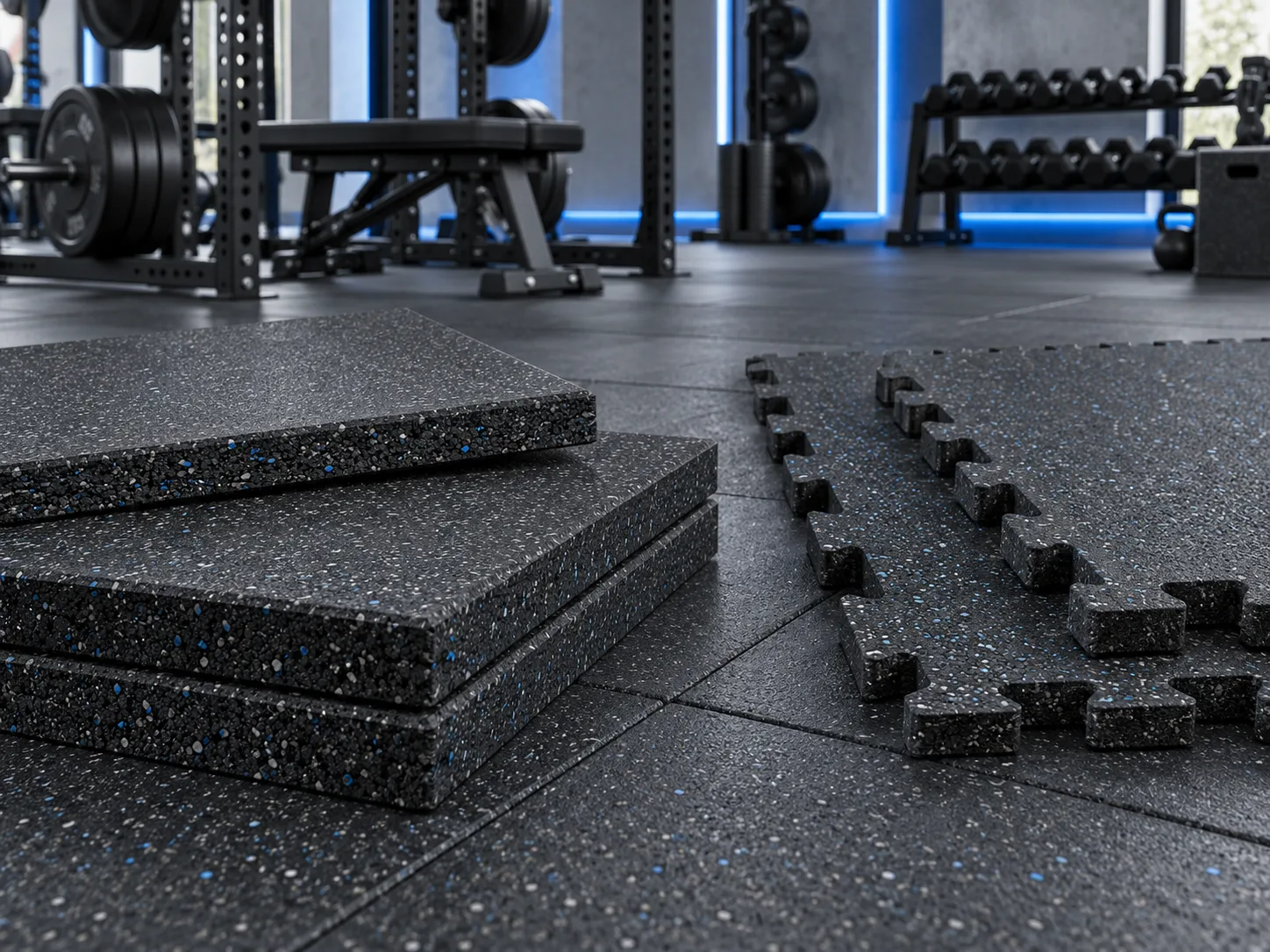
High-density modular tiles for free-weight rooms and commercial strength areas.
Fast-install interlocking protection for studios, home gyms and temporary fit-outs.
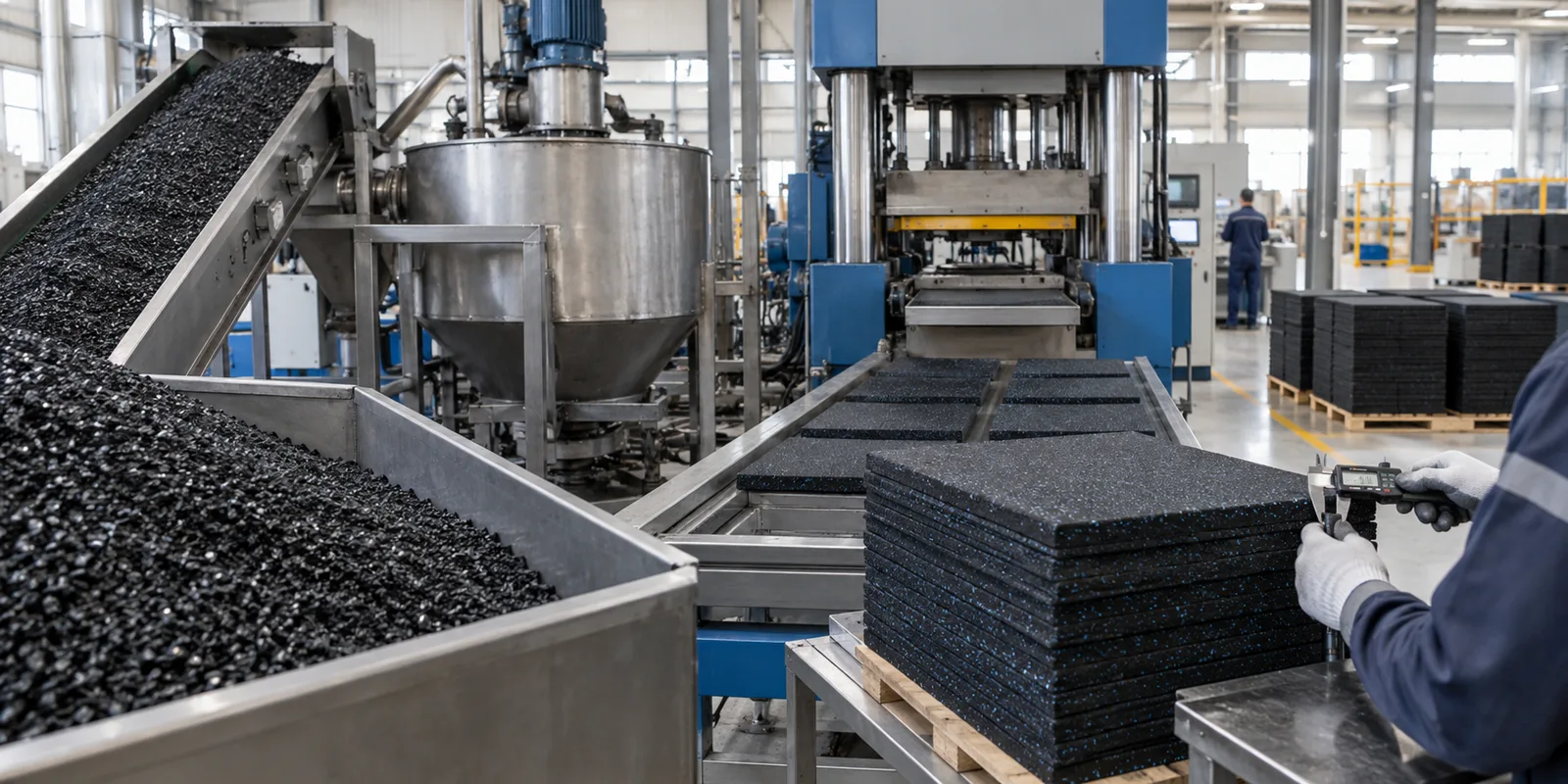
A reliable quotation describes the whole flooring system and how it will be installed, cleaned, packed and repeated.
Dimensions, columns, doorways, transitions and total floor area.
Machines, racks, dumbbells, barbells, sleds and storage.
Activities, expected traffic, footwear, drop behavior and operating hours.
Subfloor, floor level, rooms below, moisture and acoustic concerns.
Color palette, EPDM blend, logo, lanes, numbers and packaging.
Destination, schedule, installation plan and shipment preference.
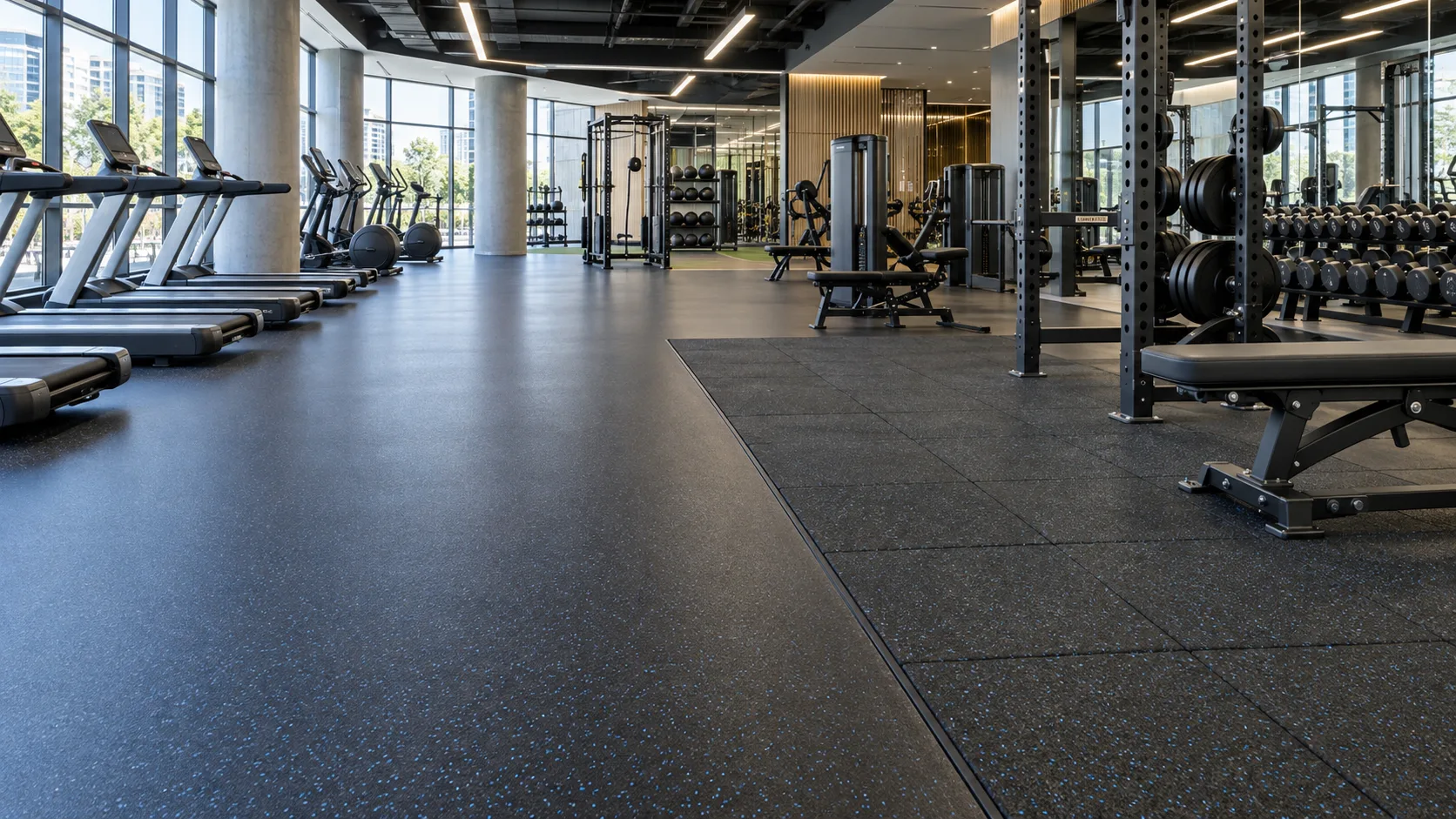
Durable multi-zone flooring that balances impact protection, acoustics, appearance and daily maintenance.
Explore solution →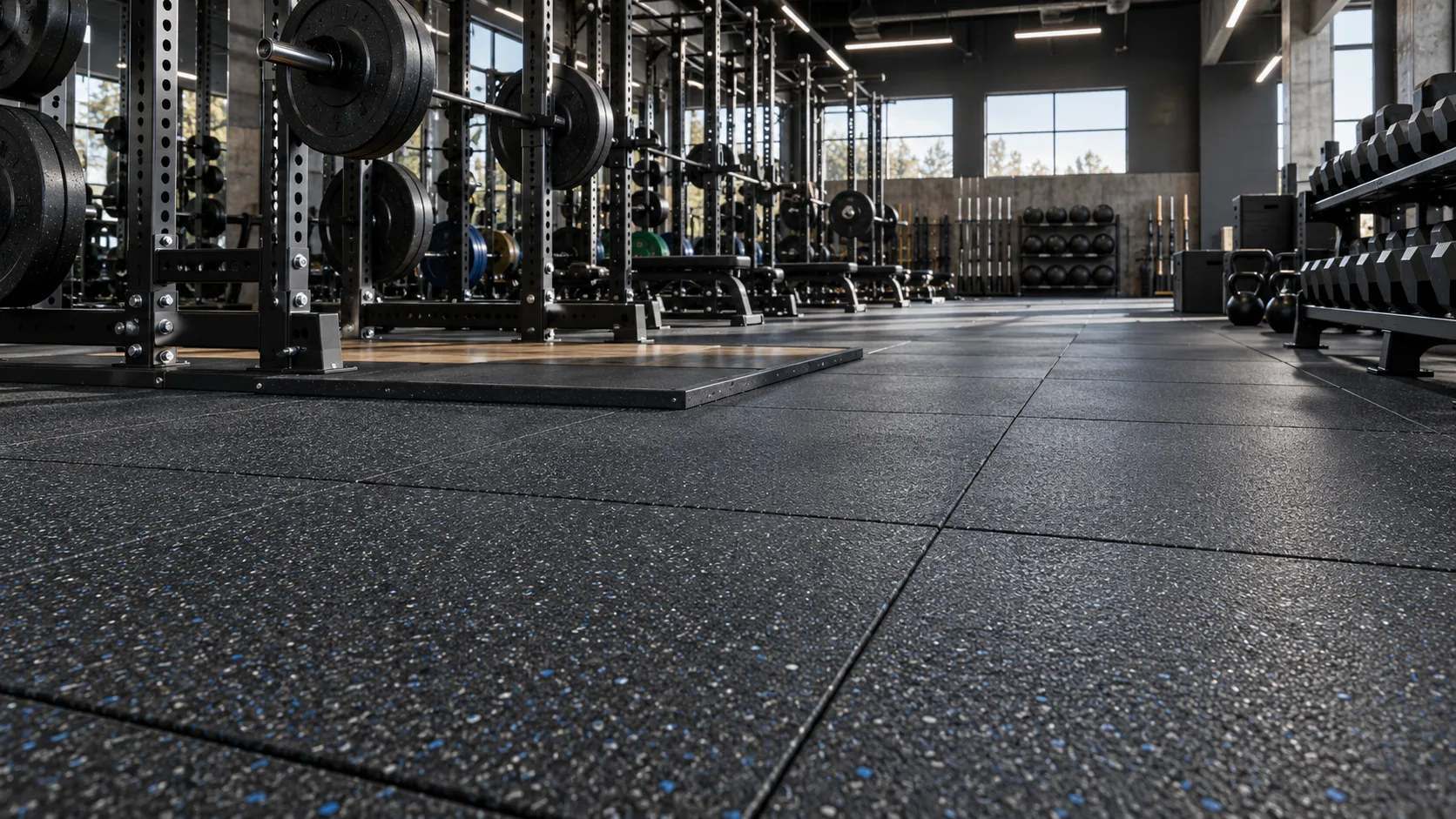
Thicker impact tiles and underlay combinations for racks, concentrated loads and dropped weights.
Explore solution →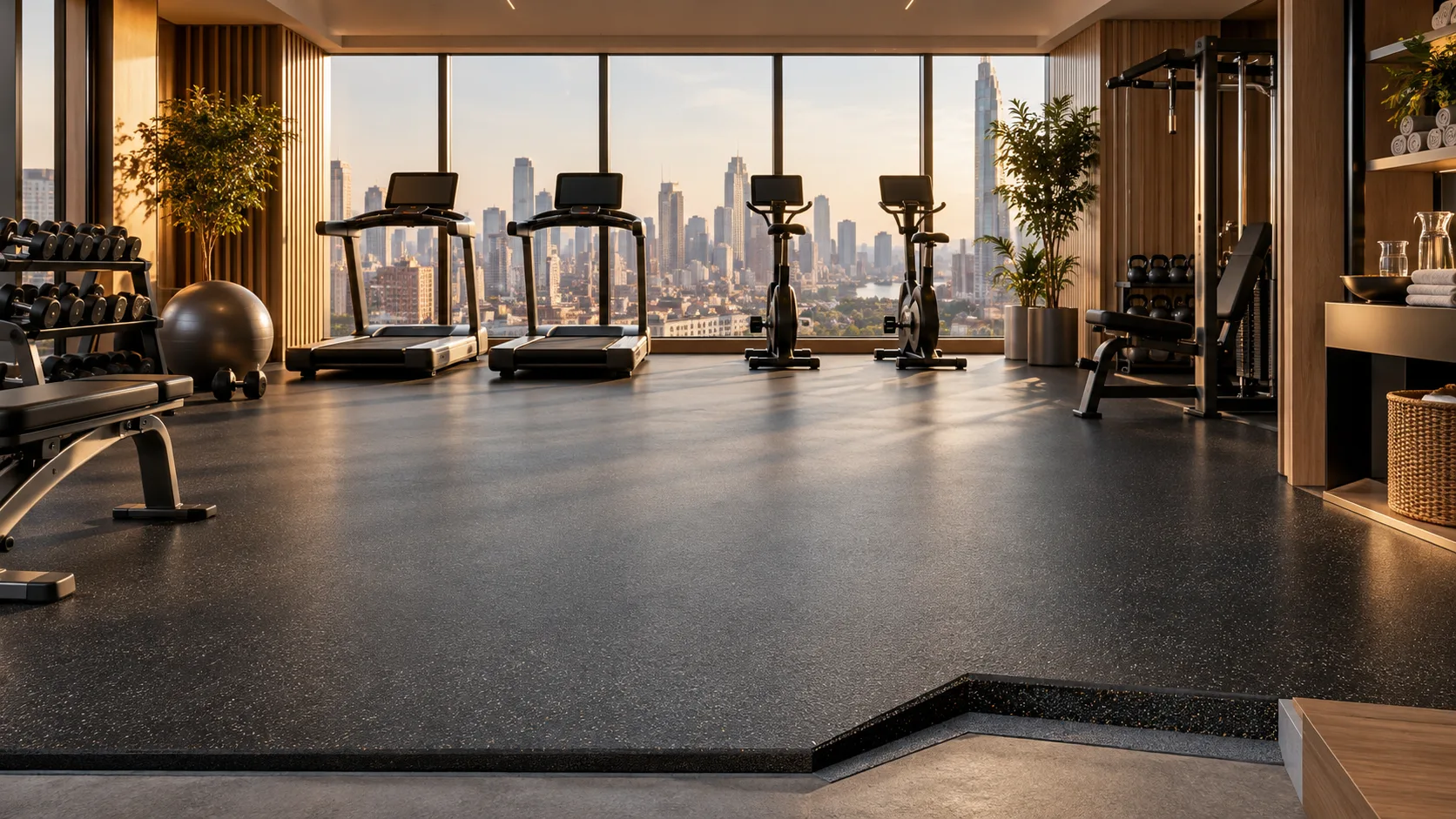
Acoustic-conscious flooring for fitness spaces above or beside guest rooms, homes and shared spaces.
Explore solution →The best system depends on the exact zones inside the space. For hiit studios · functional gyms · sled and agility zones, begin with the equipment, activity, impact exposure and subfloor, then compare the compatible formats shown on this page.
A practical early-planning range is 10–30 mm plus turf. Thickness alone is not a performance guarantee; density, construction, drop height, fixing method, underlay and the supporting floor also matter.
Rolls reduce seams and efficiently cover large cardio or machine areas. Tiles are easier to handle, zone, replace and build into thicker impact systems. Many facilities use both.
Yes. Depending on the selected format, DLJ FITNESS can discuss EPDM fleck blends, custom colors, logos, turf lanes, numbers, labels and private-label packaging.
Yes. B2B buyers can request relevant product, color, surface and thickness samples to compare before bulk production.
Send room dimensions or drawings, equipment list, training activities, subfloor, destination, target schedule and any color, logo or packing requirements.
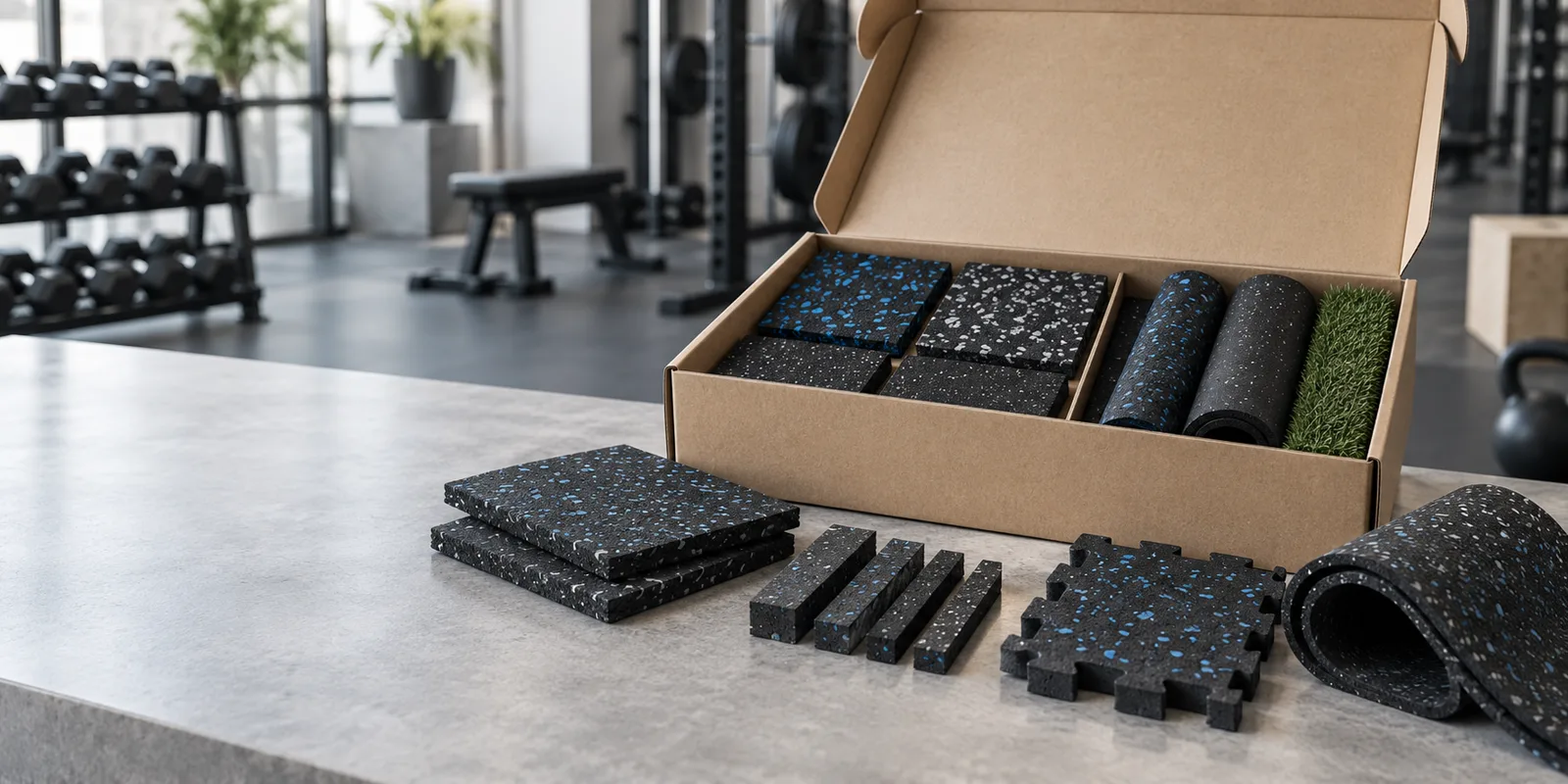
Compare surface texture, density, granule size, color blend and thickness in your own market. We prepare a focused sample pack around your project—not a random box of swatches.
Share your floor area, application and destination. We will recommend the right system and prepare a factory quotation.