Gym Flooring Landed Cost Guide for Importers
Calculate material, packing, freight, insurance, duties, port charges and inland delivery when importing gym flooring.
1.Define the landed-cost boundary
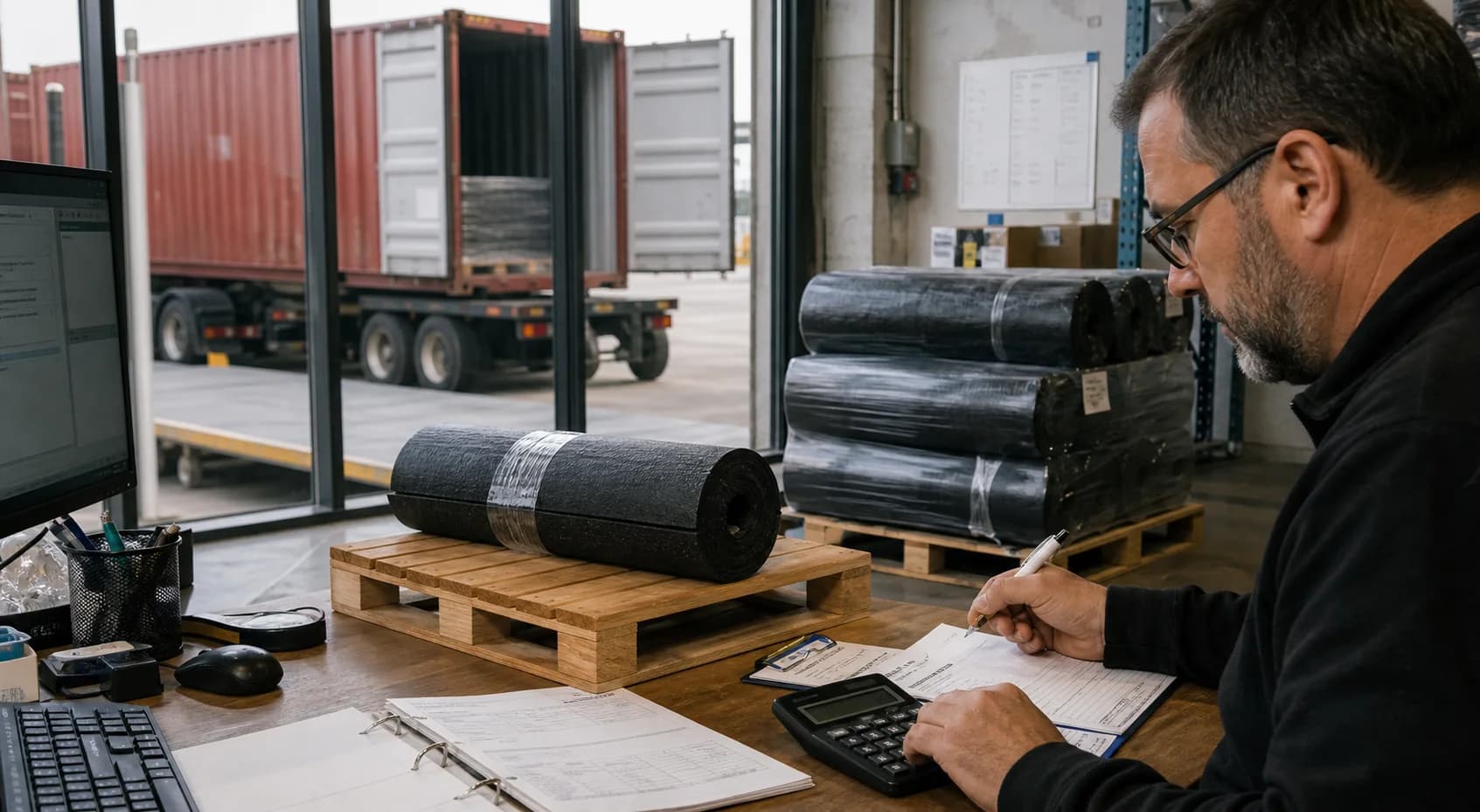
Decide whether the comparison ends at port, warehouse or project site. Add every cost required to reach that point, then divide by usable ordered area or sellable units. Keep recoverable taxes separate where local accounting rules permit.
| Component | Source | Allocation basis |
|---|---|---|
| Product and packing | Supplier quotation | SKU or order |
| Origin charges | Forwarder | Shipment |
| Main freight and insurance | Forwarder or carrier | Weight or volume |
| Duty and taxes | Customs adviser | Customs value and code |
| Destination charges | Agent, port and warehouse | Shipment |
| Inland delivery | Local carrier | Pallet, weight or trip |
2.Use ordered quantity, not room area
The imported quantity includes cutting waste, spare stock and packing increments. Use that quantity in freight and duty calculations. Use expected usable or sellable quantity when evaluating project or distributor margin so waste is not hidden.
3.Normalize Incoterms
An EXW offer excludes different costs and responsibilities from FOB, CIF or DDP. Map each quote to the same receiving point. Confirm who handles export clearance, main carriage, insurance, import clearance and final delivery rather than comparing the headline product total.
4.Allocate mixed-shipment costs
When rolls, tiles and accessories ship together, allocate shared costs consistently—by weight, volume, value or a documented hybrid method. Heavy dense tiles can consume payload while light bulky goods consume volume, so one method may distort SKU economics.
5.Add commercial risk allowances
Consider exchange-rate movement, bank charges, storage, demurrage exposure, inspection, breakage or damage reserve, financing time and local delivery constraints. Update the model when packing or freight changes; do not reuse an old landed rate indefinitely.
Buyer Questions
Is CIF price the same as landed cost?+
No. CIF normally does not include all destination, customs and inland costs. Confirm the exact trade term and local charges.
Should duty be calculated on product price only?+
Customs valuation rules vary. Use the applicable tariff code and advice from a qualified customs professional in the destination country.
How should samples be costed?+
Track sample and courier cost separately as product qualification or sales expense rather than distorting bulk landed cost.
How often should the model be updated?+
Update it when product, packing, exchange rate, freight, tariff treatment or destination charges change.