Rubber Flooring Container Loading Planning
Plan rubber rolls, tiles, pallets, container weight and unloading before confirming an international gym flooring order.
1.Collect packing data by SKU
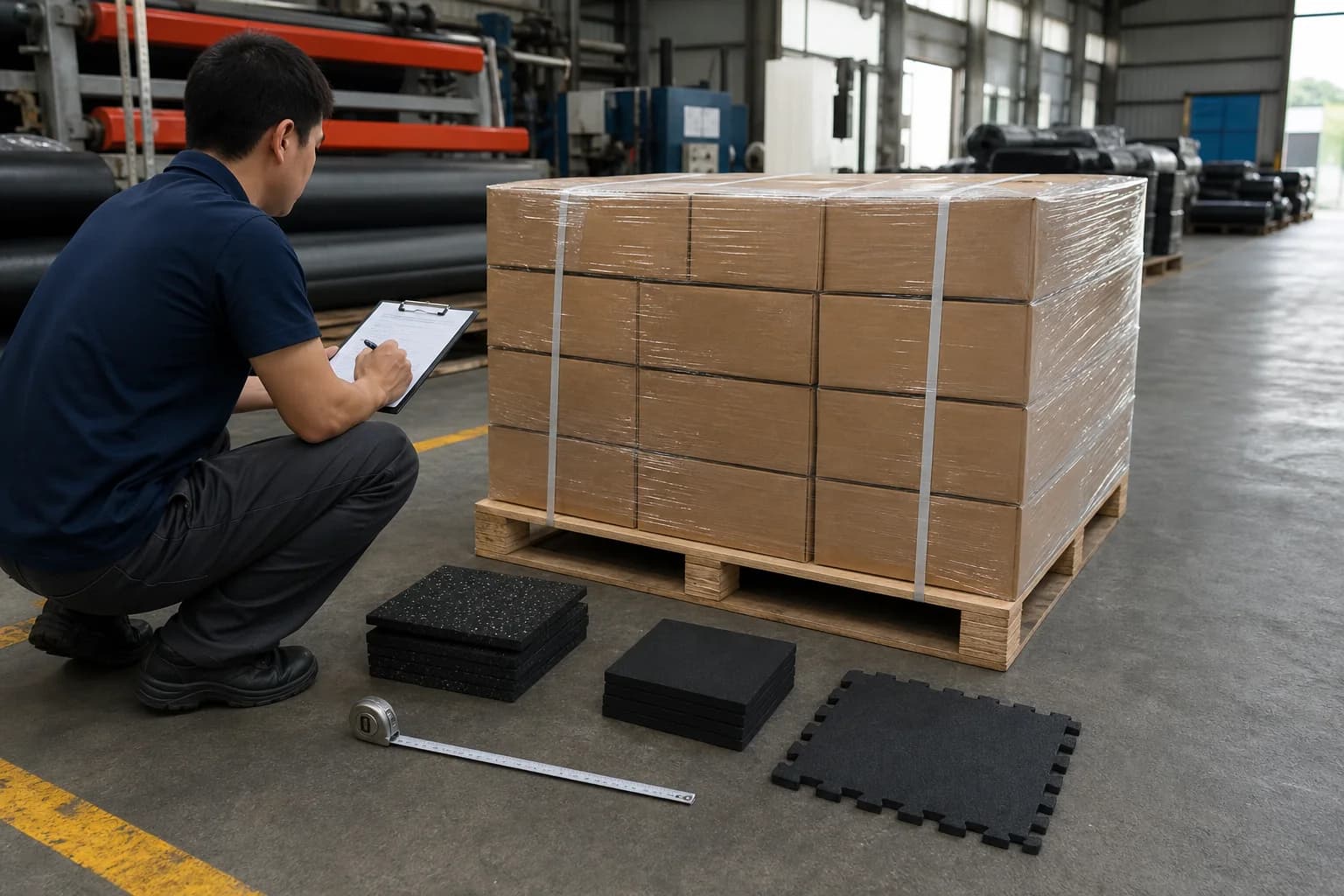
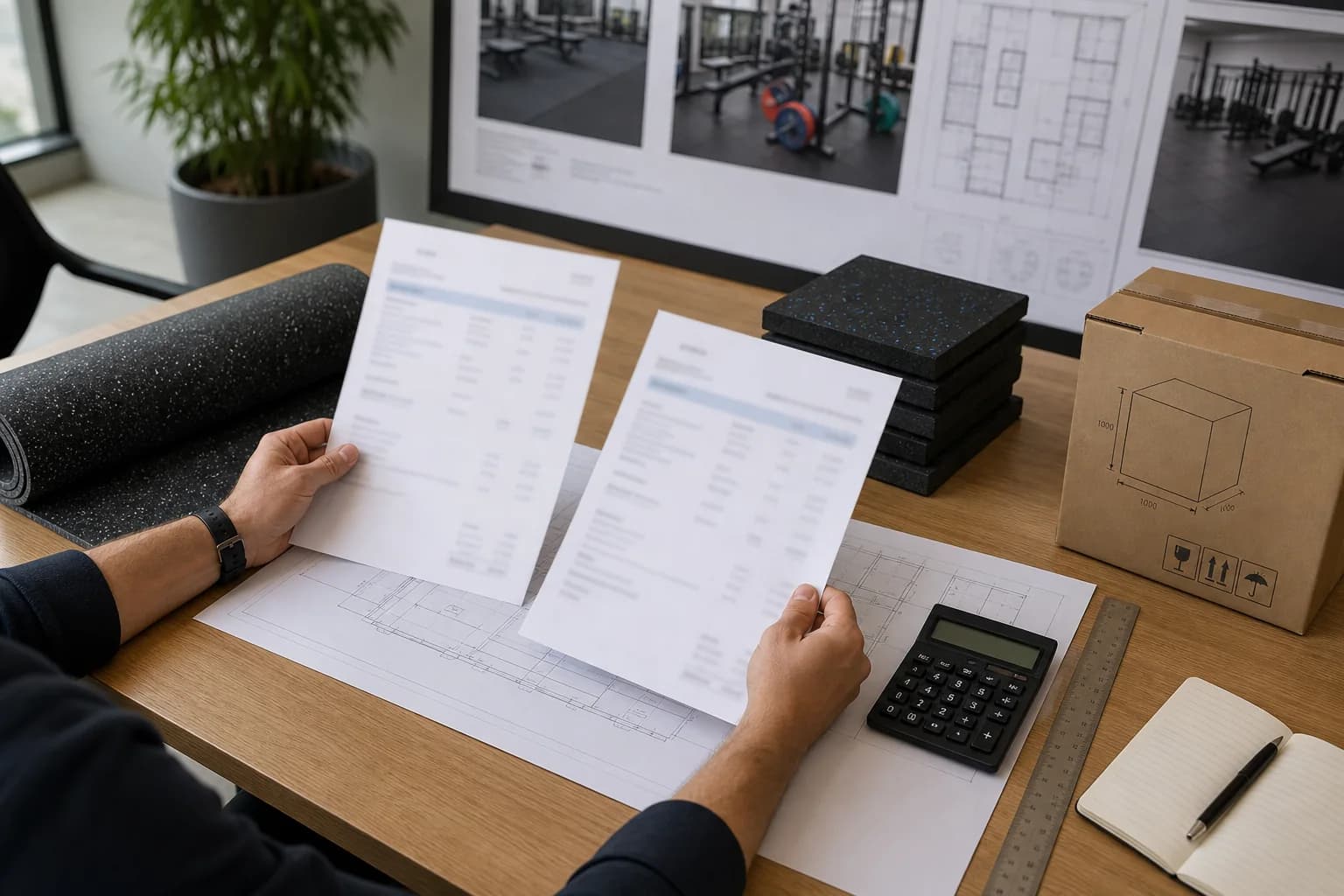
For every roll, carton or pallet, record pieces, net weight, gross weight and external dimensions. Confirm whether dimensions include pallet and protection. Mixed orders require a line-by-line packing schedule because a theoretical square-meter calculation cannot show actual loadability.
| Input | Why it matters | Evidence |
|---|---|---|
| Gross unit weight | Controls legal and equipment limits | Approved packing specification |
| External dimensions | Controls stowage and voids | Pack measurement |
| Load orientation | Protects rolls and tile edges | Loading sketch |
| SKU sequence | Supports destination unloading | Packing list order |
| Container condition | Reduces moisture and damage risk | Pre-loading photos |
2.Balance weight and volume
Rubber tiles and dense rolls are heavy relative to their volume. Container payload, road restrictions and axle distribution vary by route. The freight forwarder must confirm the legal plan; the factory supplies packing weights and a proposed arrangement.
3.Protect products during the voyage
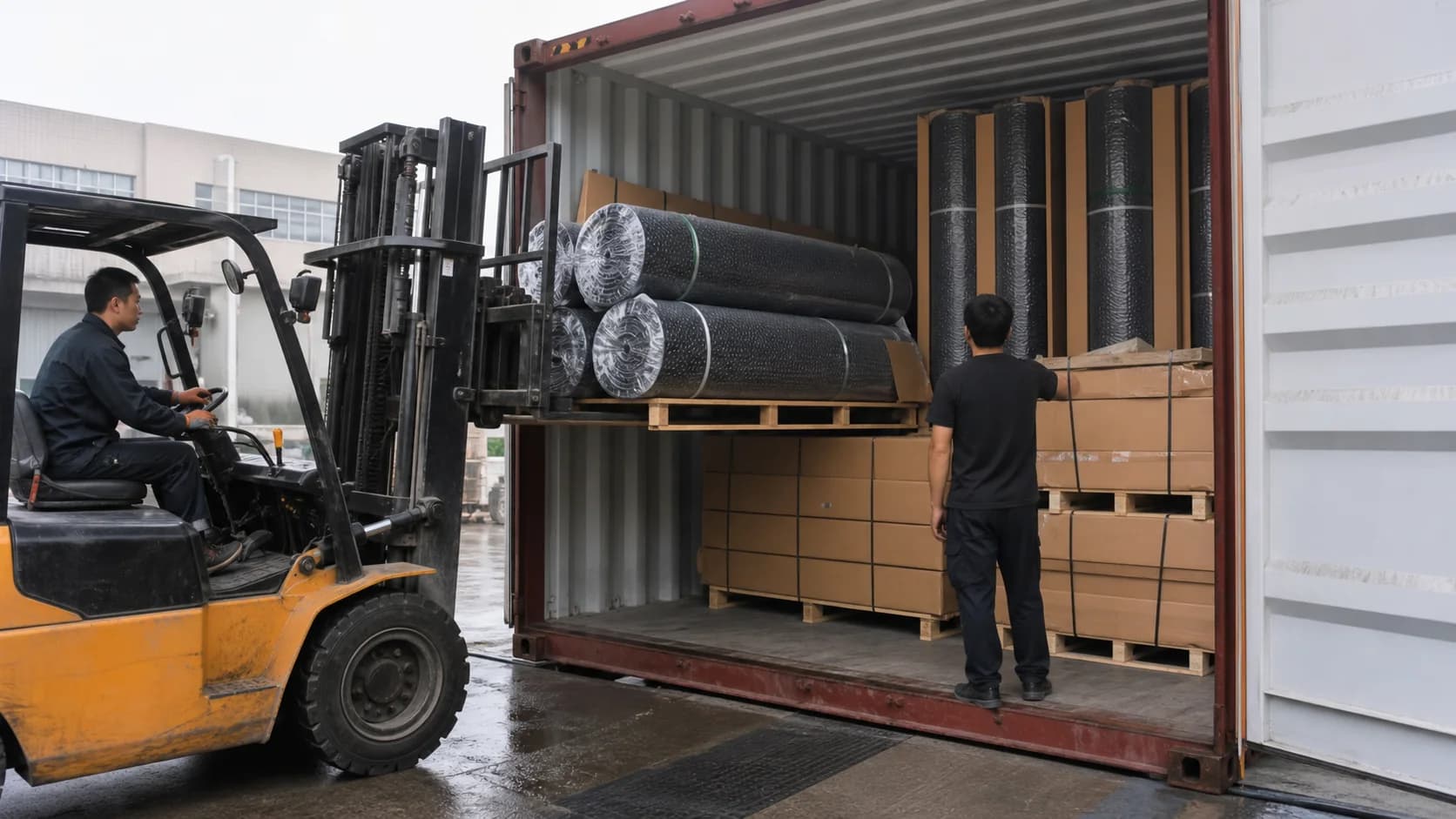
Roll ends, tile corners and cartons need protection from movement, compression and moisture. Confirm wrap, straps, corner boards, pallet condition and securing method. Avoid placing concentrated loads on packaging that was not designed to carry them.
- →Dry and structurally sound container
- →Protected edges and roll ends
- →Stable pallet and carton stacks
- →Load restraint appropriate to the route
- →No unsupported heavy items above fragile packs
4.Sequence a mixed-product load
Place the unloading plan alongside the loading plan. Products needed first at the destination should remain accessible when practical. Separate SKUs visibly and ensure carton marks correspond to the packing list without exposing confidential buyer information in public photos.
5.Create a loading record
Photograph the empty container, product packaging, each loading stage, final restraint, closed doors and seal. Reconcile the count with the commercial packing list. This record supports receiving and makes later replenishment planning more accurate.
Buyer Questions
Can container quantity be calculated from square meters?+
Only after the exact product, packing unit, dimensions and gross weight are confirmed. Equal areas can have very different weights and package shapes.
Are pallets always better for rubber flooring?+
Pallets improve handling and protection in many routes but consume payload and volume. The destination equipment and damage risk should decide.
Can rolls and tiles ship together?+
Yes when the load plan protects both formats, respects weight distribution and keeps SKU counts identifiable.
Who approves the legal container weight?+
The exporter and freight forwarder coordinate route and carrier requirements using confirmed cargo data. Local road and import rules must also be checked.