How to Choose Commercial Gym Flooring
A practical selection framework for matching gym flooring formats, thickness and performance to training zones, subfloors and project priorities.
1.Quick answer
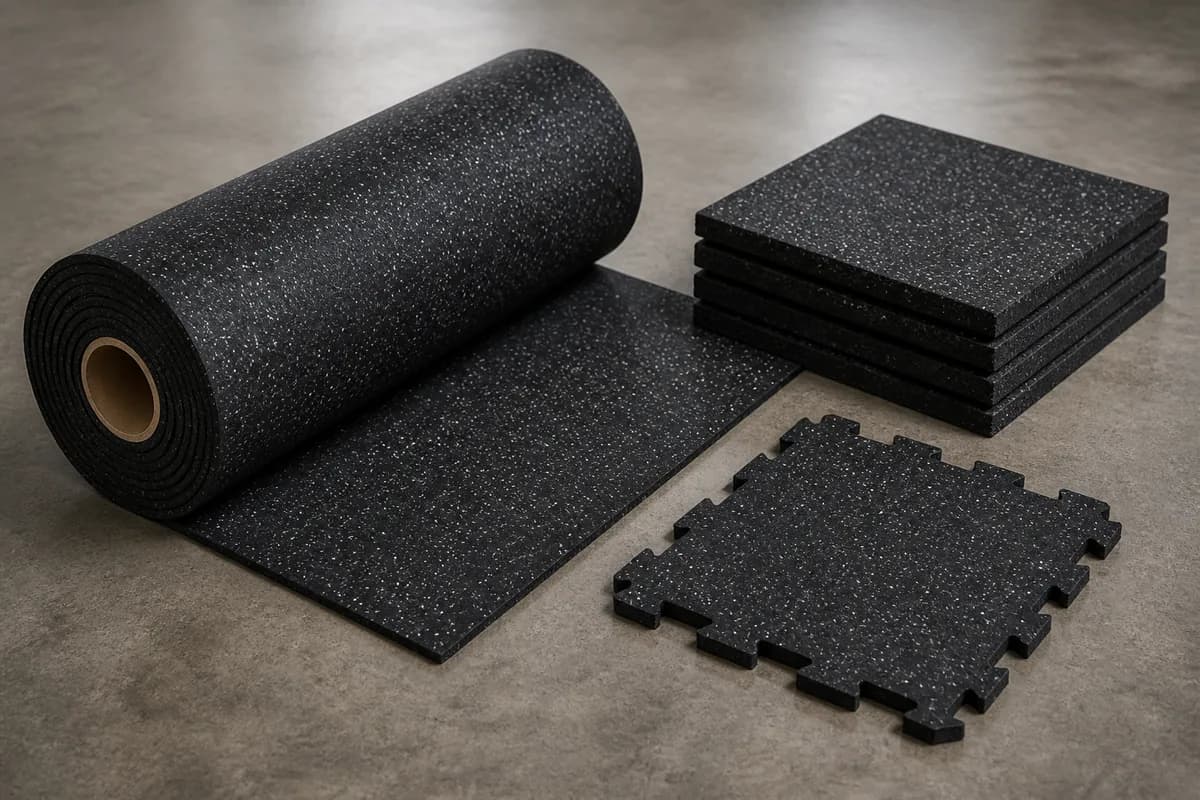
For most commercial gyms, rubber rolls suit broad cardio and general training areas, while rubber tiles or dedicated mats suit strength and repeated-impact zones. The correct system depends on load, drop behavior, subfloor and acoustic risk.
| Format | Best suited to | Installation | Replacement | Key buying check |
|---|---|---|---|---|
| Rubber rolls | Large general areas | Usually adhered | Section repair | Roll width, seams and layout |
| Rubber tiles | Strength and mixed zones | Adhered or loose-laid by system | Individual tile | Size, density and edge tolerance |
| Interlocking tiles | Flexible or smaller spaces | Mechanical interlock | Individual tile | Lock stability and perimeter finish |
| Equipment mats | Local machine or impact points | Loose-laid | Individual mat | Movement, edges and load footprint |
2.Five selection factors
Begin with use, not a catalog SKU. A floor under treadmills faces static load and cleaning traffic; a free-weight zone faces concentrated impact and tile replacement risk.
- →Training activity and expected impact
- →Equipment footprint and point loading
- →Subfloor flatness, moisture and level changes
- →Cleaning, maintenance and replacement strategy
- →Installation, delivery and opening schedule
3.Build a zone-by-zone specification
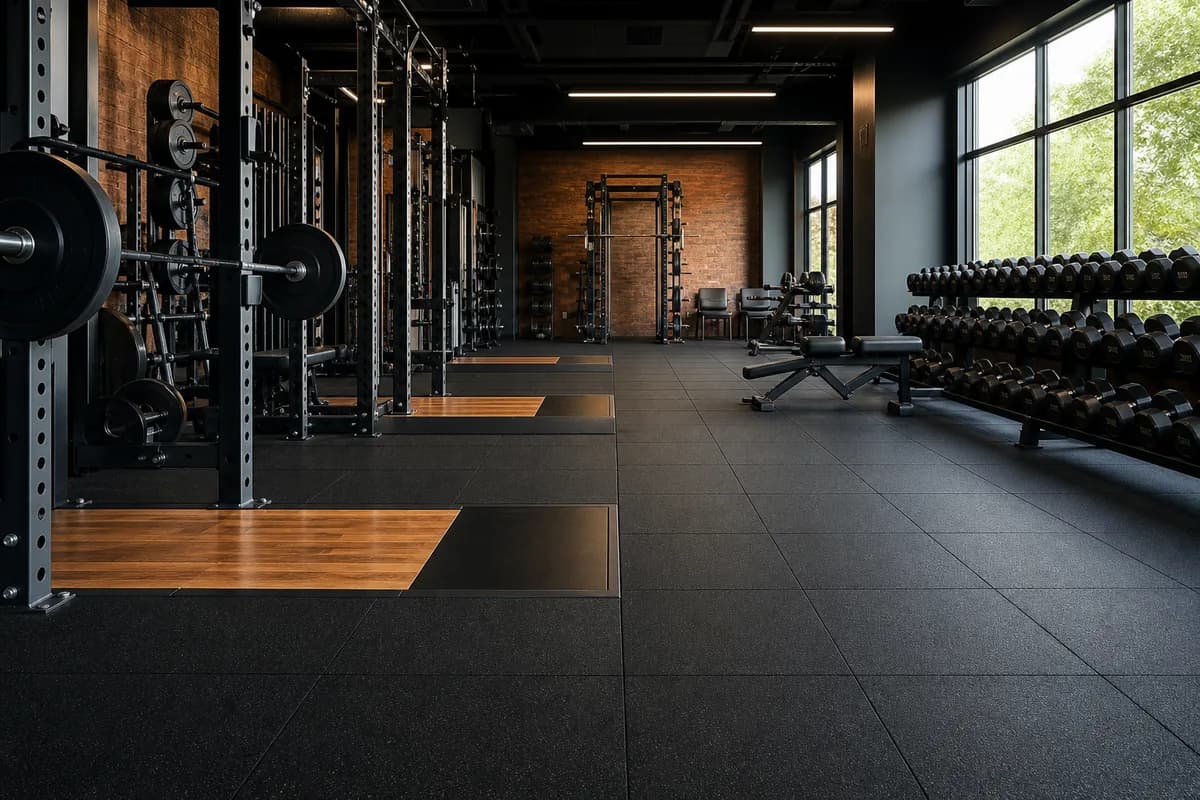
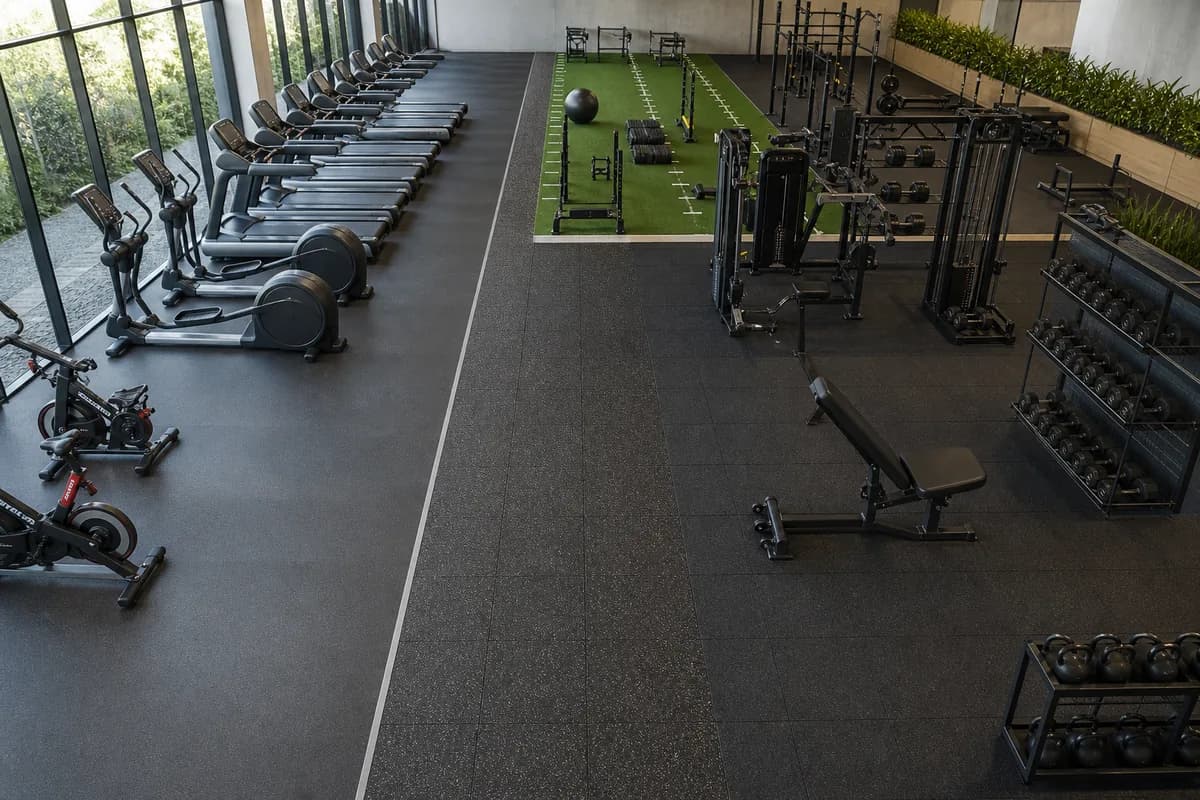
Mark the room plan by cardio, strength, free weight, functional training and circulation. Assign a flooring performance requirement to each zone, then choose formats and thicknesses. This prevents unnecessary cost in light-use areas and inadequate protection where weights are handled.
| Training zone | Typical starting range | Primary concern | Confirm before approval |
|---|---|---|---|
| Cardio / light training | 8–10 mm | Wear and equipment stability | Machine load and subfloor |
| General commercial strength | 10–15 mm | Daily durability | Dumbbell use and traffic |
| Free weights | 15–30 mm | Repeated impact | Drop practice and density |
| Dedicated lifting zone | System-specific | Concentrated impact | Platform or layered protection |
4.What to send a manufacturer
A useful inquiry includes the floor plan, area by zone, equipment list, expected drop practice, preferred format, color direction, destination and project schedule. Ask the supplier to state assumptions instead of quoting an undefined floor.
- →Area and room dimensions
- →Use of each zone
- →Subfloor and installation method
- →Requested samples and reference colors
- →Packing, delivery and documentation needs
5.Buyer approval checklist
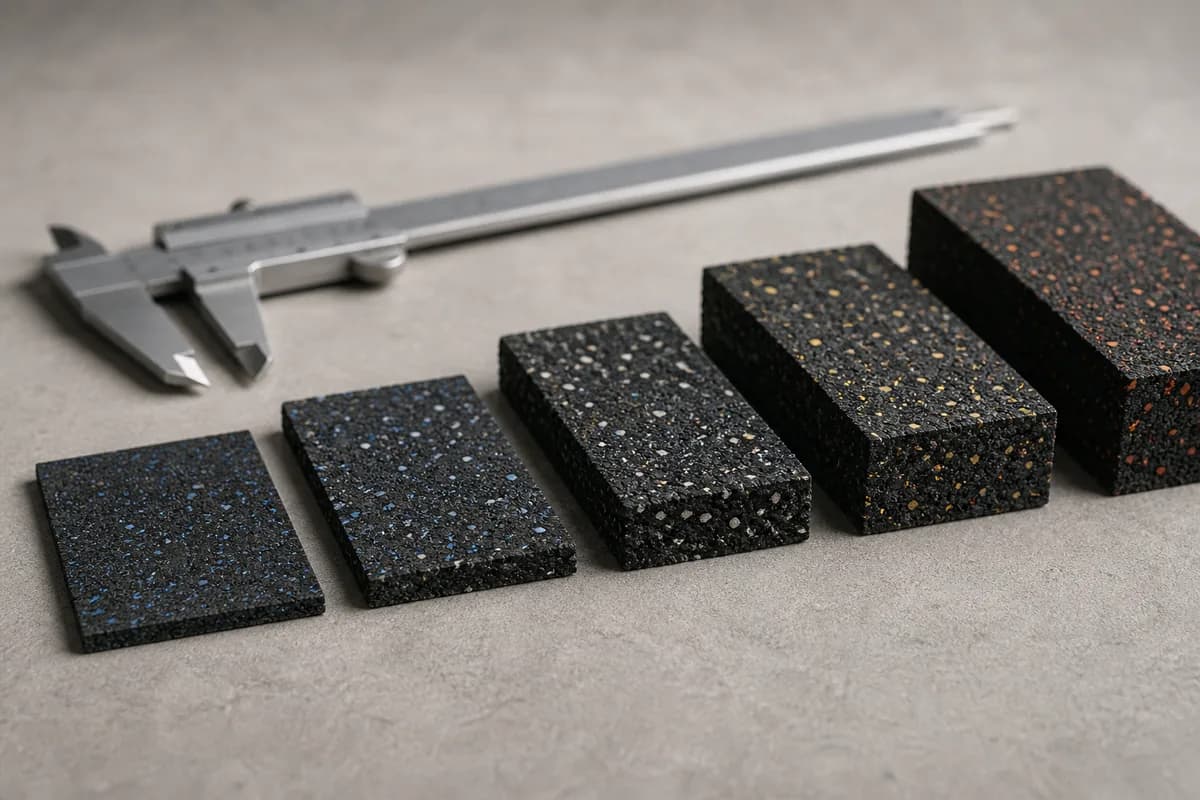
Approve the physical sample and written specification together. Record product name, dimensions, thickness, surface, color, packing unit and permitted tolerances. Keep an approved sample for repeat-order comparison.
Buyer Questions
Should a buyer approve physical samples before a bulk order?+
Yes. A retained physical sample gives both parties a reference for thickness, surface, color distribution, odor expectations and general construction before production is released.
Can one flooring specification cover every training zone?+
Sometimes, but zoning is usually more efficient. Cardio, circulation, strength and repeated-impact areas place different demands on a floor, so one universal thickness can over-specify light areas or under-protect heavy areas.
Are rubber rolls or tiles better for a commercial gym?+
Rolls reduce seams over large areas; tiles simplify zoning and replacement. Many facilities use both, with rolls in general areas and tiles in heavier zones.