Rubber Flooring Rolls vs Tiles for Gyms
Compare seams, handling, installation, replacement and procurement tradeoffs before choosing rubber rolls or tiles.
1.At-a-glance comparison
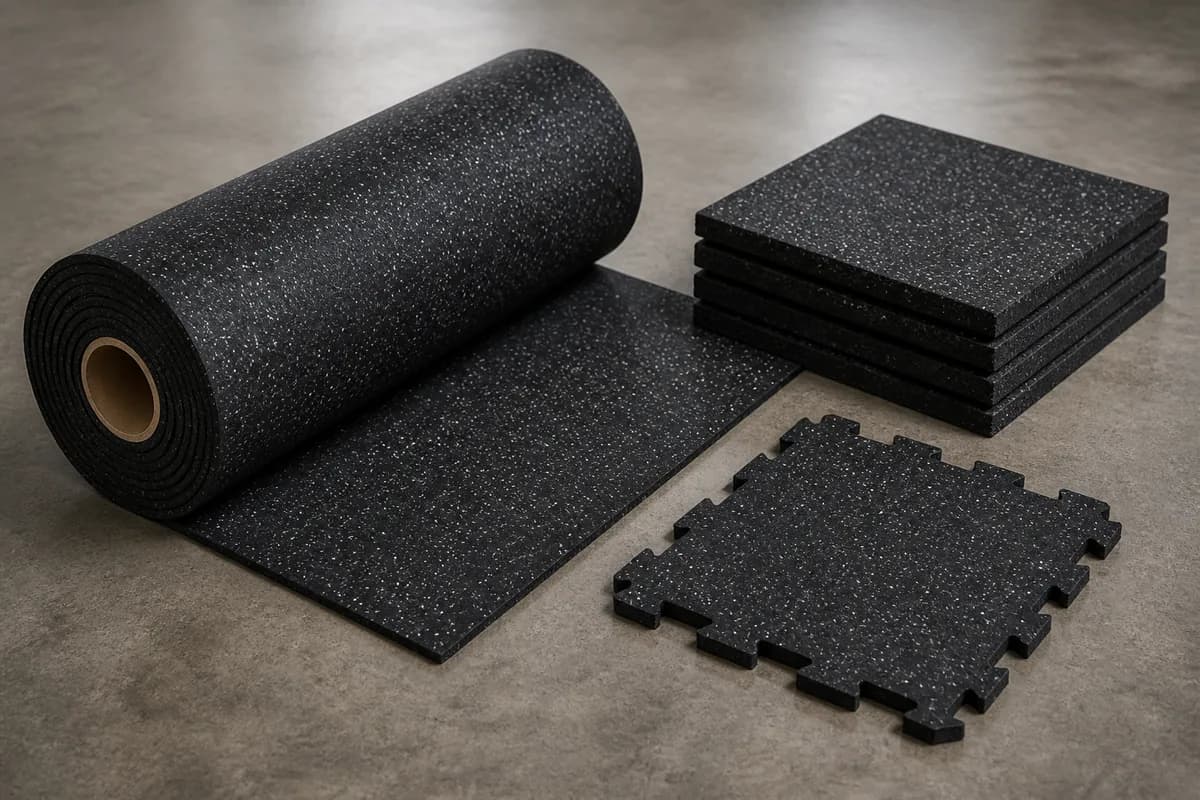
The same rubber material can perform differently once format, edge design and installation method change.
| Format | Best suited to | Installation | Replacement | Key buying check |
|---|---|---|---|---|
| Rubber rolls | Large general areas | Usually adhered | Section repair | Roll width, seams and layout |
| Rubber tiles | Strength and mixed zones | Adhered or loose-laid by system | Individual tile | Size, density and edge tolerance |
| Interlocking tiles | Flexible or smaller spaces | Mechanical interlock | Individual tile | Lock stability and perimeter finish |
| Equipment mats | Local machine or impact points | Loose-laid | Individual mat | Movement, edges and load footprint |
2.When rubber rolls make sense
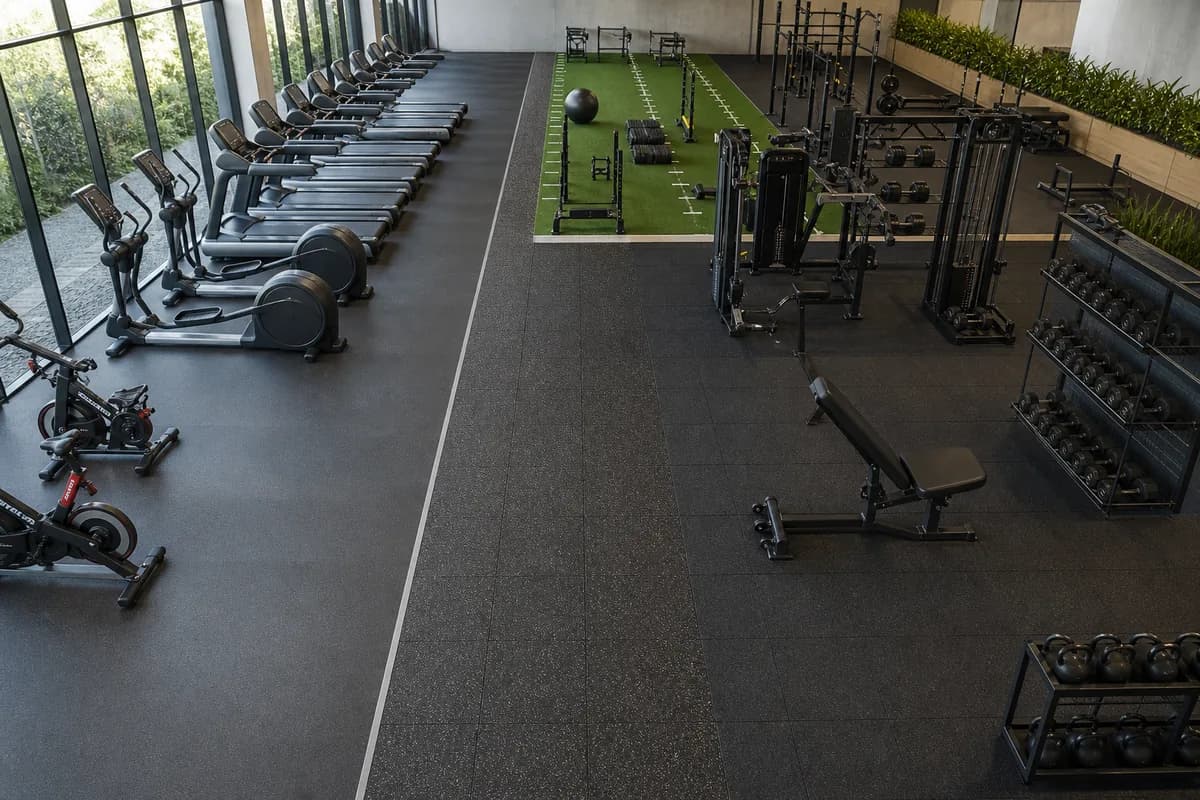
Rolls work well in broad rectangular rooms, cardio areas and circulation paths where a continuous look is important. Layout planning should confirm roll width, direction, seam locations and cutting allowance.
- →Fewer seams over large areas
- →Efficient visual continuity
- →Requires handling and installation planning
3.When tiles make sense
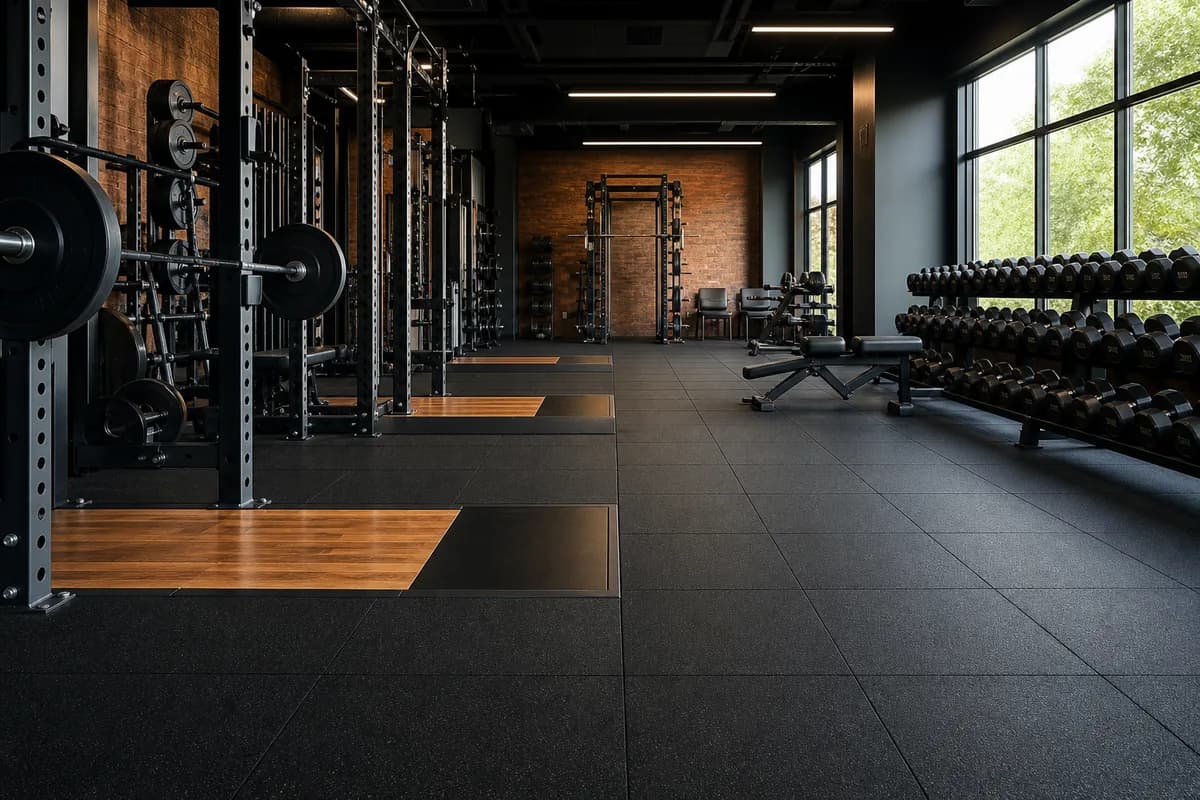
Tiles are practical for strength zones, phased projects and sites that value local replacement. Buyers should check dimensional tolerance, edge condition and color consistency across production batches.
- →Modular replacement
- →Simpler staging by zone
- →More joints to align and inspect
4.Compare the full project cost
Include cutting waste, adhesive, installer labor, pallet or roll handling, spare stock and future repairs. A cheaper unit format can become more expensive if it creates excessive waste or installation complexity.
Buyer Questions
Should a buyer approve physical samples before a bulk order?+
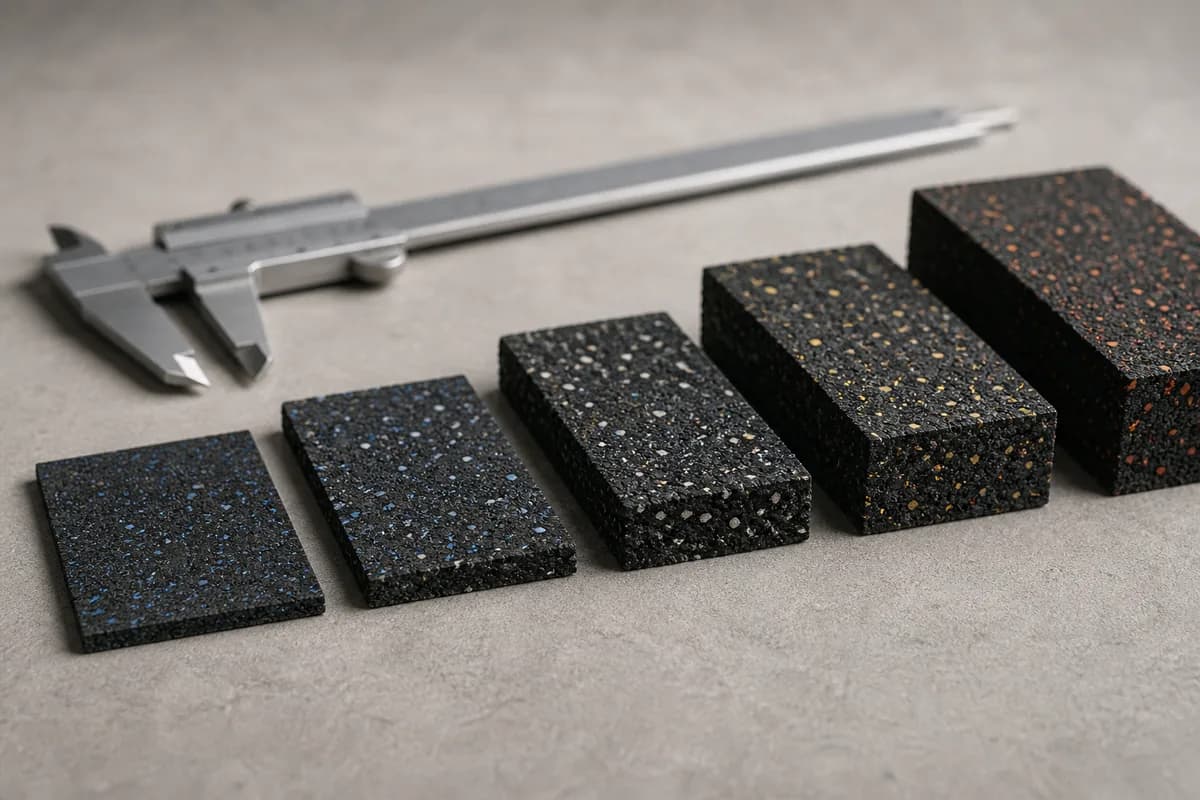
Yes. A retained physical sample gives both parties a reference for thickness, surface, color distribution, odor expectations and general construction before production is released.
Can one flooring specification cover every training zone?+
Sometimes, but zoning is usually more efficient. Cardio, circulation, strength and repeated-impact areas place different demands on a floor, so one universal thickness can over-specify light areas or under-protect heavy areas.
Do rubber rolls always need adhesive?+
Installation depends on the product, area, subfloor and project conditions. Commercial projects commonly use an approved adhesive system; confirm this with the product supplier and installer.