Concrete Moisture Testing Before Rubber Flooring
Understand why concrete moisture assessment, adhesive limits and mitigation decisions must be resolved before rubber flooring installation.
1.Understand the risk pathway
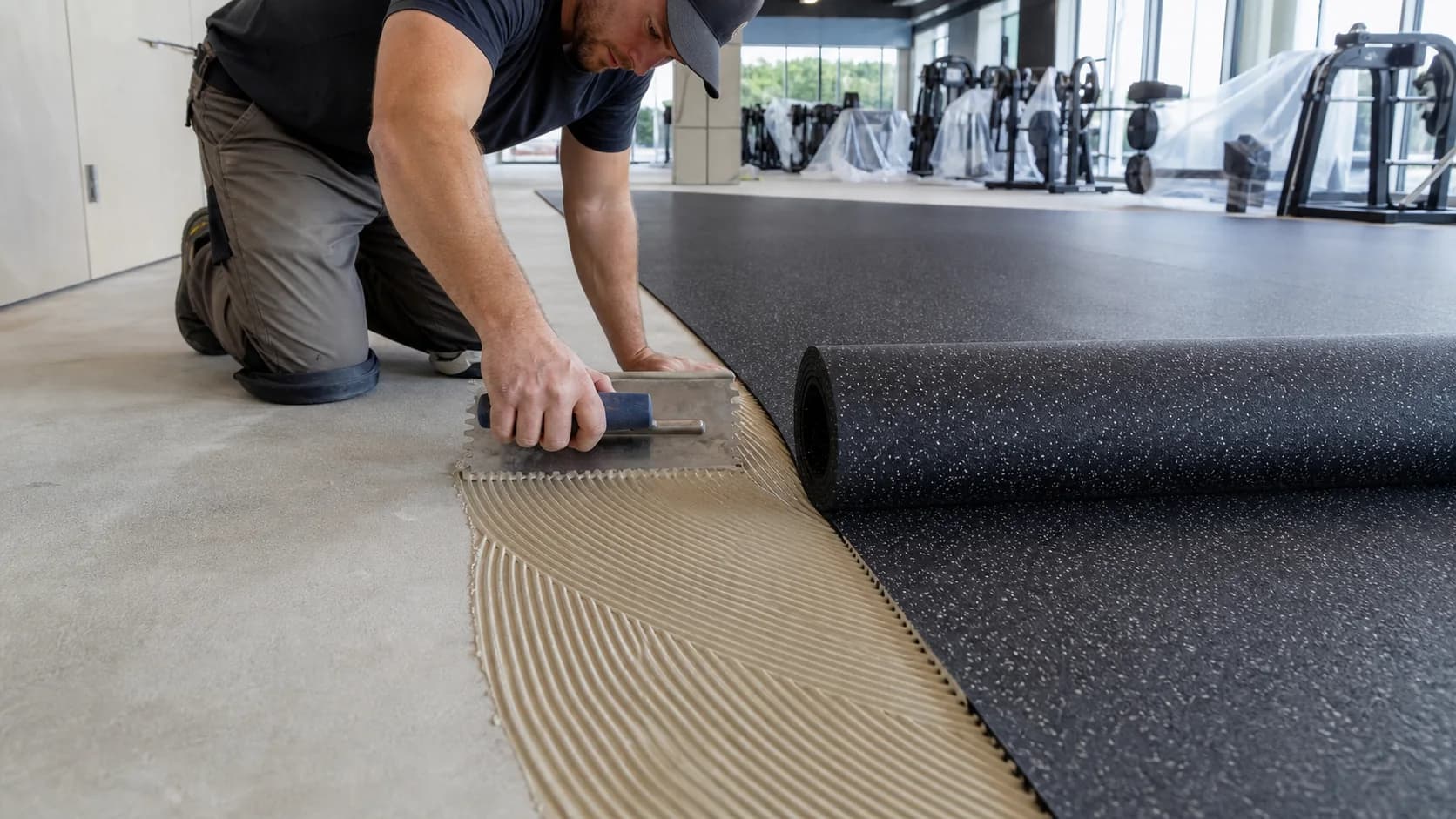
Moisture moving through concrete can affect primer, leveling compound, adhesive and floor covering. Risk depends on slab construction, ground protection, curing history, ambient conditions and the selected system. Rubber flooring should not be used to conceal an unresolved substrate condition.
2.Write a testing plan
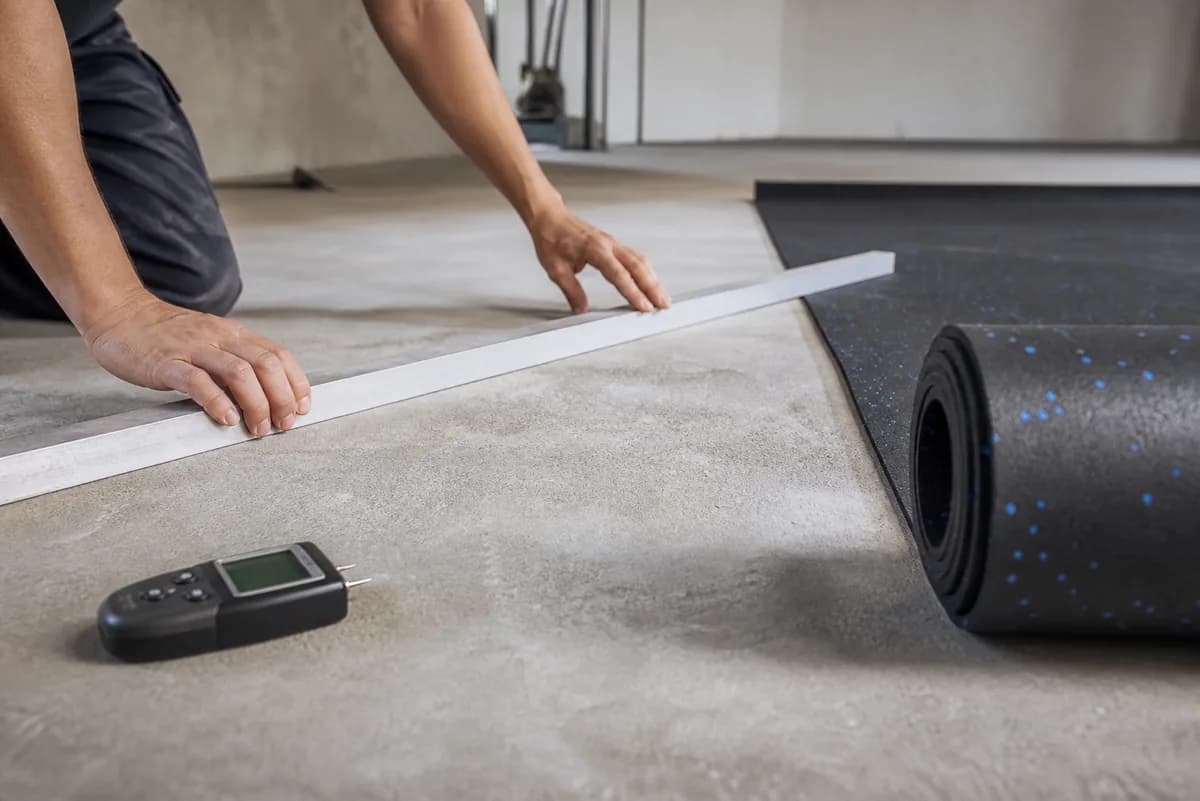
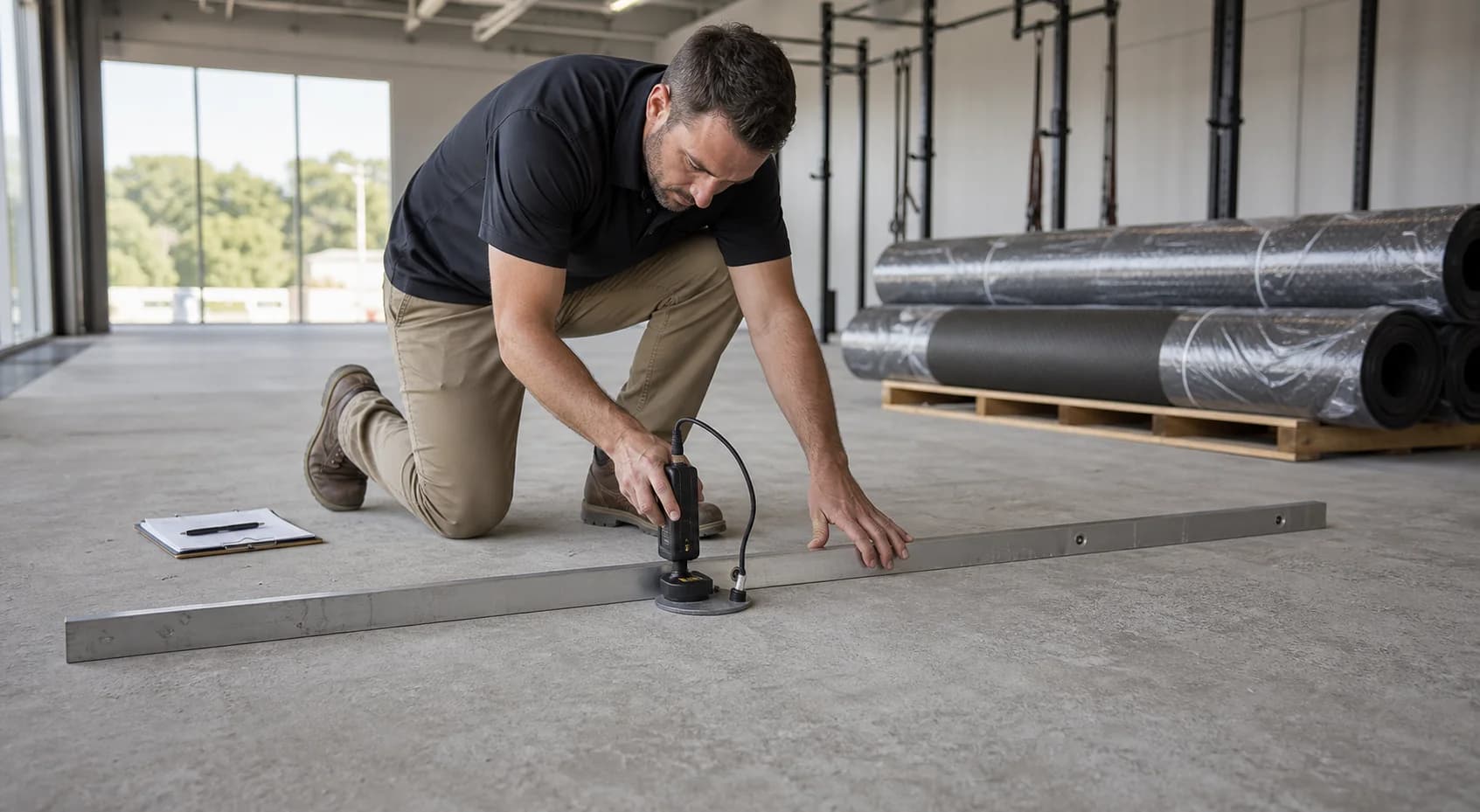
The project team should define the accepted test method, number and location of tests, conditioning requirements, timing and responsible party. Local standards, adhesive instructions and project specifications govern the decision.
| Stage | Required decision | Record |
|---|---|---|
| Before pricing | Known slab and schedule risks | Project assumptions |
| Before preparation | Accepted test plan | Locations and method |
| Before installation | Results versus system limits | Signed report |
| After mitigation | Compatibility and retest | Product and result record |
| Handover | Final system and conditions | Installation file |
3.Test under representative conditions
Building enclosure, HVAC operation and recent wet work can influence conditions. Coordinate testing with the actual installation schedule rather than relying on a result taken under unrelated site conditions.
4.Resolve results before material is laid
When results exceed the system limit, pause and obtain a compatible mitigation design. Confirm the sequence among concrete preparation, mitigation, leveling, primer, adhesive and flooring. Retest or verify as required by the selected system.
5.Do not ignore other substrate checks
Moisture is one part of readiness. Check flatness, strength, cracks, contamination, porosity, surface profile, transitions and finished-floor height. Record repairs before covering the slab.
Buyer Questions
Can a handheld meter approve a concrete slab?+
Screening tools may help locate areas for investigation, but acceptance should use the method required by the project and flooring system.
Does an old slab still need testing?+
Age alone does not remove risk. Ground moisture, leaks, HVAC changes and prior coverings can affect an existing slab.
Can rubber flooring trap moisture?+
Floor coverings and adhesives change how moisture leaves a slab. The complete system must be assessed before installation.
Who is responsible for moisture testing?+
The contract should identify responsibility. Results should be reviewed by the installer and relevant system manufacturers before work proceeds.