Gym Flooring Spare Stock and Replacement Planning
Plan spare material, batch identification, storage and modular repairs so a commercial gym can maintain its flooring after handover.
1.Set the spare quantity by risk
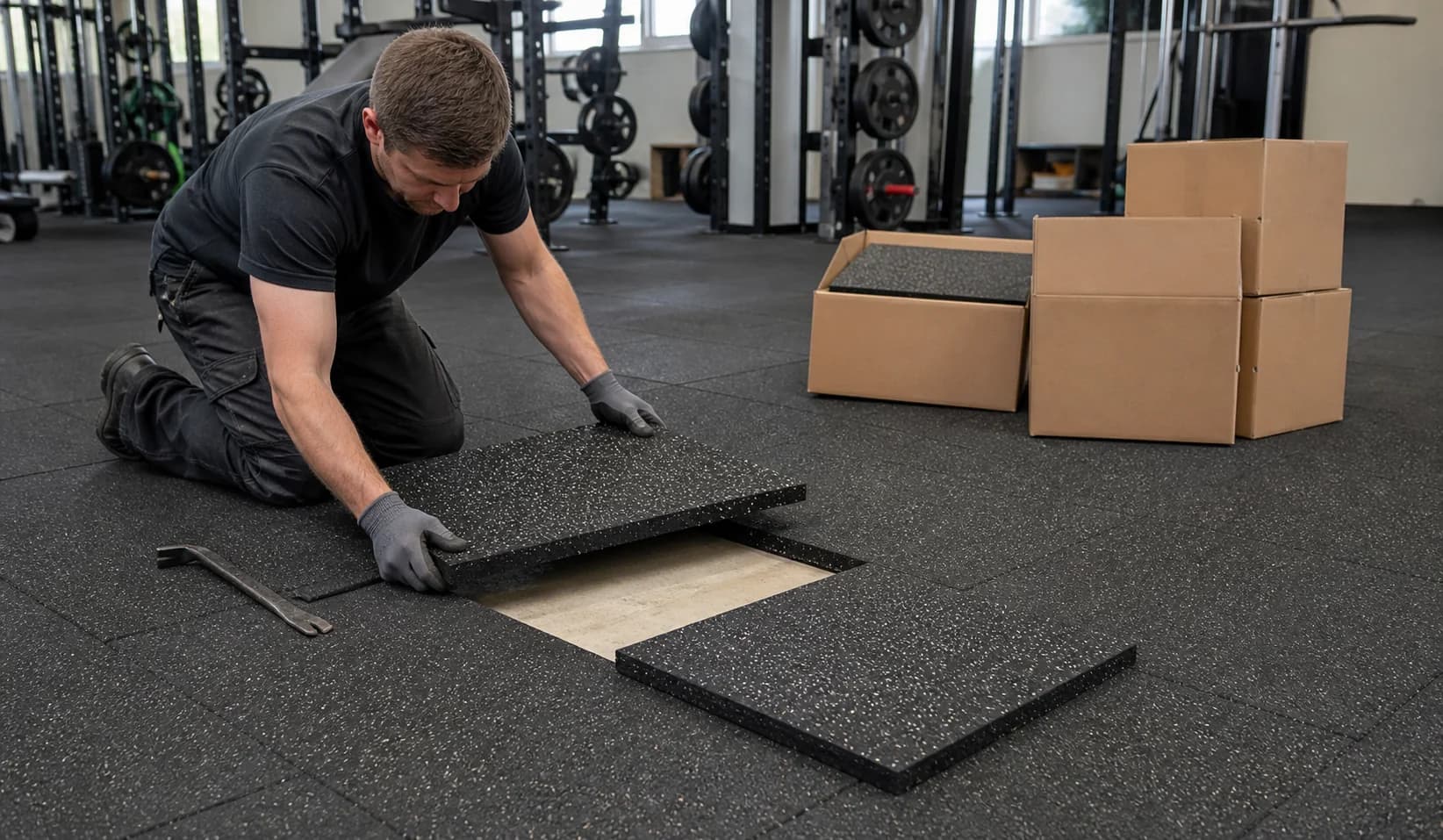
There is no universal percentage for every project. A simple rectangular roll installation has different repair needs from a custom-patterned tile layout or a facility with many cut perimeter pieces. Consider minimum reorder quantity, lead time and whether the gym can close an area while replacement arrives.
| Factor | Higher spare need | Lower spare need |
|---|---|---|
| Customization | Unique color or pattern | Standard stocked finish |
| Format | Many cuts or special pieces | Simple modular layout |
| Use | Heavy impacts and movable equipment | Controlled light traffic |
| Supply | Long lead time or high MOQ | Reliable local replenishment |
| Continuity | Closure is costly | Easy temporary isolation |
2.Preserve identification
Label stored material with product code, construction, size, thickness, color, batch, project and installation date. Keep the approved sample, purchase record, packing label and floor plan together. Unidentified black tiles can be difficult to match years later.
3.Store material correctly
Follow supplier guidance for temperature, moisture, sunlight, stacking and roll position. Protect cartons and edges, keep products away from contaminants and maintain an inventory record. Do not use spare flooring as general workshop protection.
4.Plan a controlled repair
Identify why the area failed before replacing it. Check subfloor, moisture, adhesive, equipment movement and adjacent seams. Use compatible installation materials and protect the repaired area through cure. For rolls, section repairs may remain visible and need careful seam planning.
5.Set realistic appearance expectations
Stored material and installed flooring age under different light, traffic and cleaning. Even material from the same production batch may look temporarily different until cleaned and conditioned. Test the replacement in the actual area before completing a larger repair.
Buyer Questions
How much spare flooring should a commercial gym keep?+
Set the quantity from layout, customization, risk, lead time and minimum reorder constraints. The designer, buyer and installer should agree it before ordering.
Can one rubber tile be replaced?+
Modular tiles are generally easier to replace locally, but adhesive, interlocks, perimeter restraint and adjacent wear must be considered.
Will a future batch match exactly?+
Exact matching cannot always be assumed. Retained same-batch stock gives the strongest replacement reference, especially for custom colors.
What records should be stored with spares?+
Keep product code, specification, batch, labels, approved sample, floor plan, installation materials and maintenance instructions.