Rubber Flooring Adhesive Selection Guide
Coordinate rubber flooring, adhesive, subfloor, moisture and installation conditions before commercial gym flooring work begins.
1.Treat adhesion as a system decision
Rubber rolls, square tiles and interlocking formats may use different installation routes. Concrete, wood, existing resilient flooring and raised assemblies present different risks. Confirm substrate compatibility, primer, adhesive type and application method with the product and adhesive manufacturers and the project installer.
| Input | Question | Why it matters |
|---|---|---|
| Flooring | Format, backing and thickness? | Controls contact and movement |
| Subfloor | Material, strength and porosity? | Controls bond and preparation |
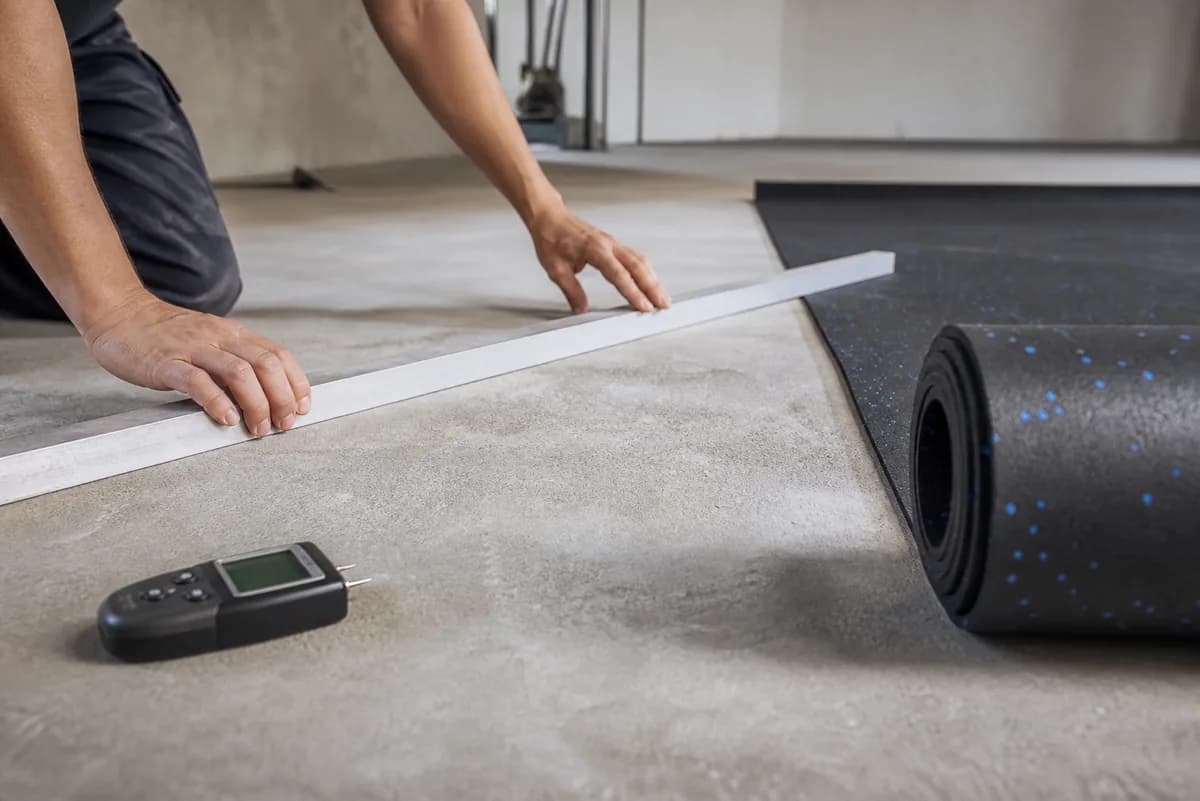
| Moisture | What test and result? | May require mitigation |
| Environment | Temperature and cleaning exposure? | Affects cure and service |
| Schedule | When will traffic and equipment return? | Protects the bond |
2.Prepare the substrate
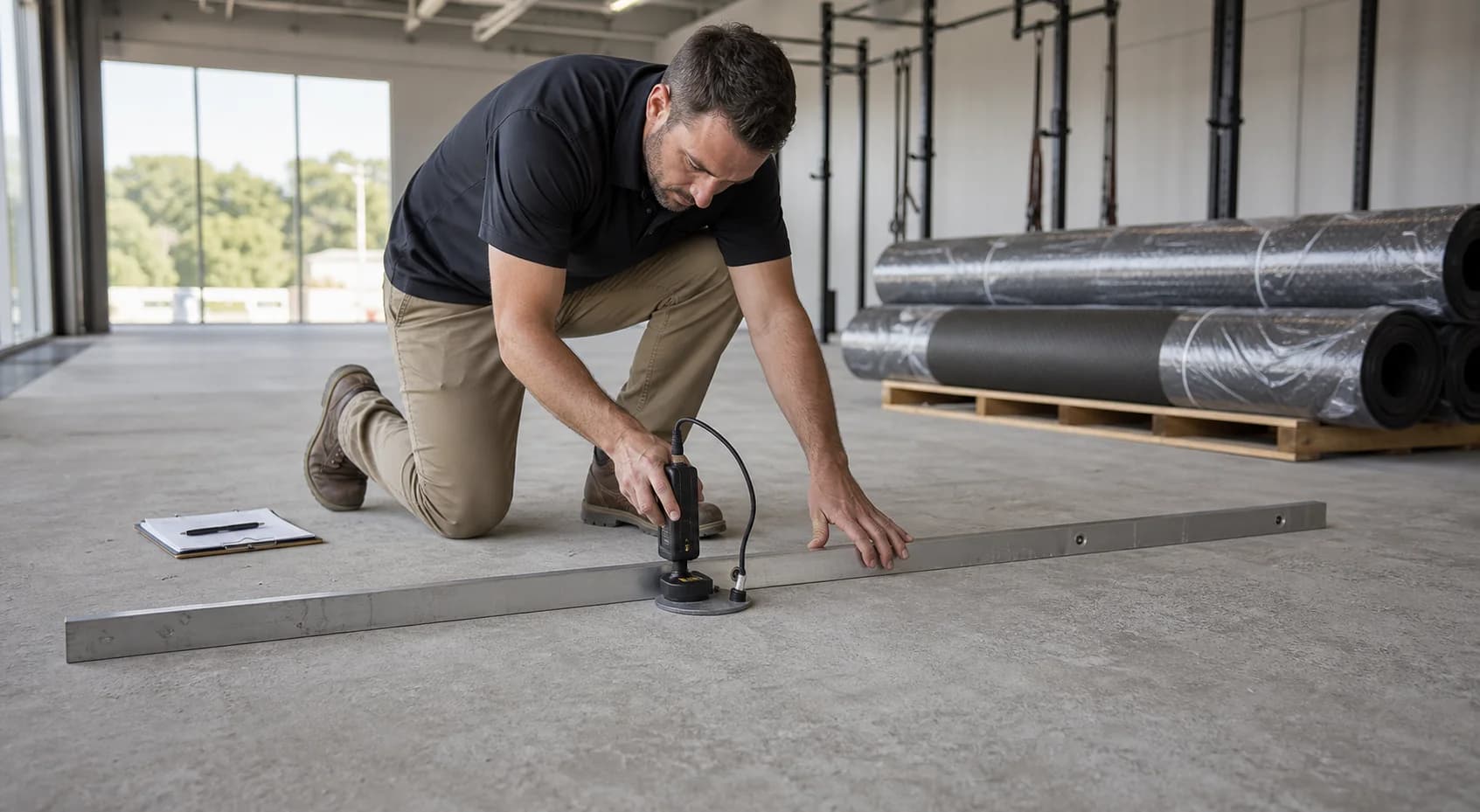
The substrate must meet the system requirements for cleanliness, strength, dryness and flatness. Remove incompatible contaminants and repair defects using compatible materials. Do not assume adhesive can fill depressions or stabilize a weak surface.
3.Control adhesive application
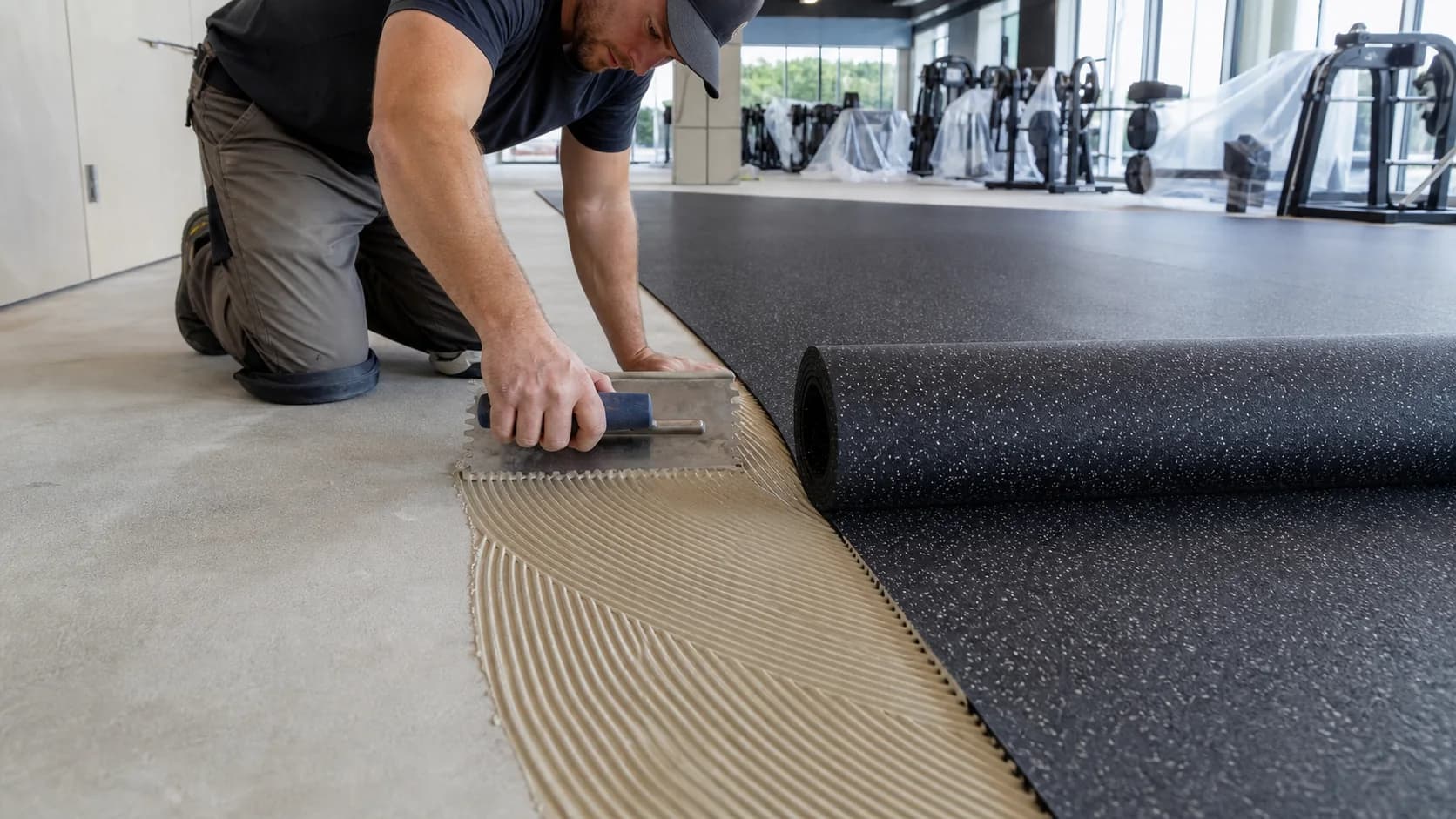
Use the specified trowel and coverage, observe working time and install within the permitted conditions. Roll or press the flooring as instructed, keep seams clean and prevent equipment traffic until the system has cured sufficiently.
- →Correct trowel notch and replacement frequency
- →Measured coverage rate
- →Open and working time
- →Temperature and humidity record
- →Rolling and seam inspection
4.Know when loose-lay is being considered
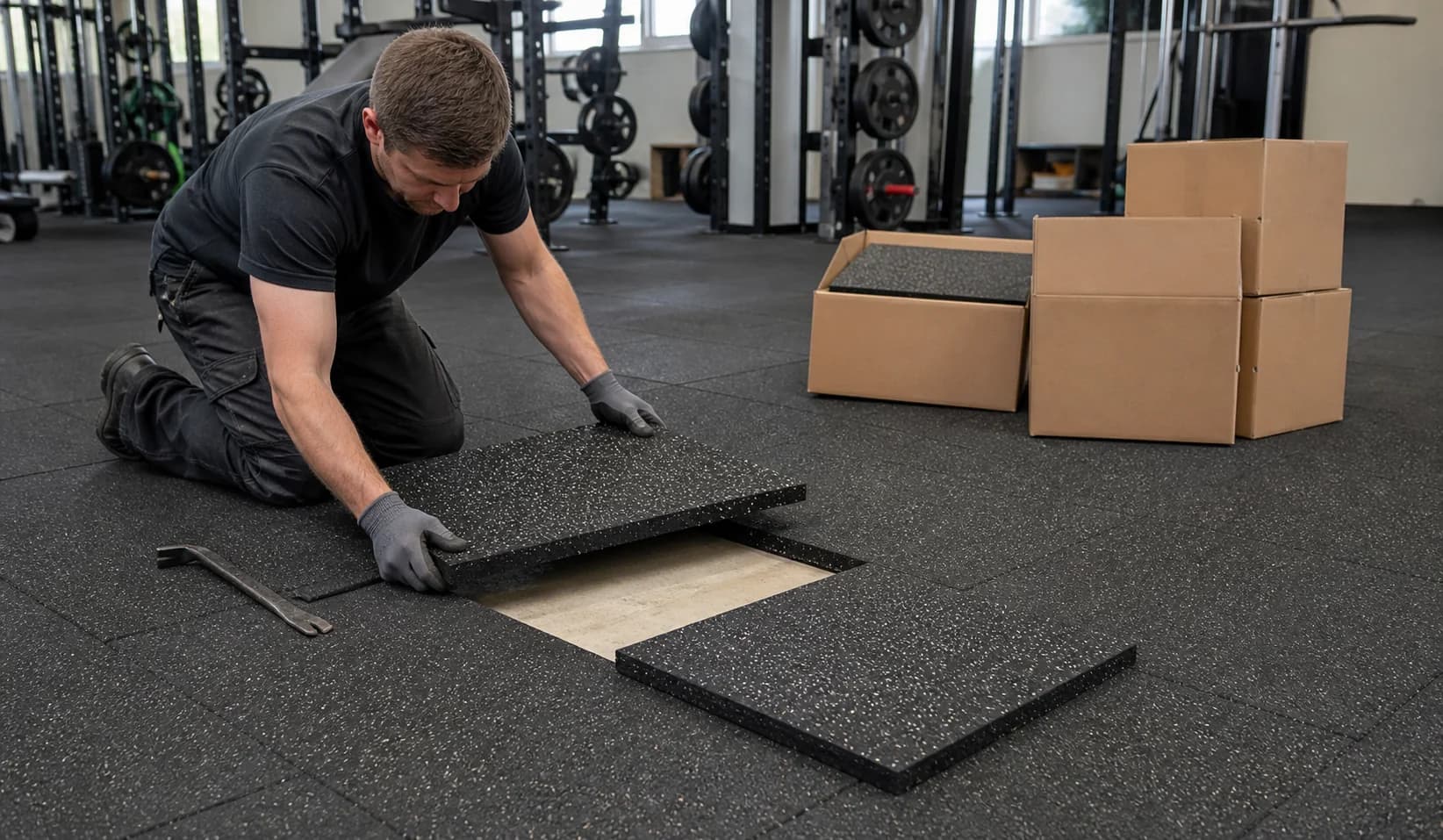
Some modular systems may be designed for loose-lay or perimeter restraint, but suitability depends on area, traffic, equipment, edge design and manufacturer instructions. Do not omit adhesive from a product that requires full bonding simply to save installation cost.
5.Keep installation records
Record subfloor preparation, moisture results, product and adhesive batches, environmental conditions, coverage and installation dates. These records support handover and help diagnose any later movement or bond concern.
Buyer Questions
Is one adhesive suitable for every rubber floor?+
No. Flooring backing, subfloor, moisture, use and environmental conditions determine compatibility.
Can adhesive fix an uneven subfloor?+
No. Flatness and repairs should be addressed before installation using suitable preparation materials.
When can gym equipment be placed on a new floor?+
Follow the complete system’s cure and traffic guidance. Heavy equipment may require more protection and time than foot traffic.
Who should approve the adhesive system?+
The project installer should coordinate written guidance from the flooring and adhesive manufacturers with site conditions and local requirements.