Hotel Gym Flooring Specification Guide
Balance guest comfort, noise risk, premium appearance, cleaning and project scheduling in hotel fitness rooms.
1.Build a hospitality-specific brief
Record operating hours, equipment, room adjacencies, guest expectations, cleaning routine, interior finish palette and opening schedule. A small hotel gym can still create significant impact risk if free weights are placed above rooms.
2.Zone the fitness room
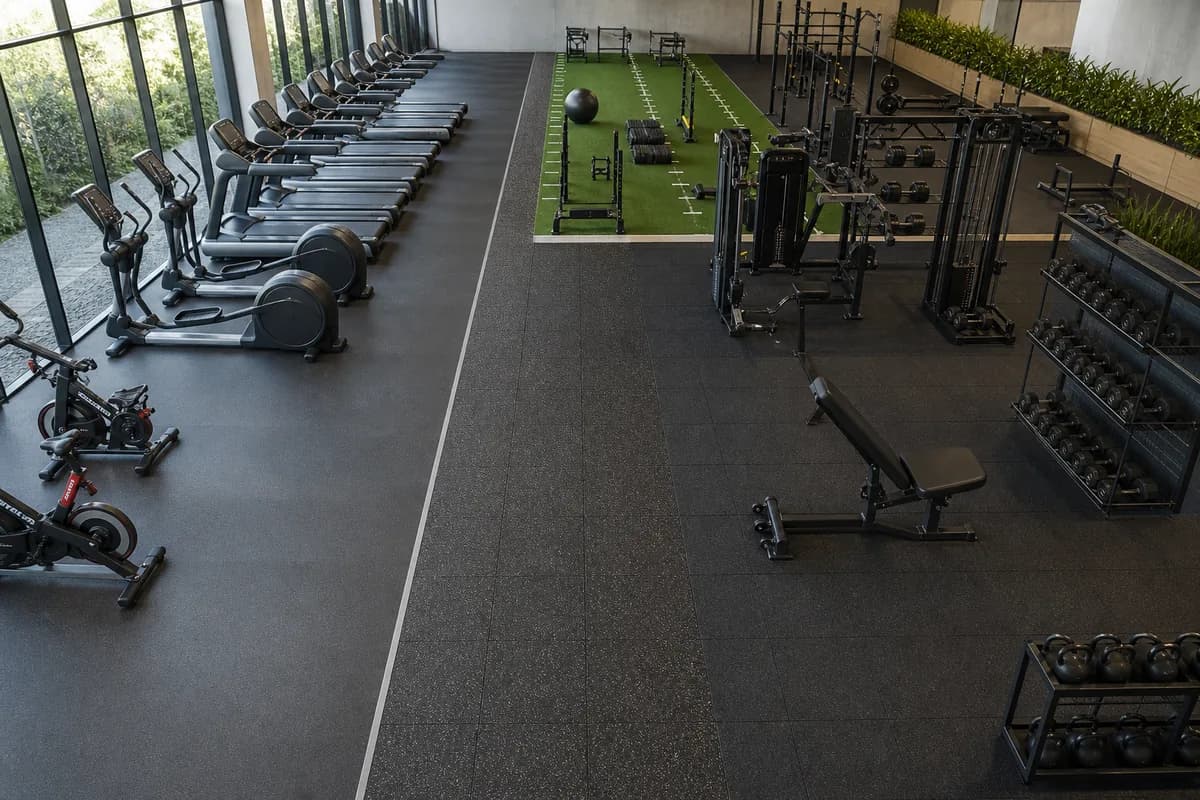
Use stable, cleanable flooring under cardio equipment and stronger local protection in dumbbell or functional areas. Keep noisy activities away from sensitive adjacencies where layout permits.
| Training zone | Typical starting range | Primary concern | Confirm before approval |
|---|---|---|---|
| Cardio / light training | 8–10 mm | Wear and equipment stability | Machine load and subfloor |
| General commercial strength | 10–15 mm | Daily durability | Dumbbell use and traffic |
| Free weights | 15–30 mm | Repeated impact | Drop practice and density |
| Dedicated lifting zone | System-specific | Concentrated impact | Platform or layered protection |
3.Approve finish and transitions
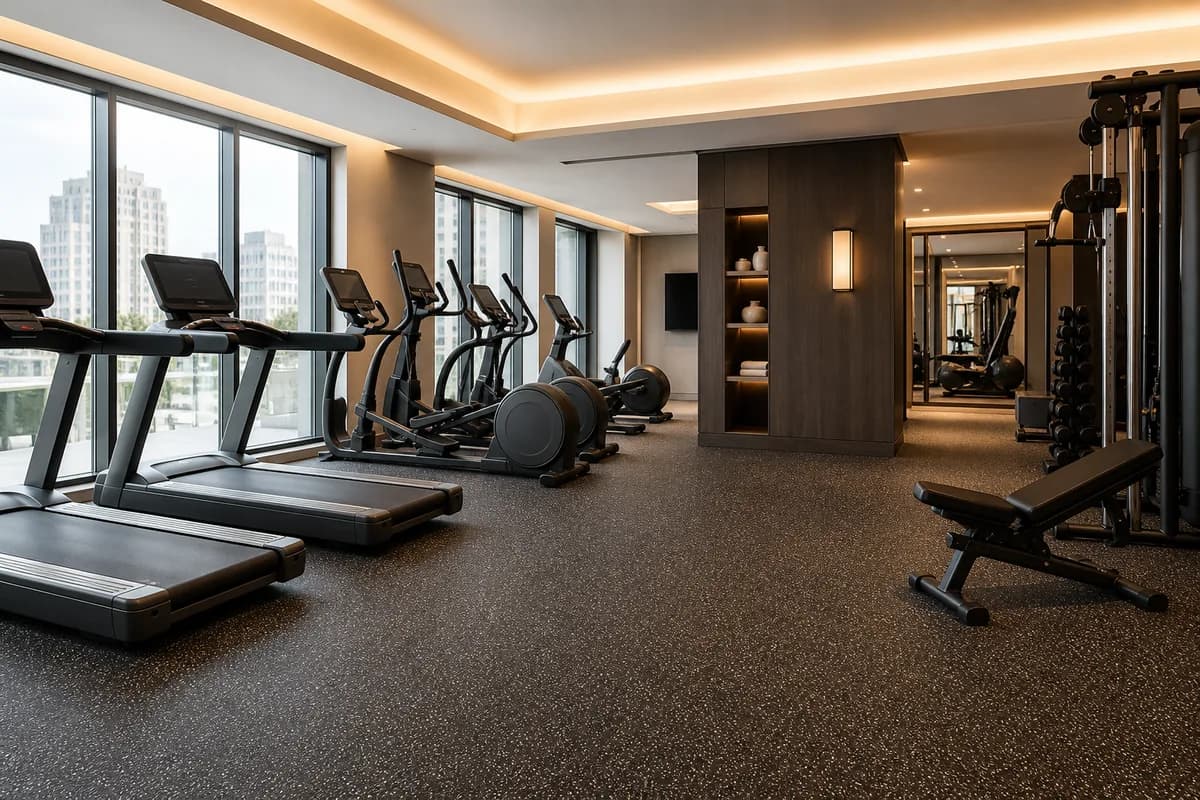
Review color flecks, texture, seams, edge trims and adjacent finishes under the selected lighting. Coordinate finished floor height with doors and accessibility details.
4.Plan for hotel operations
Confirm delivery access, material storage, low-disruption installation windows, ventilation and cleaning before reopening. Keep replacement material identified and stored for future repairs.
Buyer Questions
Should a buyer approve physical samples before a bulk order?+
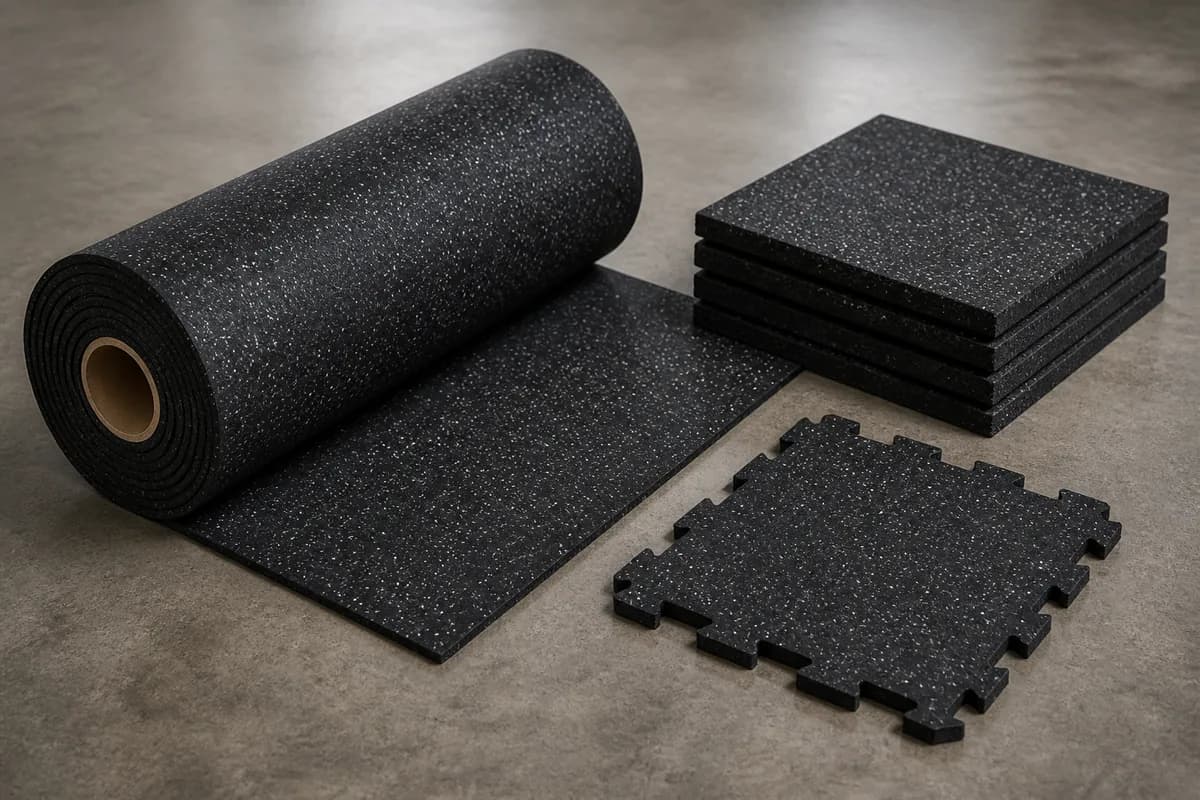
Yes. A retained physical sample gives both parties a reference for thickness, surface, color distribution, odor expectations and general construction before production is released.
Can one flooring specification cover every training zone?+
Sometimes, but zoning is usually more efficient. Cardio, circulation, strength and repeated-impact areas place different demands on a floor, so one universal thickness can over-specify light areas or under-protect heavy areas.
Does a hotel gym always need acoustic underlay?+
Not always. The need depends on building structure, room adjacency, equipment and impact activity. Upper-floor or noise-sensitive projects should receive a project-specific review.