Rubber Flooring Density vs Hardness
Learn how density, hardness, mass and compression describe different aspects of rubber gym flooring and what buyers should verify.
1.Separate the measurements
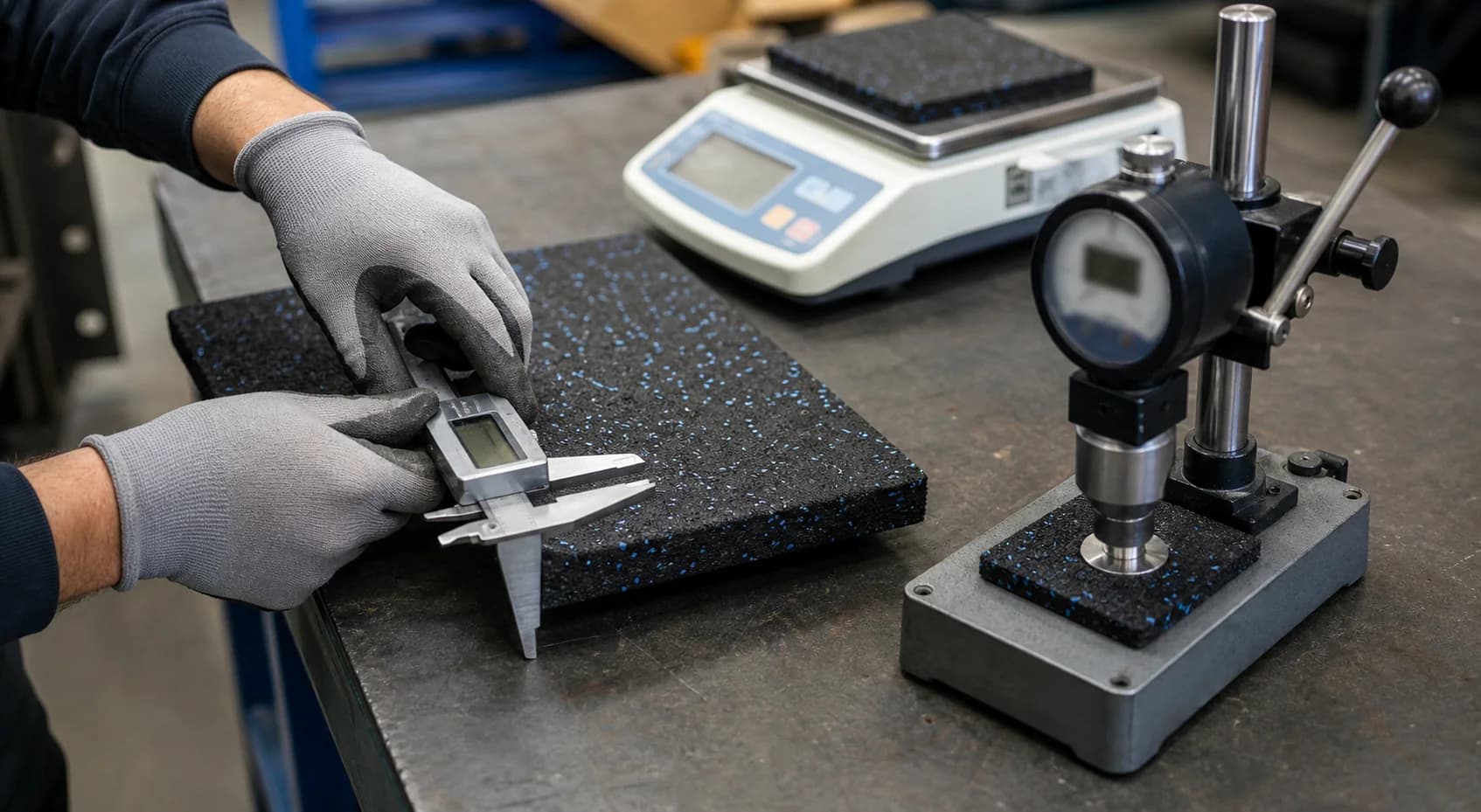
Density, hardness, compression, tensile behavior and finished weight answer different questions. A dense tile may feel stable under equipment, while a resilient layer may be selected for a different role in an assembly. Test method, specimen and conditioning matter when comparing values.
| Property | What it describes | Buyer caution |
|---|---|---|
| Density | Mass per unit volume | Confirm construction and method |
| Hardness | Resistance to indentation | State scale and test method |
| Finished weight | Mass of the supplied unit | Check size and tolerance |
| Compression | Response under load | Time and recovery matter |
| Thickness | Nominal product depth | Does not define structure alone |
2.Relate the numbers to the zone
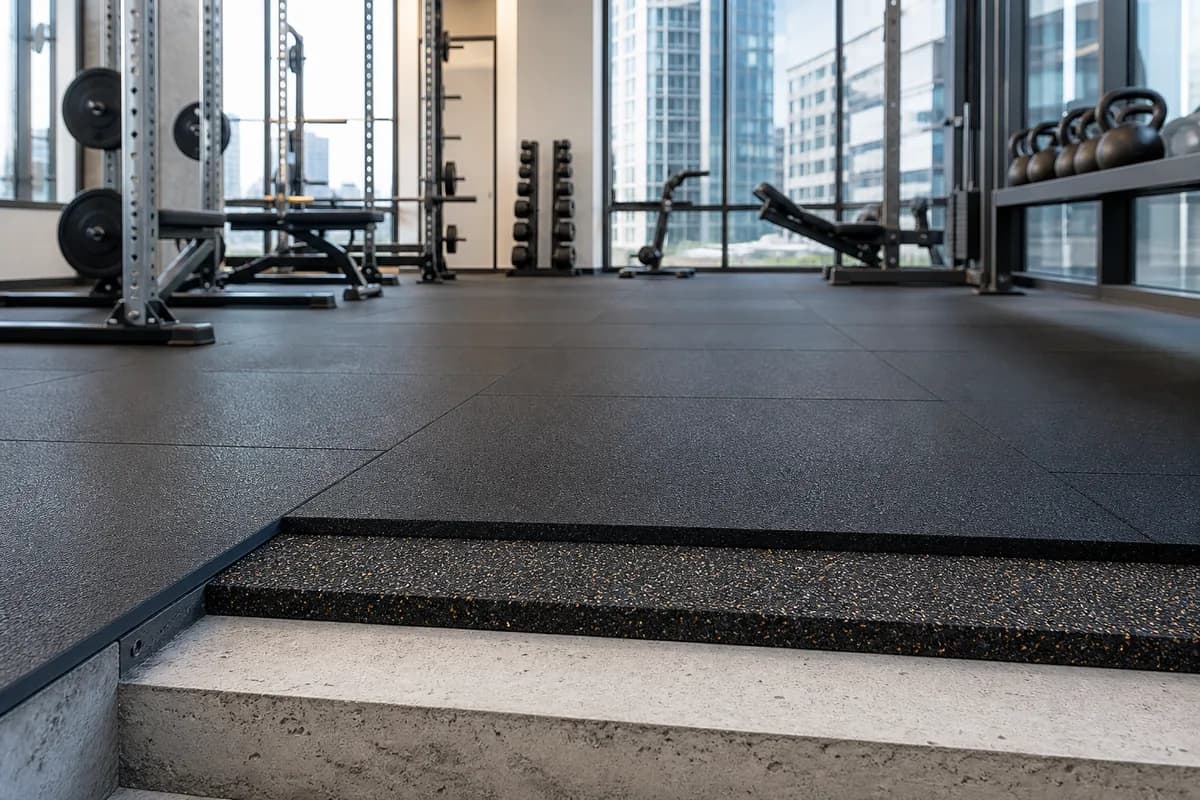
Cardio equipment needs stable support and practical maintenance. Free-weight areas add repeated impact and local replacement risk. Upper-floor projects require review of the complete acoustic path. The useful property balance changes by zone.
3.Compare like with like
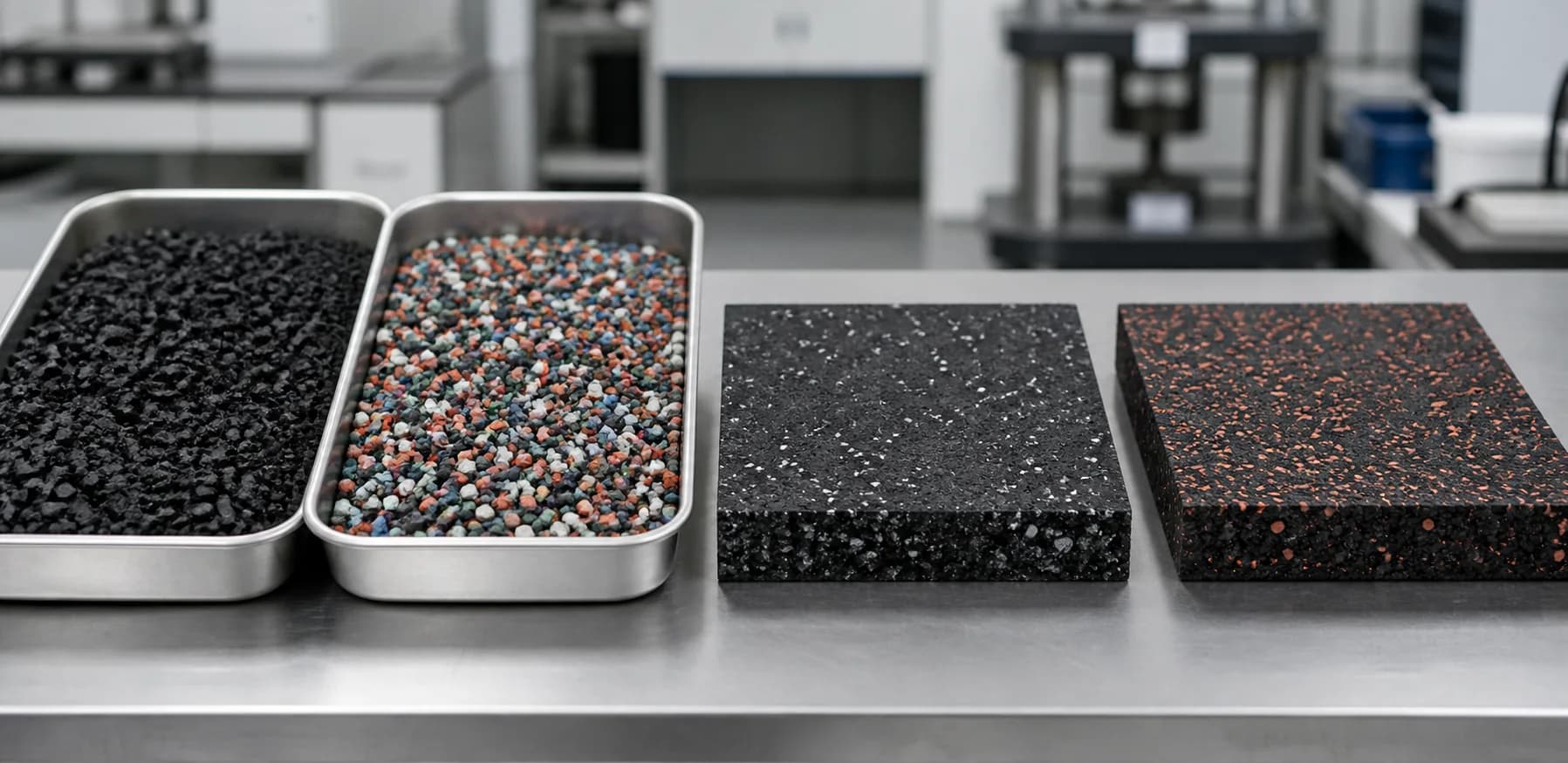
Use samples with the same nominal size and thickness, then record mass, construction and test references. Comparing a molded tile with an underlay or a layered roll without recognizing the structural difference produces misleading conclusions.
- →Same product family and intended use
- →Same nominal thickness and format
- →Declared test method
- →Multiple measurement points
- →Physical reference retained
4.Avoid over-specifying one number
An extremely firm surface may transmit more impact or feel less forgiving, while an overly compliant surface may allow equipment movement. Final selection must consider equipment, impacts, seams, subfloor and the complete assembly.
5.Write an inspection-ready requirement
State the product code, construction, nominal dimensions, tolerances and referenced methods. Agree how samples and production units will be checked, who records the result and what happens when a value falls outside the agreed range.
Buyer Questions
Is higher density always higher quality?+
No. Density must suit the product role. Quality also includes formulation, dimensions, surface, consistency, installation fit and verified performance.
Can hardness replace an impact test?+
No. Hardness is one material measurement and does not represent the entire floor assembly under dynamic impact.
Why do equal-thickness tiles feel different?+
Their density, granule structure, binder, layers, surface and production method may differ.
How should production be checked?+
Use the agreed product specification, measurement method, sampling plan and retained reference rather than a casual hand-feel comparison.