Commercial Gym Flooring Cost: A Complete Buyer’s Guide
Understand the material, installation, freight and lifecycle costs that shape a commercial gym flooring budget before requesting quotations.
1.Build the budget from the floor plan
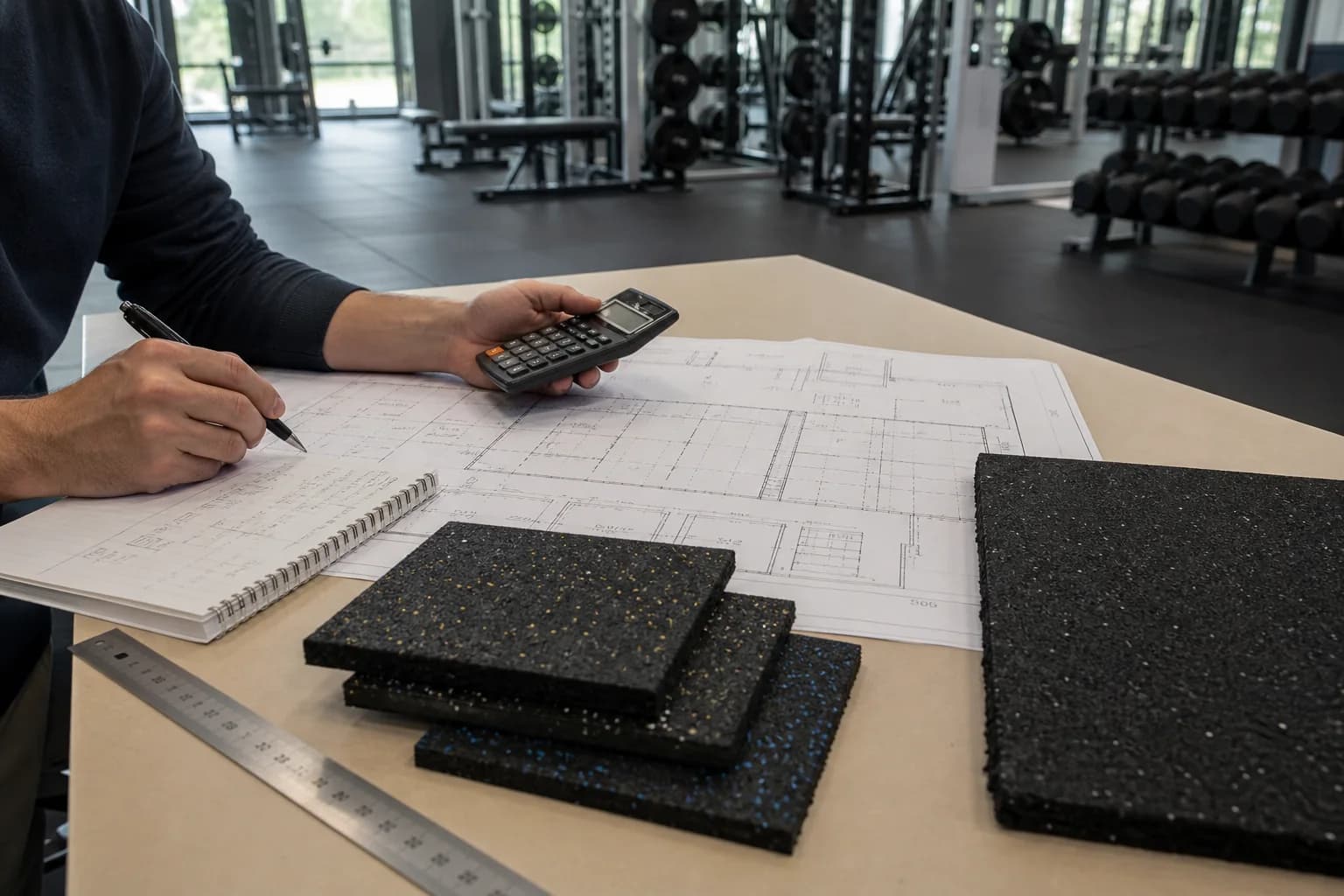
Start with net area by training zone, then add a documented waste allowance for room geometry and product format. Cardio aisles, machine areas, free-weight bays and lifting platforms rarely need the same construction. A single blended rate hides where the budget is being spent and makes supplier comparisons unreliable.
| Cost group | Information required | Common omission |
|---|---|---|
| Material | Format, construction, thickness, area | Mixing unlike specifications |
| Site work | Subfloor condition and moisture | Repairs and leveling |
| Installation | Layout, adhesive, seams, transitions | Equipment relocation |
| Logistics | Packing, freight, duty and delivery | Unloading access |
| Lifecycle | Cleaning, spare stock and replacement | Future batch matching |
2.Identify the largest price drivers
Thickness affects material use, but it is not the only driver. Product density, color content, tile dimensions, roll width, edge design, backing, packing and order quantity all influence production and transport. Custom colors, logos or retail packaging add separate approval and setup work.
- →Training load and selected floor build-up
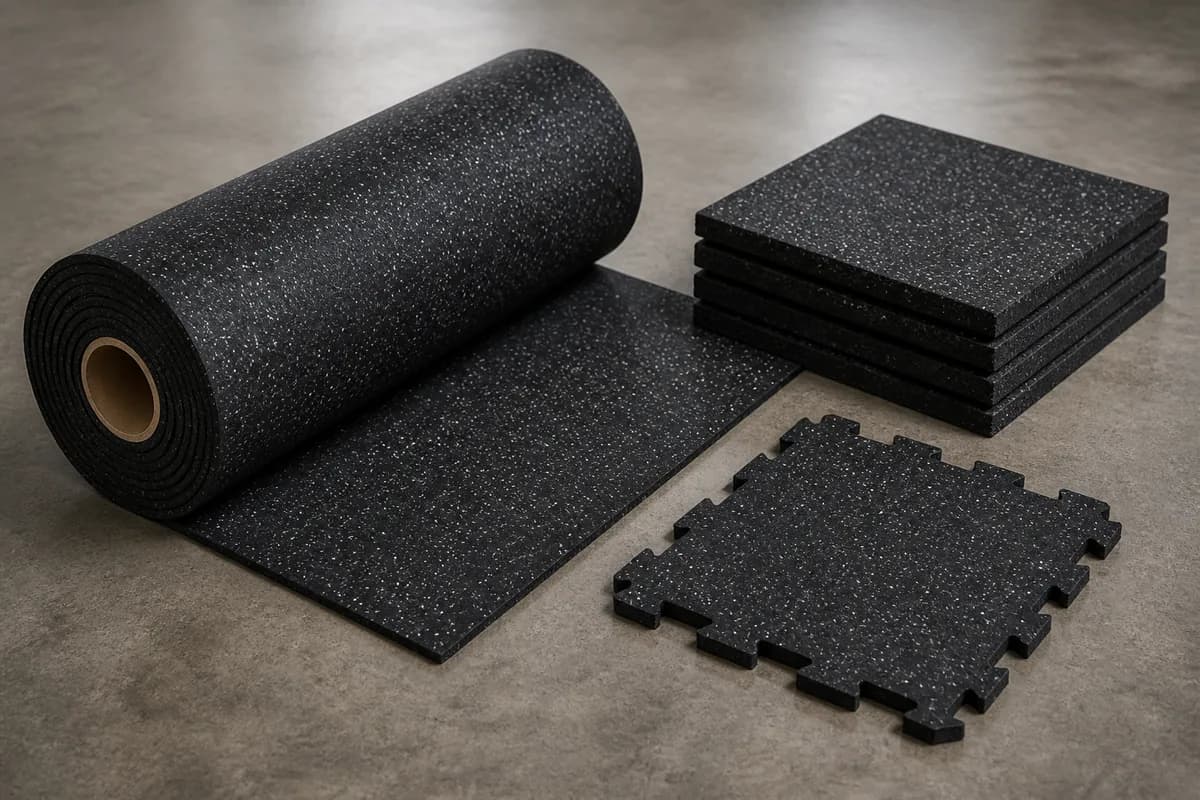
- →Roll, square tile or interlocking format
- →Standard black, EPDM fleck or custom appearance
- →Order volume and mixed-SKU complexity
- →Destination, Incoterm and delivery constraints
3.Compare installed cost, not factory price
A low factory price can lose its advantage if the product creates more cutting waste, requires extensive substrate repair or uses an installation method that local contractors price highly. Ask installers to price the same drawing and product instructions. Include adhesive, primer, trims, equipment movement, curing time and protection before opening.
4.Make supplier quotations comparable
Give every supplier the same zone schedule, dimensions, quantity, destination and packing requirements. The quotation should identify the exact construction, dimensions, tolerance, packing unit, lead time, trade term and exclusions. Treat an undefined product name such as ‘heavy-duty tile’ as incomplete.
- →Exact product and construction
- →Net and ordered quantity
- →Packing dimensions and gross weight
- →Sample and approval reference
- →Lead time, Incoterm and validity
5.Evaluate lifecycle value
Consider whether damaged areas can be replaced locally, whether spare stock can be stored, how seams will age and what cleaning routine is required. The lowest initial price is not the lowest project cost when premature replacement, business interruption or difficult maintenance is included.
Buyer Questions
Can a supplier quote from square meters alone?+
A preliminary material estimate is possible, but a reliable quotation also needs product format, thickness, use zones, destination, packing and customization requirements.
Why do two rubber tiles of equal thickness have different prices?+
Density, material composition, size, edge accuracy, color content, production method, packing and order quantity may differ even when nominal thickness is the same.
Should installation be included in the comparison?+
Yes. Compare material and local installation as one project cost, including preparation, adhesive, trims, waste and equipment movement.
How can I receive a current price?+
Send the zone areas, desired products, thickness direction, quantity and destination. A current factory quotation can then state its assumptions and trade terms.